

Besides Israel’s repeated destruction of entire villages in south Lebanon, the use of bombings, white phosphorus and chemicals has systematically damaged and destroyed the region’s environment for years to come.
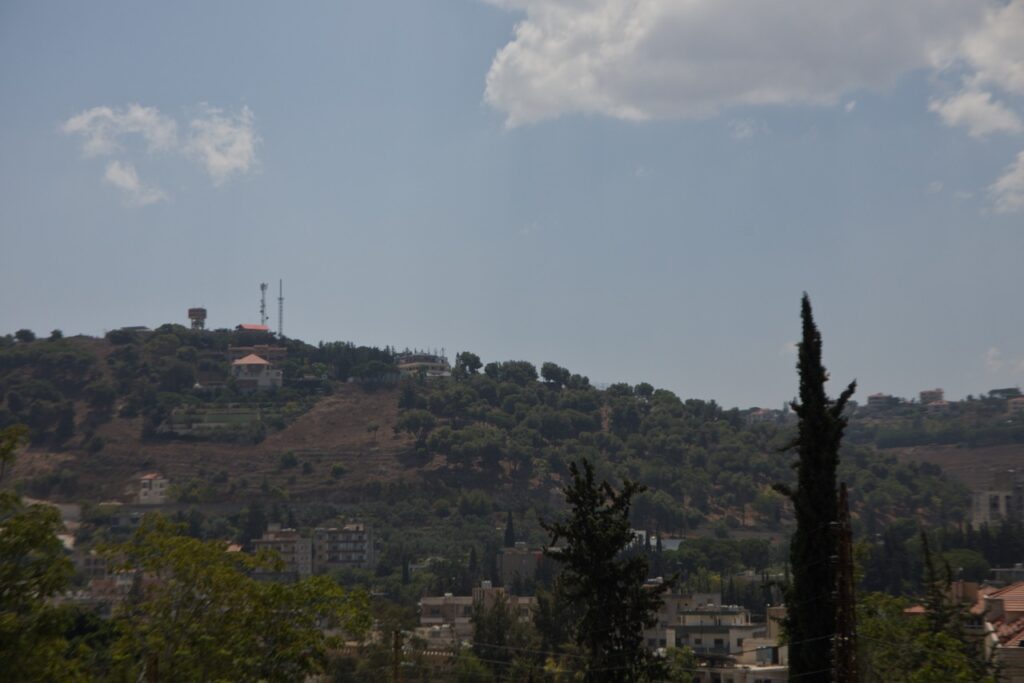
The sound of buzzing grew steadily louder and louder on a small plot of land on the side of the road in Nabatiyeh. Overhead, the Israeli drone that watches the residents of the southern Lebanese town on a daily basis continued to whir away until, eventually, it was drowned out by an increasing number of bees exiting and flying around their hives. Hundreds of bees flew around seemingly aimlessly yet with purpose.
Surrounded by dry brush and never-ending traffic, the bees went about their business unaware of the drone flying overhead or the airstrike that targeted neighboring Nabatiyeh al-Fawqa earlier that same day. Their only goal was to serve the hive.
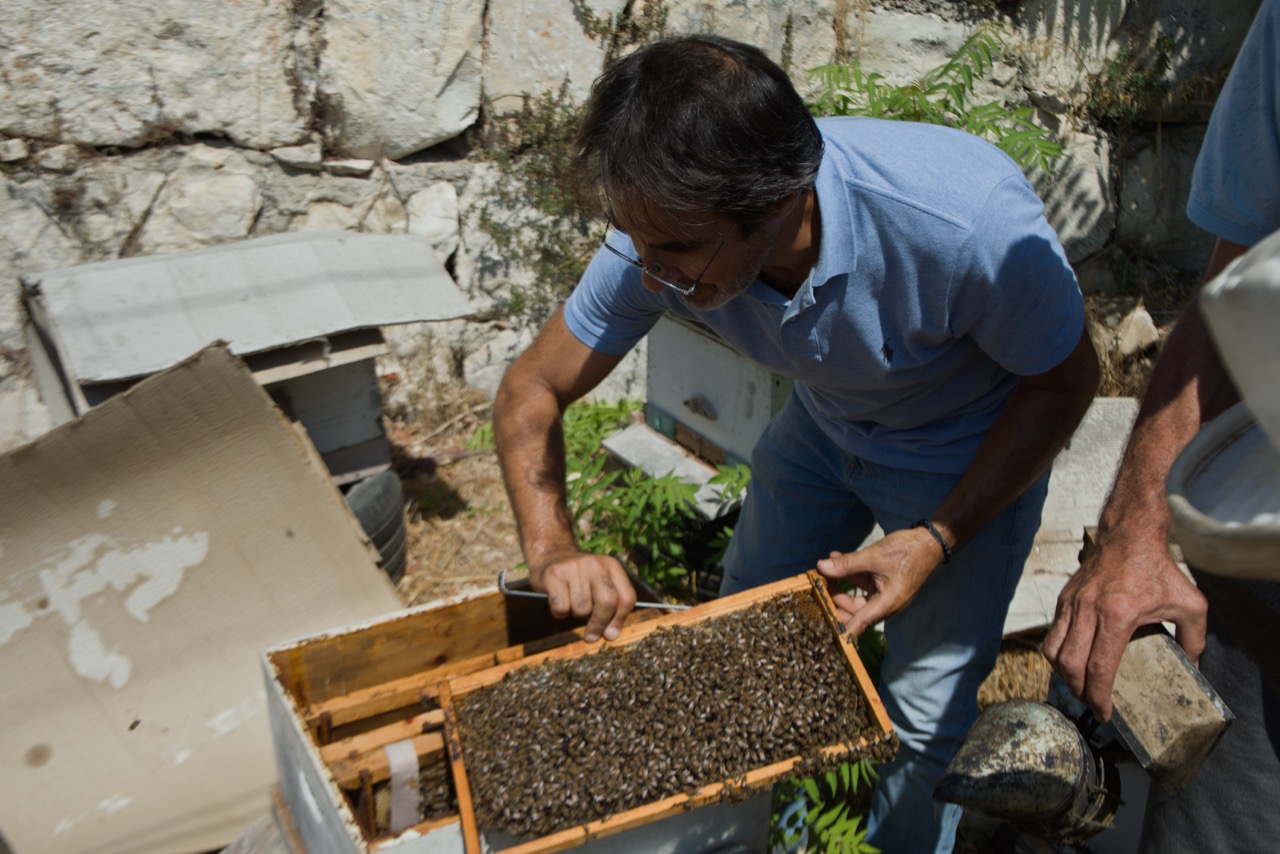
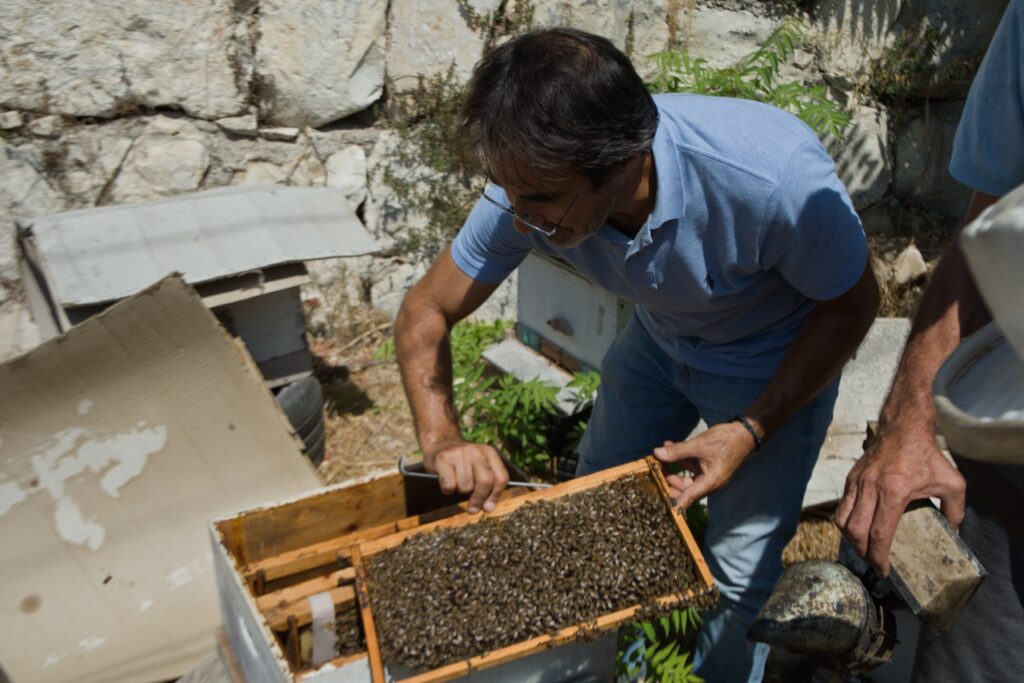
For 58-year-old Majid Kwais, this was his happy place. He loved every second of being amongst the bees, not even bothering to wear a suit to protect him from the possibility of getting stung by the creatures he practically considered family.
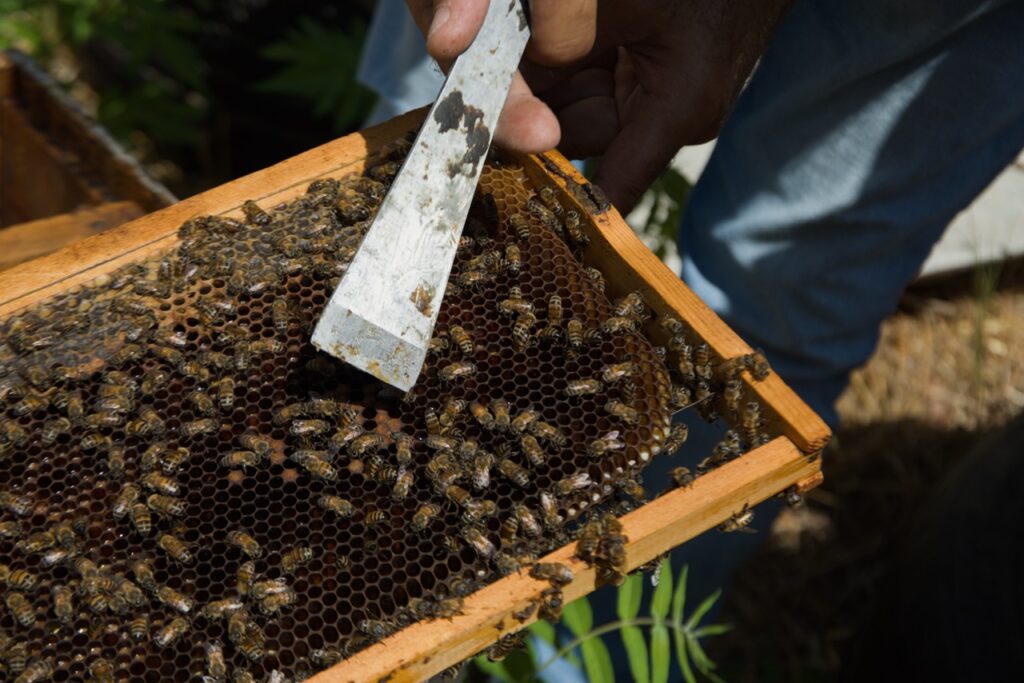
With practiced care, he removed the lid to the hive and listened closely. Apparently satisfied with whatever he heard, he pulled out a section and examined the countless bees crawling and grouped on it. He noted one bee hatching from its egg and helped it escape its confines.
“I listen to the sound of the hive and if it sounded angry, I would close it up and put on the suit,” he told Beirut Today.
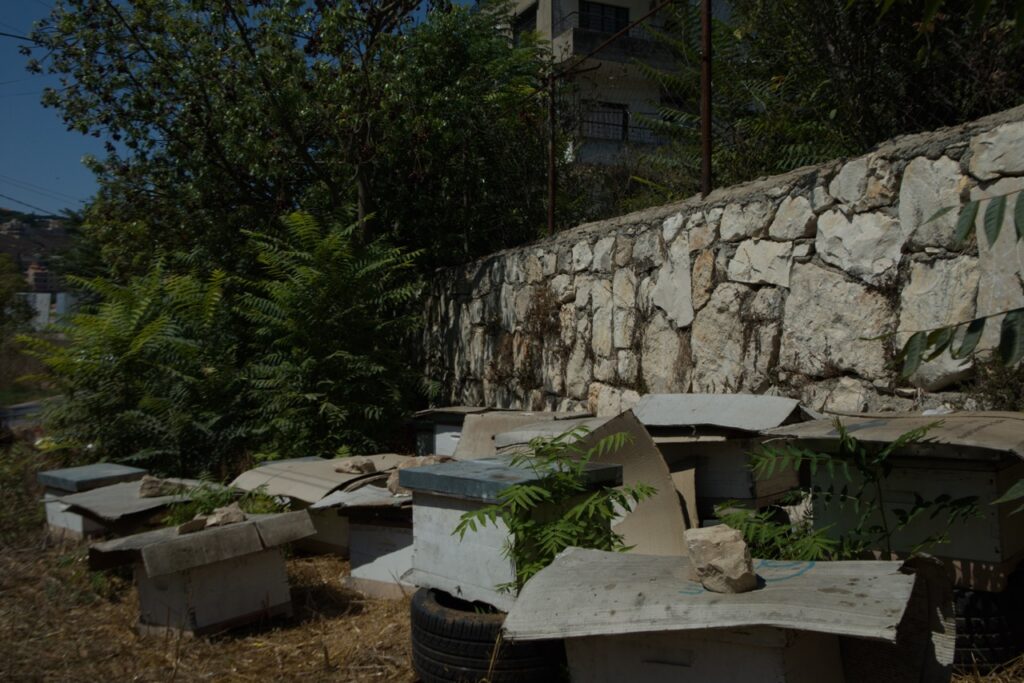
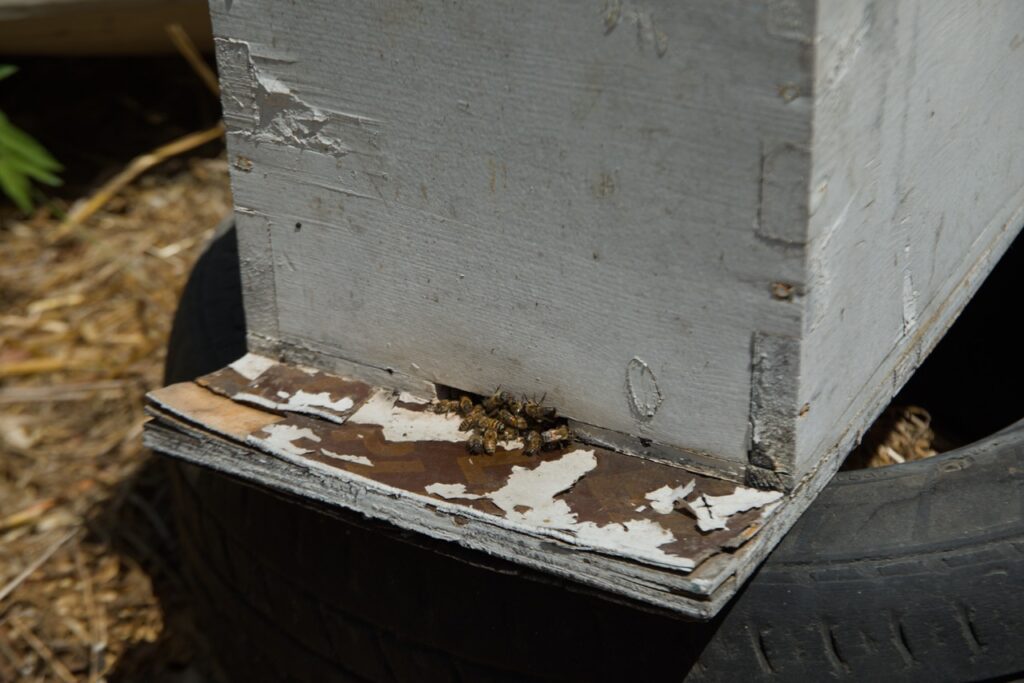
The 18 hives positioned carefully on stacks of tires and situated near trees so they would receive some shade throughout the unrelenting summer day were what little remained of Kawis’s hives. Just a few months ago, he boasted 125 hives all filled with thriving communities of bees. Today, that number sits closer to 25.
The recent war between Hezbollah and Israel ensured that he lost most of his bees. Now, he is just trying his best to maintain the ones he has left in the hopes of slowly rebuilding his colony.
Over the last three years, Israel has steadily bombed the south and used controlled detonations to destroy entire villages.
The environment, though, has suffered greatly through the use of chemicals and white phosphorus, which has left much of south Lebanon’s once lush, green forests and plains darkened and scorched.
“They want to make it impossible for anyone to live here,” Kwais stated solemnly.
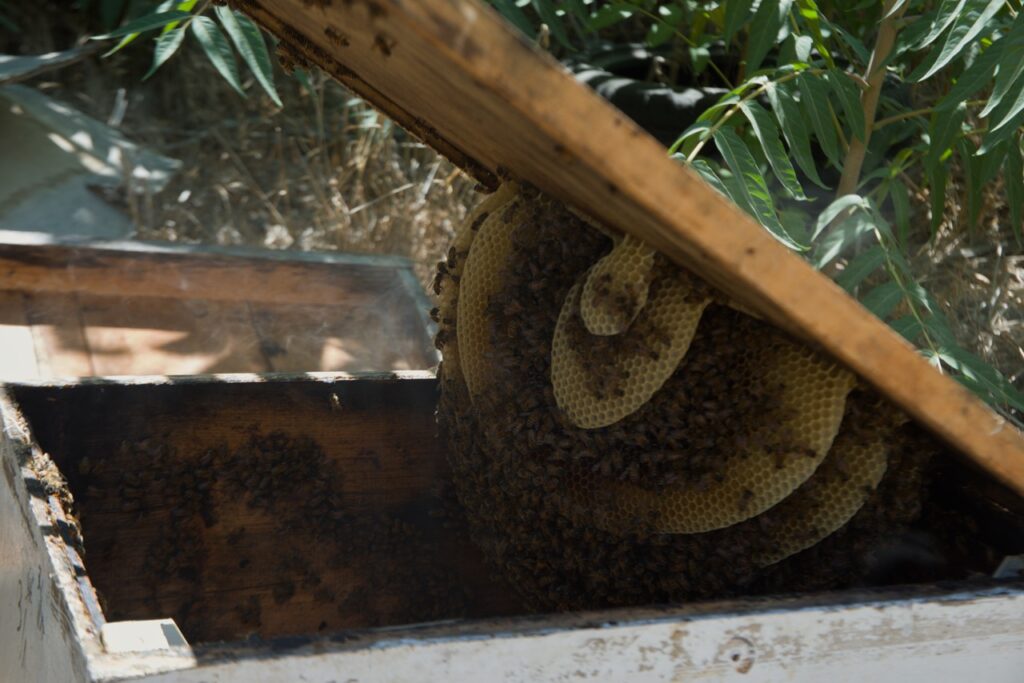
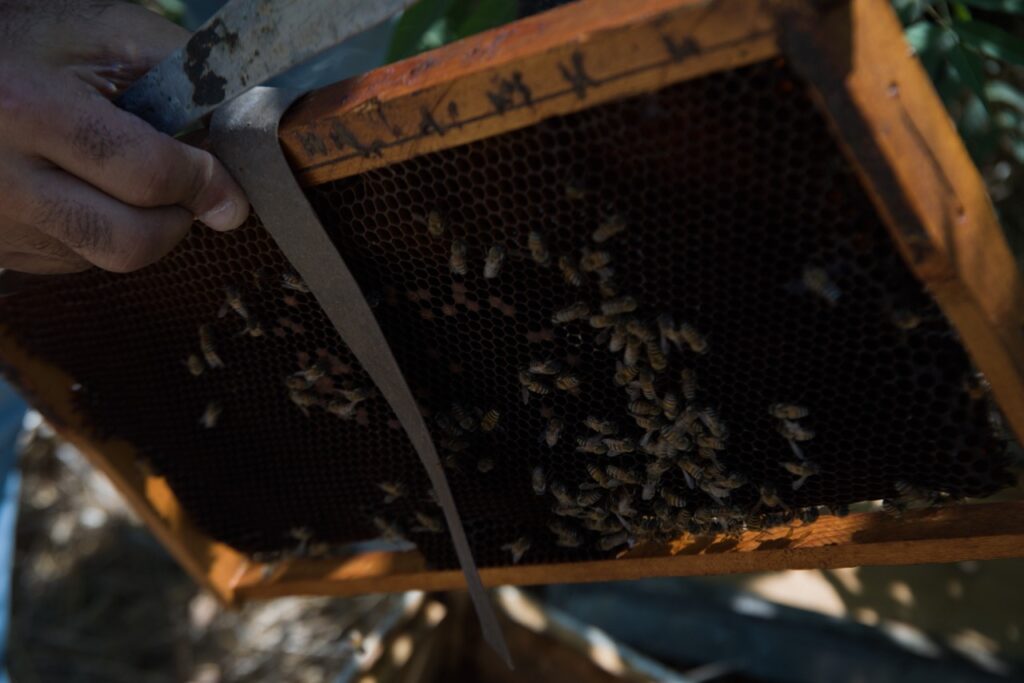
A hive community
Kwais is fairly new to the beekeeping scene.
After he spent much of his life in Africa, he returned in 2018, only for the devastating economic crisis to come the following year. Kwais, like so many others in Lebanon, lost most of his money.
Unsure what to do, he sat under a tree in his garden at home in Nabatiyeh one morning when a bee flew around him and landed on the same tree. The bee did not harm him or even bother him, but, nonetheless, he was wary of it and got up, leaving it where it was. Later that evening, when he came back, the bee was still there. He caught it and put it in a brood box. His fascination with bees had begun.
Over the next year, he found someone to teach him the fundamentals of beekeeping. Still, he was not satisfied. Kwais was a perfectionist and he wanted to know everything there was to know about bees and beekeeping.
He began researching bees on his own, getting down to the most minute detail so that he would know what to do in different circumstances.
“It became my work. When I slept at night, I would dream of the queen bees,” Kwais recalled with a chuckle. “I began thinking like a bee.”
Eventually, he learned from another beekeeper that there was a WhatsApp group for beekeepers in Lebanon, to which he was soon added. This, however, gave Kwais pause.
Why not have groups and centers like this throughout Lebanon so that every beekeeper and aspiring beekeeper would have a resource to do their work correctly?
Not long after, Kwais started a group to do just that.
By the time the wars started in 2023 and 2026, he had established centers in 156 villages throughout Lebanon where he provided free assistance and answered questions. It was not about the money or the honey for him.
“I help them to work correctly – it doesn’t matter when it comes to honey – because when nature is doing well and the bees are good, then everything benefits from it,” he stated.
The wars between Hezbollah and Israel sought to upend this natural balance.
When the latest one began on March 2, Kwais was at home in the garden speaking with his brother on a video call. He had heard about the six rockets that were launched from south Lebanon at Israel, but, at the time, he thought little of it. He was sure it was some Palestinian group that fired them and little would come of it.
As he was showing his brother the main road leading out of Nabatiyeh, filled with residents fleeing the town out of fear of what would come next, his brother told him that it was Hezbollah that fired the rockets. Still skeptical, Kwais turned on the TV, which confirmed what his brother had told him. At 5 a.m., Kwais left with his wife and children, using the roads inside the valley in the hopes of avoiding the congestion on the main coastal road.
Even displaced by war and under the threat of death, Kwais continued to return to Nabatiyeh every few days. When the ceasefire was announced, he returned to his home and stayed there.
Prior to the start of the war, he had moved his 125 hives to Mayfadoun, a village south of Nabatiyeh, to put them on a hilltop.
“In the summer, you put the bees in a place where there are trees because there is more sun. In the winter, you want to put them in a place where there is a lot of sun because it is cold,” he explained. “So, what do I do? I take all of my bees from the trees and put them in Mayfadoun on top of a mountain so the sun hits them and the sun helps them in the winter by keeping them warm.”
By the time a ceasefire was reached, it was well into summer and he needed to check on his bees to make sure that nothing happened to them. Since Israel was still occupying villages near Mayfadoun, Kwais needed to request permission through the ceasefire “mechanism” so that, if given, it would mean Israel would not target him if he went to the hilltop. Permission never came, but he could not sit around waiting and got in his car to go to his bees.
Looking back on it, he recognized what he did could be seen as insane, especially since 28 beekeepers have been killed since the start of this recent war and another 72 in the previous one.
“It all comes down to luck. They haven’t killed me but maybe they will,” Kwais said.
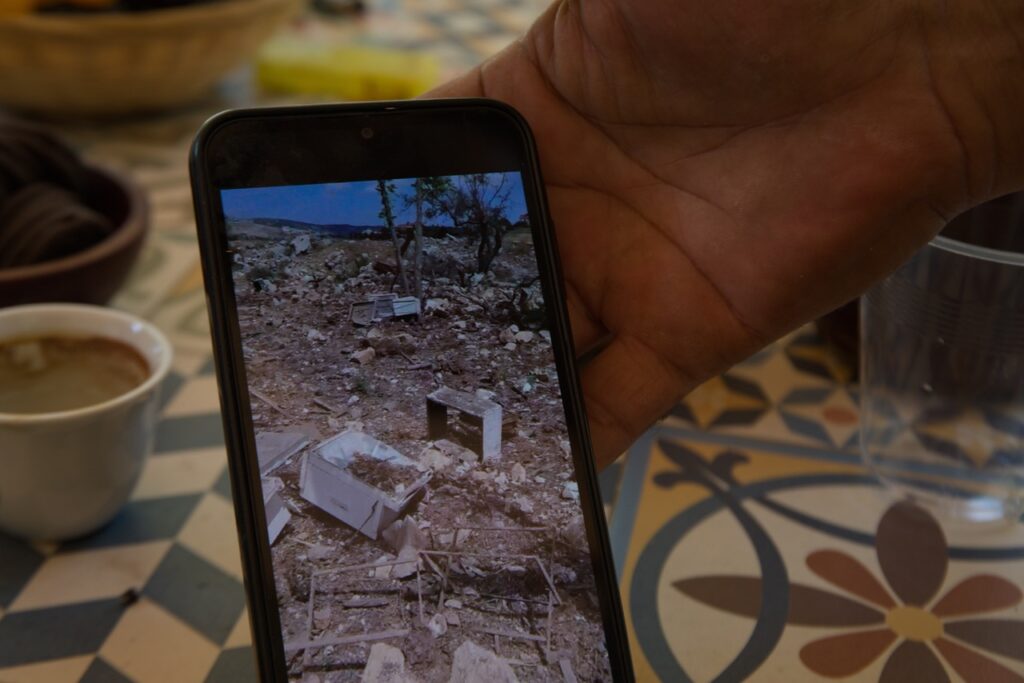
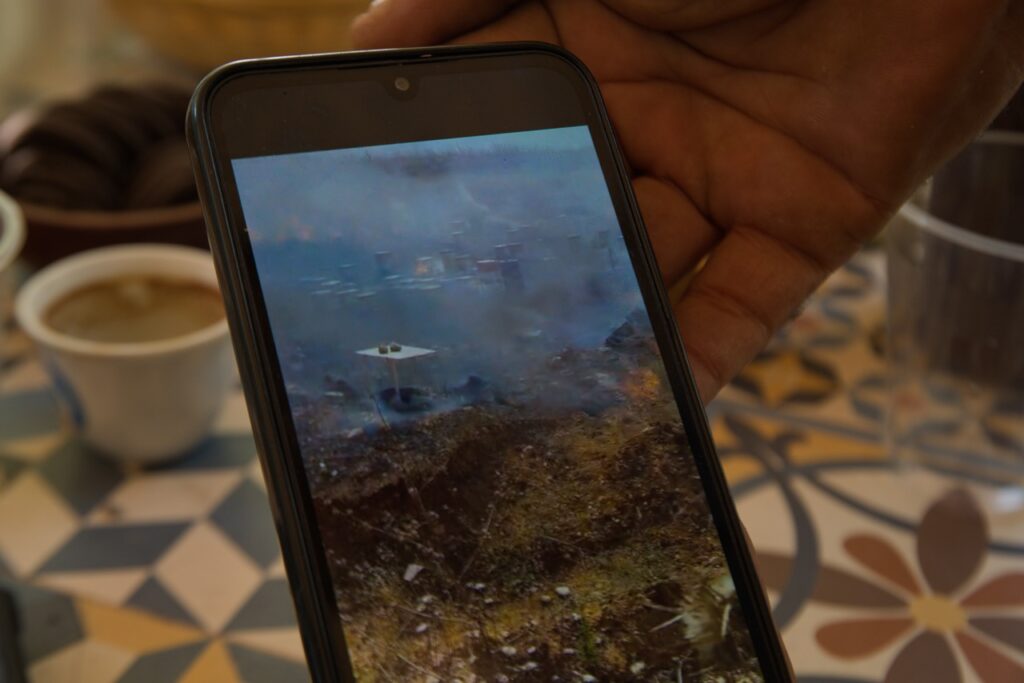
On the way there, he knew that some of his bees would likely have died, but, he believed there should still be around 100 hives or so left. What he discovered shook him to his core. Almost all of the bees were dead.
Kwais opened the tops of the hives and looked inside, finding piles of rigid bee corpses. Without any food, they had starved to death.
He gathered the surviving 25 hives and brought them back to Nabatiyeh.
Kwais was not alone in his experience. A colleague of his, Ibrahim Ayoub, had 140 hives before the war, but they were all destroyed by Israel.
By Kwais’s estimates, there were probably around 200,000 beehives in south Lebanon before the war started. Current figures indicate around 35,000 have been destroyed so far but Kwais believes that number is likely higher.
“We are saying 35,000 hives just like that, but if we went on the ground tomorrow from village to village, it’s going to be a lot more than that,” he stated, a bitter edge to his voice.
There was zero doubt in Kwais’s mind. Israel was deliberately targeting beehives throughout the south, given the extensive use of white phosphorus and incendiary bombs.
“They know,” he said.
Poisoning the earth
Kwais is not alone in his assessment of what Israel is doing in south Lebanon.
For nearly three years, Dr Hicham Younes, founder of the environmental group Green Southerners, has helped document Israel’s actions pertaining to the environment in the south. In his eyes, it was clear that what Israel is doing is systematic and intentional.
“We’ve been observing a kind of pattern. It started with the beginning of the aggression in October 2023,” Younes told Beirut Today. “We noticed that with the beginning of our documentation, like a different, unprecedented scale and intensity of the use of white phosphorus and, also, incendiary munitions, even in the broad daylight. Clearly, there was an intention from the very beginning.”
Israel has insisted that its use of things like white phosphorus is solely for the purpose of targeting Hezbollah and in the defense of its troops. Younes finds such notions inherently disingenuous given the scale and intensity with which the Israeli military has used white phosphorus.
“It’s not like an isolated incident here and there for what has been allegedly said, like military infrastructure and whatsoever, because we noticed that even that continued after the Israeli forces occupied the areas,” Younes explained.
The use of munitions, such as white phosphorus, has legal uses under international law. Militaries can use it to hide troop movements, to illuminate areas at night and highlight enemy positions and equipment. Rights groups like Amnesty International and Human Rights Watch have argued that Israel’s use of white phosphorus goes against international law.
Beyond the use of white phosphorus, Lebanon has also accused Israel of spraying chemicals like glyphosate in south Lebanon. Glyphosate is an herbicide that kills plants when they absorb it through their leaves and stems, transporting the chemical to their roots, killing them in roughly two to three weeks.
Israel’s use of chemicals in the environment in south Lebanon also predated the start of the war in March, with Kwais noting that they were used in the border region, killing the plants and bees in the area.
“What is the need for glyphosate in an area that was, at the time, already cleared and had been subjected to the use of white phosphorus? What is the need for using glyphosate at such a high concentration, when even under normal circumstances this herbicide should be used with restrictions?” Younes questioned.
“It is an attempt to transform the area into a dead zone. This is what we are seeing happening every day. You occupy a village and still continue destroying every single standing home while, at the same time, uprooting trees and destroying what remains of the landscape,” he added.
Outside of the destruction of greenery in the south, the rivers that run through the region like veins have also been affected.
On Aug. 12, the Litani River Authority, the governmental body that administers the Litani River in south Lebanon, said there was an increase in turbidity of the water in the Litani due to Israeli military activity in the Beaufort Castle and Zawtar areas.
The issue, though, goes well beyond the color of the water.
“An ecosystem is complex. It doesn’t work in a straightforward way; it’s a network, and the effects cascade through it. This has been systematically destroyed, factor by factor,” Younes stated. “You destroy trees; you contaminate the soil and streams; and then you have everyday military activity, with the constant movement of heavy military machinery across an ecologically sensitive and fragile area such as the Litani basin. Do you think all of this comes without an impact?”
All of this will not only have an impact on Lebanon. It will also have an environmental impact on northern Israeli regions, given the widespread destruction and the cascading effect it will have on the ecosystem, particularly in the border region.
In April, the Lebanese government accused Israel of carrying out “ecocide” in south Lebanon as part of a report published by the National Council for Scientific Research on the recovery of Lebanon’s ecosystem after the war.
In her forward for the report, Environment Minister Tamara el-Zein condemned the “scale and intentionality of the damage to forests, agricultural lands, marine ecosystems, water resources, and atmospheric quality,” arguing that such acts “must be recognized as an act of ecocide.”
“The environmental damage we face is not simply ecological – it is a matter of public health, food security, livelihoods, social fabric, and national resilience,” the minister added.
With, at the time of the report, 5,000 hectares of forest damaged, hundreds of trees uprooted, most notably the theft of 600 olive trees from Zawtar al-Sharqiyeh by Israeli forces, the soil and water contaminated by chemicals and heavy metals, Younes is not sure if “ecocide” is a strong enough word to describe what is happening to south Lebanon given the level of ecological degradation taking place.
“The impact, given the level of destruction, will be significant. But what is more challenging is the duration of this damage and the ecosystem’s capacity to recover. Based on what has been documented and the available evidence, we are talking about long-term impacts. It is not just about the scale of the damage, because at this level of destruction, we start talking about cascading effects,” he said.
To bloom once more
How long it would take to repair the damage caused to south Lebanon’s environment is impossible to determine.
While some samples have been taken and examined, they were a far cry from what is actually needed to determine the extent of the destruction wrought upon the region, especially since Israel continues to occupy a significant portion of the south.
Until Israel withdraws from Lebanon, something its military and political leadership has repeatedly stated their refusal to do, it is impossible to accurately determine the scale of the damage.
Through the work that Green Southerners has done to document the destruction of southern Lebanon’s environment, Younes, though hesitant to give any definitive timeframe, estimated that it would be years before the environment was simply stabilized and not even returned to the prosperous fields of tobacco, oranges and olives that once made up its valleys and coast.
“Even if they withdraw tomorrow, that won’t change the level of destruction already on the ground. Rehabilitation and recovery will require a lot of work,” he stated. “From what we have documented, recovery will be a long-term process. But even now, I cannot put a number of years on it. It differs from one area to another and depends on many factors, most importantly the ecosystem’s capacity to recover.”
Countless samples need to be taken in order to determine what even needs treatment and how best to carry out any recovery.
Given the scale and number of ecological challenges that await them, Younes was skeptical that the Lebanese government is capable of dealing with these issues, something that would only serve to compound the struggles of rehabilitating the environment.
There is little doubt that if Israel withdraws from Lebanon, the residents of the once-occupied villages would return to the places that they called home. It was their land and they would never give it up.
Even if there was nothing left but mounds of rubble, Kwais said, they would simply put up a tent and stay there.
The greenery, though, was just as important. Without it, the south would not be the south again.
“It needs to come back,” Kwais stated.
