

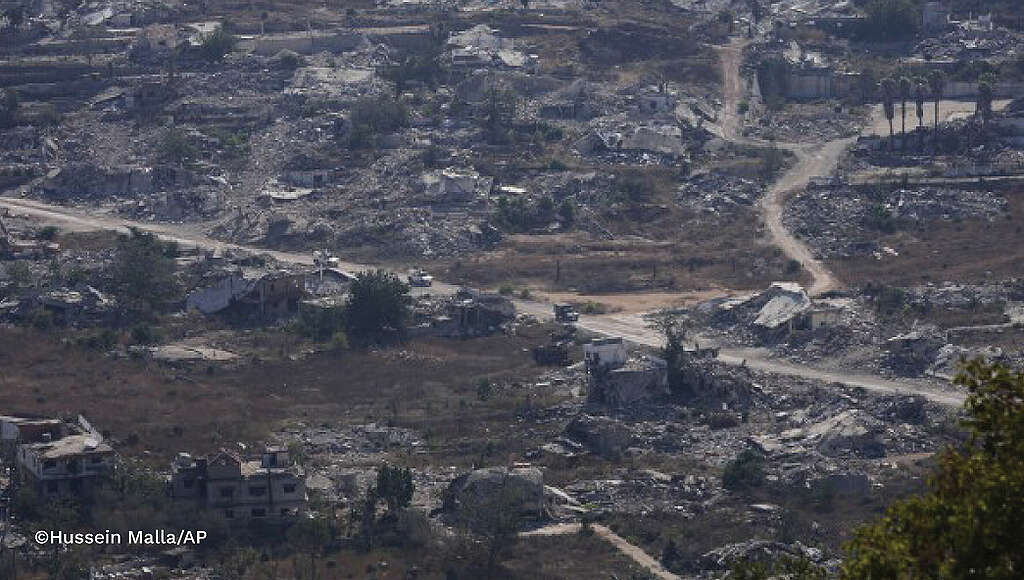
Lebanon’s security situation has seen little-to-no progress amid ongoing tripartite negotiations between Lebanon, Israel, and the United States. Almost a month after work began in the three pilot-zone towns of Froun, Srifa, and Zawtar al-Gharbiya, the next steps remain absent from public discussion.
Israeli attacks have continued at a high frequency in southern Lebanon, including a combination of strikes and the burning and destruction of civilian infrastructure. More than 350,000 people remained displaced as of August 17, according to the United Nations Office for the Coordination of Humanitarian Affairs’ (OCHA) latest Flash Update.
The Strategic Importance of Ali al-Taher
Among the most important and contested areas in ongoing military and strategic discussions is the hill of Ali al-Taher. The hill rises about 600 meters above sea level and overlooks Nabatieh and areas across the border, making it a highly valuable strategic location.
Hezbollah Member of Parliament Hassan Ezzeddine said that the group would not abandon the hill and “would face any act of aggression.”
As such, the fragility of ongoing political and security negotiations and diplomatic efforts becomes particularly clear when arrangements concern sensitive and strategically important zones, as opposed to areas where the components of the trilateral framework agreement are easier to implement.
The frequency of ongoing Israeli attacks, as well as Hezbollah’s decision to conduct counter-operations, remain important factors in security deliberations, with particular attention focused on the hill of Ali al-Taher. The lack of clarity surrounding the negotiations and Israel’s longstanding failure to respect ceasefire agreements are also major factors preventing displaced people from returning to their communities.
UNIFIL’s Fate Remains Unclear
The final mandate of the United Nations Interim Force in Lebanon (UNIFIL) concludes on December 31, 2026. The approaching date is raising numerous concerns about the aftermath of the mandate’s expiration and future security arrangements in southern Lebanon, particularly regarding peacekeeping and monitoring.
Lebanese state representatives, including President Joseph Aoun, have been pushing to extend UNIFIL’s mandate in the country. However, other alternatives are also under discussion, including the deployment of forces led by other countries.
