

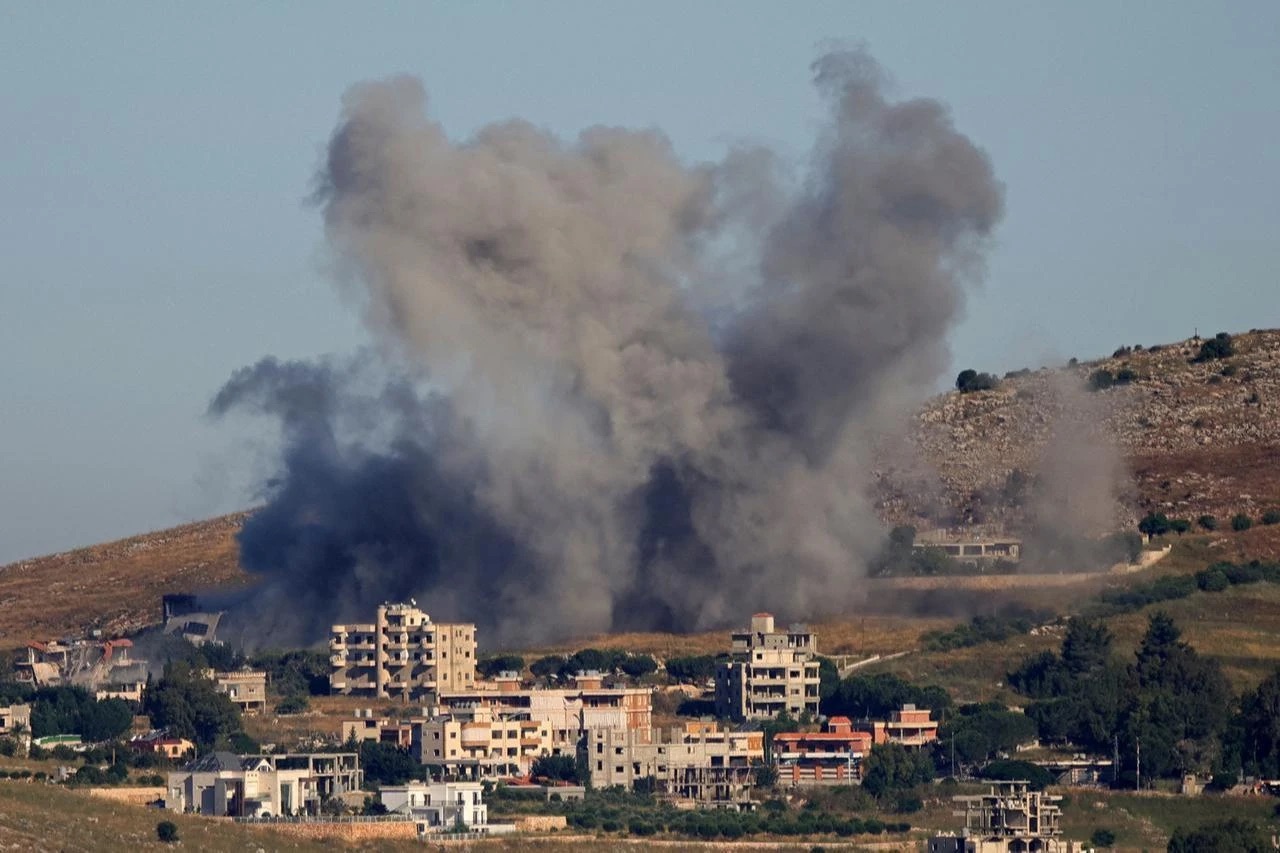
The seventh round of United States-mediated talks in Rome between the Lebanese and Israeli delegations began this week. The talks are taking place amid a renewed escalation in fighting in southern Lebanon and the Israeli army’s resumption of forced displacement orders.
The Talks in Rome
The seventh round of talks is expected to include high-level officials from Lebanon and Israel, including ambassadors and experts from the Lebanese side and political and military officials from the Israeli side.
Among the major items on the agenda is the expansion of pilot zone operations. The latest operations included the towns of Froun, Srifa, and Zawtar el-Gharbiyyeh. Al Jazeera reported that the Lebanese army is bringing maps and documents detailing its deployment in Zawtar el-Gharbiyyeh.
In the seventh round, the towns of Bint Jbeil and Khiam are reportedly being considered for new pilot zone operations. It remains to be seen whether one or both will be included. This would depend on the talks in Rome and ongoing military developments in southern Lebanon.
Attacks and Forced Displacement Orders in South Lebanon
On Wednesday, the Israeli army issued its first forced displacement order since the start of negotiations. The order targeted the village of al-Mansouri in southern Lebanon and instructed residents to move 1,000 metres north of the village.
Israeli attacks have continued over the past few weeks, including shelling in al-Mansouri, the demolition of houses in Zawtar el-Sharqiyyeh, and drone and air strikes across multiple areas.
Israeli forces have also continued using internationally prohibited chemicals in southern Lebanon. They set fire to olive and pine groves in the village of Yaroun in the Bint Jbeil district, destroying approximately 120 hectares of forest land, according to L’Orient Today.
Israel’s history of violating ceasefire agreements, not only in Lebanon but also in other areas, including Gaza and the West Bank, as well as Hezbollah’s refusal to acknowledge the components of the agreement represent major hurdles to the sustainable and progressive implementation of the framework agreement.
The latest round of pilot zone arrangements also included areas where there was no established Israeli presence. The success of pilot zone operations in Lebanon would depend on how developments unfold in strategically significant areas. Regional escalations could also have a major impact on the situation in Lebanon, as the two tracks remain vaguely connected.
