

Israel’s Strike on Beirut’s Southern Suburbs Exposes a Failing Superpower
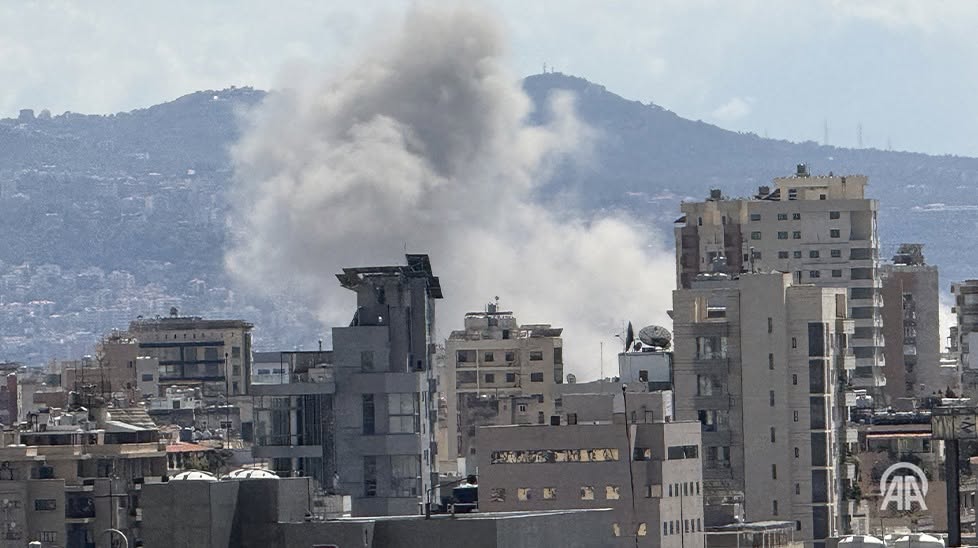
When Israeli jets struck Beirut’s southern suburbs during what Washington was still selling as a ceasefire, it was not just another line added to a long violations list. It cut through the diplomatic spin and made one fact impossible to ignore: the United States has far less control over this war than it keeps claiming.
According to a Reuters report, the strike came after what officials described as “intense consultations” with the Trump administration – not in defiance of Washington, but effectively under its watch. It was also the first attack this close to Beirut in weeks, a calculated escalation at the very moment American officials were selling the idea of de-escalation to regional and international audiences.
A mediator that arms one side
Washington wants to cast itself as the indispensable mediator – the only actor capable of brokering truces, arranging pauses, and stitching together “understandings” that keep a regional war at bay. But mediation is not a branding exercise; it requires distance from the conflict and leverage over the parties. The United States has neither.
For years, Israel has been at the top of the list when it comes to American military aid, getting everything from warplanes to guided bombs that have shown up in Gaza, Syria, and Lebanon. So when those very weapons hit areas around Beirut in the middle of a “ceasefire” announced by Washington, the U.S. looks less like a broker and more like the main sponsor of the attack.
The collapsing fiction of “controlled escalation”
American officials have spent months insisting they are “working around the clock” to prevent a broader regional war. They speak the language of “containment” and “de-escalation,” while quietly greenlighting additional arms shipments and defending Israel at international forums.
But controlled escalation is a fiction when the ally you claim to restrain keeps opening new fronts or pushing existing ones to the brink. Striking near Beirut during a supposed ceasefire is not a technical breach; it is a political message that the rules are flexible when it comes to Israel’s security doctrine, and that U.S. “red lines” are more like suggestions.
Washington’s credibility problem
Every ceasefire or “understanding” that carries an American signature now comes pre-loaded with regional skepticism. Lebanese communities living under the constant risk of bombardment have little reason to believe in U.S.-sponsored calm when just days or weeks later, jets roar overhead and explosions shake the skyline.
The message to civilians in Beirut’s southern suburbs and beyond is brutally clear: American diplomacy is reversible, fragile, and ultimately subordinate to Israel’s security calculations. When the next agreement is announced – whether over Gaza, Lebanon, or the wider front stretching toward the Red Sea – local populations will remember not the press conferences, but the craters.
A superpower without real leverage
The United States wants to be seen as the only actor capable of “managing” Israel, but the events on the ground suggest the opposite. Each unpunished escalation advertises Washington’s unwillingness – or inability – to impose meaningful consequences on its ally.
Leverage is measured not by how often officials talk to each other, but by whether policy changes after those talks. If intensive discussions with the Trump administration precede a strike near Beirut rather than prevent it, then Washington is not restraining Israel’s war – it is merely being informed of its next steps.
The cost to regional diplomacy
This contradiction has real strategic costs. Arab states asked to support U.S.-backed frameworks – from security arrangements to reconstruction plans – quietly factor in Washington’s track record. Why invest political capital in a deal that can be bombed days later with no accountability for the violator?
In Lebanon, the memories of the 2006 war and later Israeli attacks are still close to the surface. Each new strike launched during what Washington calls a ceasefire chips away at the little confidence that remains in U.S. diplomacy, and the more the U.S. protects Israel politically and with weapons while talking about “stability,” the more it pushes local societies away.
Normalizing the abnormal
There is also a dangerous normalization at play. Strikes near a capital city during a ceasefire are treated as “limited” or “surgical,” as if geography and timing are just technical details in a conflict-management algorithm. But for residents of Beirut’s southern suburbs, there is nothing limited about living under permanent threat, even during periods Washington labels as calm.
By framing such incidents as manageable deviations rather than fundamental breaches, U.S. officials help shift the baseline of what is considered “acceptable” wartime behavior. The bar keeps moving: first it is Gaza, then southern Lebanon, then the outskirts of Beirut – always with assurances that a wider war is being prevented, even as the map of the conflict expands.
The illusion of “both arsonist and firefighter”
In public, Washington likes the image of being both indispensable and responsible – the firefighter rushing to contain a blaze. But when it continues to supply fuel and protect the arsonist from consequences, that metaphor collapses. You cannot extinguish a fire while guarding the matchbox.
The hit near Beirut, carried out under a ceasefire stamped with Washington’s name, was hardly an accident. It reflects a broader habit: the U.S. plays Israel’s chief sponsor and then turns around and presents itself as the referee. That kind of contradiction doesn’t only spoil a single ceasefire; it eats away at the credibility of U.S.-run “security arrangements” across the region.
A region moving beyond American guarantees
The more the United States proves unable or unwilling to restrain its closest ally, the more regional actors will look for alternatives – whether through their own deterrent capacities, new alliances, or simply a hardened assumption that they are on their own. For Lebanon, this may mean deeper entrenchment of non-state actors who argue, with growing credibility, that no external guarantor can be trusted.
For Washington, the cost will be measured not only in damaged reputation, but in a shrinking ability to shape outcomes in a region it still claims to stabilize. A ceasefire that can be shattered on the outskirts of Beirut with advance notice to U.S. officials is not a ceasefire; it is a diplomatic performance, one that the people living under the bombs have long stopped applauding.
