

Lebanon and Israel have went through another round of deliberations via United States (US) mediation, with a statement announced Thursday dawn. The fourth high-level trilateral meeting took place between June 2 and 3, and both parties agreed to the implementation of a ceasefire agreement.
The agreement was considered contingent on the cessation of Hezbollah’s “fire” and the evacuation of the group’s operatives south of the Litani river.
The agreement includes the establishment of pilot zones, under the guidance of the US, where the Lebanese Army would take exclusive control of the areas without any non-armed group military presence. Both parties also expressed that they would continue negotiations to resolve ongoing issues and work toward a comprehensive agreement.
Key agreed-upon steps include the dismantling of non-state armed groups, the prevention of their re-emergence, and the condemnation of Iran’s attacks across the region, with the US emphasizing that its mediated processes should be the only track for ending hostilities.
The US also mentioned its intent to support the Lebanese Army to exercise sovereignty throughout Lebanese territory, with Lebanon also committing to enhancing the capacity of the army.
Both parties are set to reconvene for the political and security tracks during the week of June 22, with the aim of reaching a comprehensive agreement.
The implementation of the agreement, based on the post-meeting statement, suggests a high level of focus on intra-Lebanese issues, with progress contingent on domestic level developments.
The Reaction of Different Parties
The first pilot zones, during the initial stage, are set to be Western and Eastern Zawtar and Beaufort (ash-Shaqif) Castle as part of an experimental stage. Lebanese President Joseph Aoun emphasized that the agreement reached is “the last chance”, after which each party would “bear its own responsibilities”.
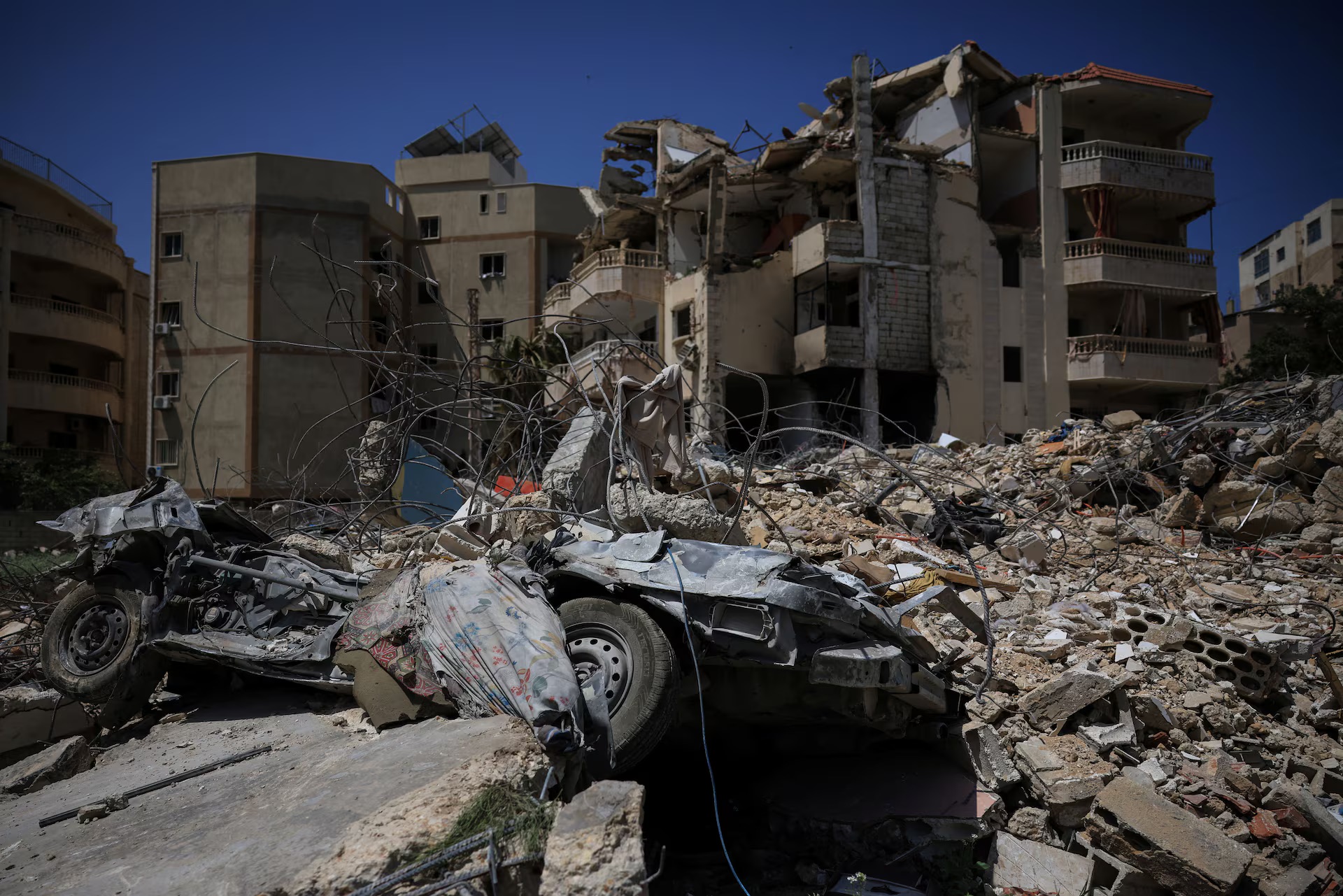
Throughout the day, Israeli attacks resumed, with 32 strikes reported by Megaphone on a number of towns. Five people were killed in one strike. One person was killed and another was wounded in a strike on a motorcycle in Maaroub, while three others were wounded in a strike on a car on the Zefta-Kfaroue road.
Israeli drones, meanwhile, continued hovering over Beirut, and the Israeli army issued additional forced displacement orders to residents in southern Lebanon, threatening them and instructing them to move north of the Litani river.
Israeli Defense Minister Israel Katz stated that the Israeli army would continue its operations in southern Lebanon.
In a speech during afternoon hours, Hezbollah Secretary General Naim Kassem described the negotiations as “absurd, humiliating and disgraceful for Lebanon”. Kassem also highlighted that the group made no commitments to anyone “not to resist aggression or respond to it”.
The Iranian Revolutionary Guard Corps, from its part, said that “calm won’t be achieved in the region if Zionists don’t withdraw from Lebanese lands”. It also said that US interventions “under the pretext of establishing peace did not result in anything other than more crimes and genocide in Lebanon”.
As a result, Lebanon remains stuck in a difficult impasse. Deciding factors depend on how Israeli attacks and ongoing occupation or withdrawal move forward, the amount of support provided to Lebanese institutions and their receptivity of such support, and the steps taken between local actors in Lebanon, including the Lebanese Army and other security institutions, Hezbollah, and other political actors, as well as the firmness of such steps.
