

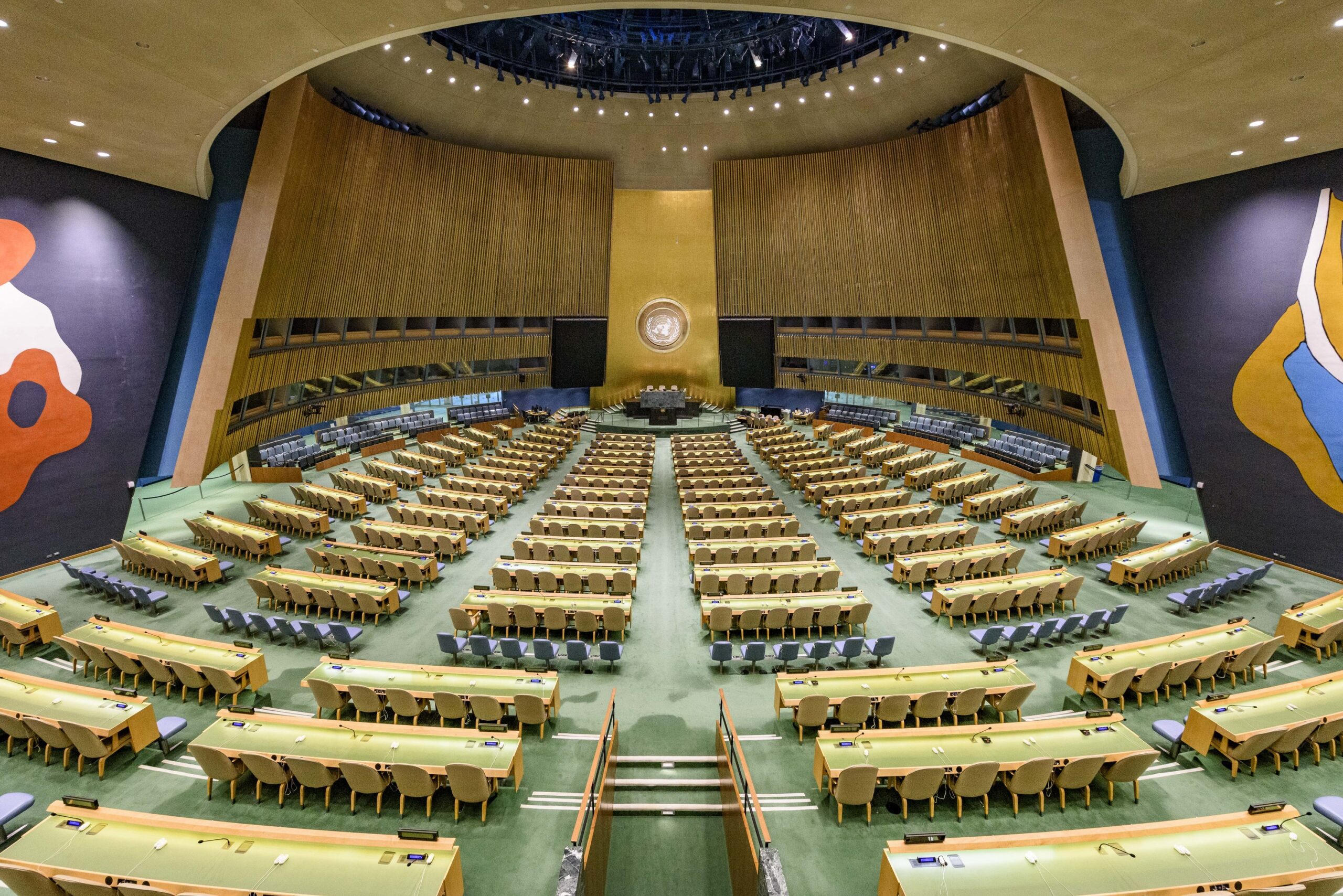
The United Nations General Assembly is meeting today to elect the President of its 81st session for a one-year mandate between September 2026 and September 2027. The Assembly is also electing the Vice-President, as well as the chairs of its six main committees.
The UN General Assembly is one of the main avenues of global multilateral action, through which states contribute to shaping collective efforts on peace, security, development, humanitarian, and climate issues, among others.
This Year’s Election
Two countries are contesting the Assembly’s presidency, namely Bangladesh and Cyprus. Bangladesh’s candidate is the country’s current foreign minister, Halilur Rahman. Meanwhile, Cypriot Ambassador to the United Nations Andreas Kakouris is the candidate representing the Mediterranean nation.
The President of the UN General Assembly is usually elected by acclamation, especially since the presidency rotates annually among the five global regional groups and member states of the designated region typically agree on a single consensus candidate. However, this year’s election proceeded to a formal vote due to the presence of more than one candidate. The winner requires a simple majority to secure the position.
A Security-Heavy Mandate
The election takes place amid a period of global instability and prolonged wars across different continents. The new president will have to navigate severe security, war, peace, and peacebuilding deliberations, all while addressing major climate and economic crises.
Just yesterday, the General Assembly met to discuss “Strengthening the Role of Mediation in the Peaceful Settlement of Disputes, Conflict Prevention and Resolution.”
According to New York University’s Center on International Cooperation, the Presidency’s office holds important procedural authority, including managing the Assembly’s schedule and overseeing key processes related to the agenda, rules of procedure, the appointment of co-facilitators to lead intergovernmental negotiations, thematic debates, and more.
The role of the Presidency, as well as that of multilateral institutions more broadly, has come under increased scrutiny given the lack of respect for international law demonstrated during the last several years of conflict, alongside systematic attacks on efforts to establish strong and enforceable international legal frameworks governing issues of security, war, peace, and development.
