The Union of Journalists in Lebanon reflects on Journalism day:
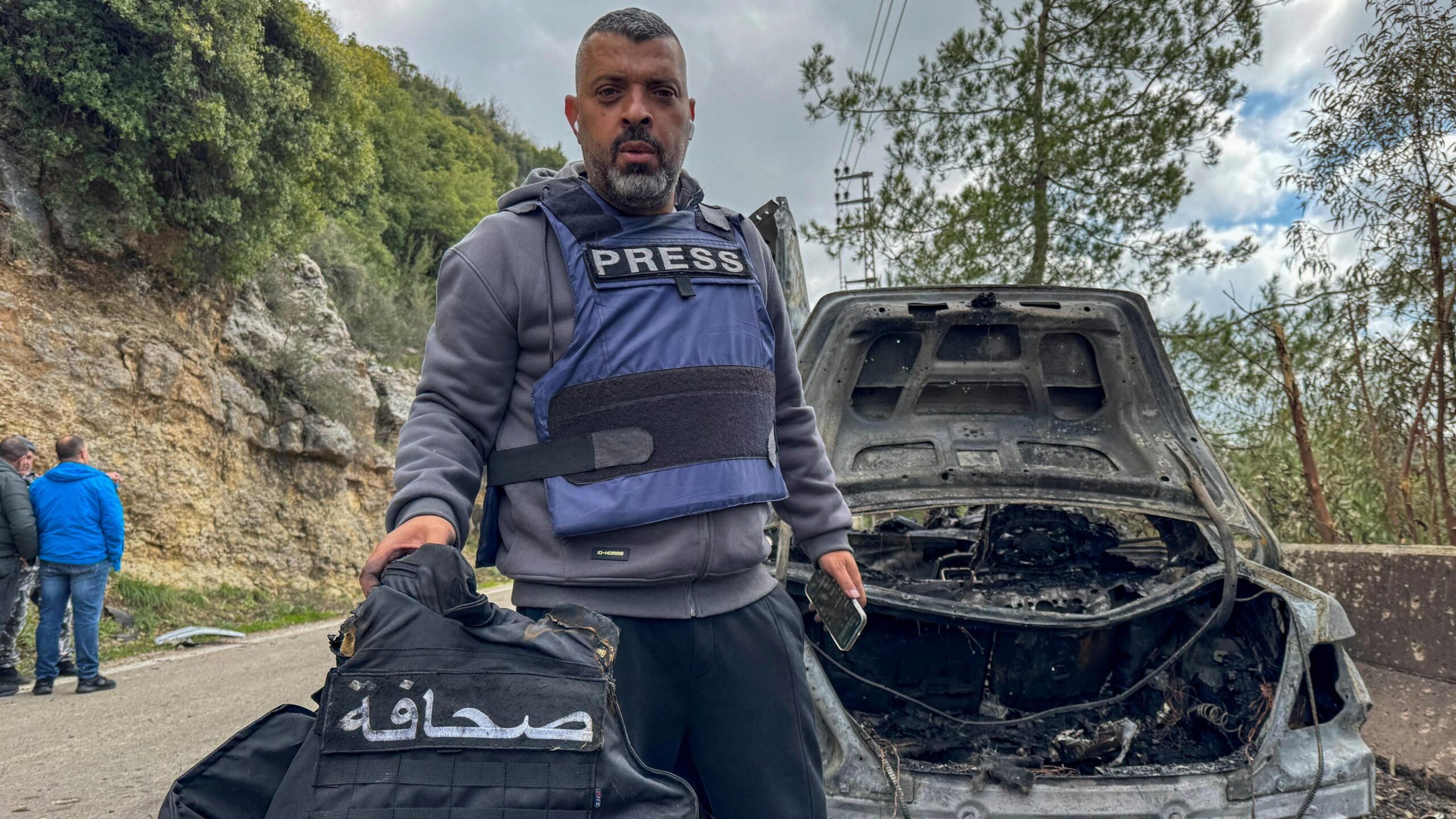
“Should I wear the press vest or not? Will I become a target if I wear it, or will it protect me?”: On World Press Freedom Day, our journalists are not okay.
World Press Freedom Day comes upon us in Lebanon while we are in a state of mourning. Our mourning for Ali Shoaib, Fatima, and Mohammad Fatouni had not yet ended before we began another mourning for Amal Khalil.
On the day Israel killed Ali, Fatima, and Mohammad, a colleague who was on a journalistic assignment and was about to put on her press vest when she heard the news, contacted us and asked: “Should I wear the vest or not? Will I become a target if I wear it, or will it protect me?” Her question summed up our situation in Lebanon today, and before us in Palestine: Does the press insignia protect us when Israel strips us of our journalistic status and turns us into targets?
We regret that World Press Freedom Day has arrived and our journalists are not okay; they feel endangered precisely because they are journalists.
We regret that this day has arrived when some of our journalists have been killed, and their killer remains at large. This impunity encourages further crimes against us. We regret that this day has arrived when some of our colleagues have suffered wounds that have not yet healed, the latest being our colleague Zainab Faraj.
We also regret that this day comes amid attempts to obstruct the reform of the media law, which would provide legal protection for journalists and guarantee the freedom of journalistic work.
We likewise regret the ongoing attempts to restrict journalistic work and prevent journalists from performing their duties, whether through continued illegal summonses based on their work, occasional verbal or physical attacks, preventing them from covering events, or imposing prior authorization requirements on them.
On this occasion, and based on all the above, we reiterate our demands with a louder voice:
1. Holding Israel Accountable for the Killing of Journalists
We once again call on the Lebanese state to act on the following levels:
- Centrally documenting the crimes.
- Opening judicial investigations into the crimes.
- Enacting a law that punishes war crimes.
- Requesting the formation of a fact-finding committee from the Human Rights Council.
- Granting jurisdiction to the International Criminal Court to investigate war crimes committed since October 8, 2023.
2. Media Law Reforms
We reiterate our shared demands with our partners in the Coalition for Freedoms in Lebanon:
- Abolishing the penal approach in defamation and libel cases, replacing it with civil provisions, and ensuring that any awarded compensation is strictly proportionate to the actual damage caused.
- Restricting criminalization to statements that amount to advocacy of hatred that constitutes incitement to discrimination, hostility, or violence.
- Guaranteeing the freedom of journalistic work and protecting journalists and their sources.
- Organizing the independent media commission, which will oversee the governance of the media sector, based on transparent criteria with the participation of civil society.
3. Internal Attacks Against Journalists
We renew our demand for all parties to:
- Respect the freedom of journalistic work.
- Ensure the safety of journalists.
- Facilitate their access to information and targeted sites.
- Refrain from harassing them while they perform their duties.
- Hold accountable anyone who attacks them.
On this day, the Union affirms that it will remain by the side of all journalists, supporting them and fiercely defending their rights. It will remain faithful to the blood of the martyrs of the press and the pain of its wounded, continuing on a path baptized in blood, pain, and sacrifice.
We want a media law:
- That protects our right to access information, and our right to expose any corrupt individual, regardless of their rank or status.
- That protects our sources of information, and enshrines our right not to appear before any security agency, because a journalist should only appear before the competent judiciary.
- That protects the freedom of our media work, and does not put journalists in prison.
- That does not criminalize opinion, and does not prosecute journalists before penal or exceptional courts.
- That does not restrict independent media institutions with politicized licenses, high fees, and heavy financial guarantees.
- That adopts self-regulation for media outlets, and reduces government interference and censorship.
- That protects our rights as independent journalists, and guarantees the freedom to unionize.
- That protects us on the ground so we can bring the picture to you.
