

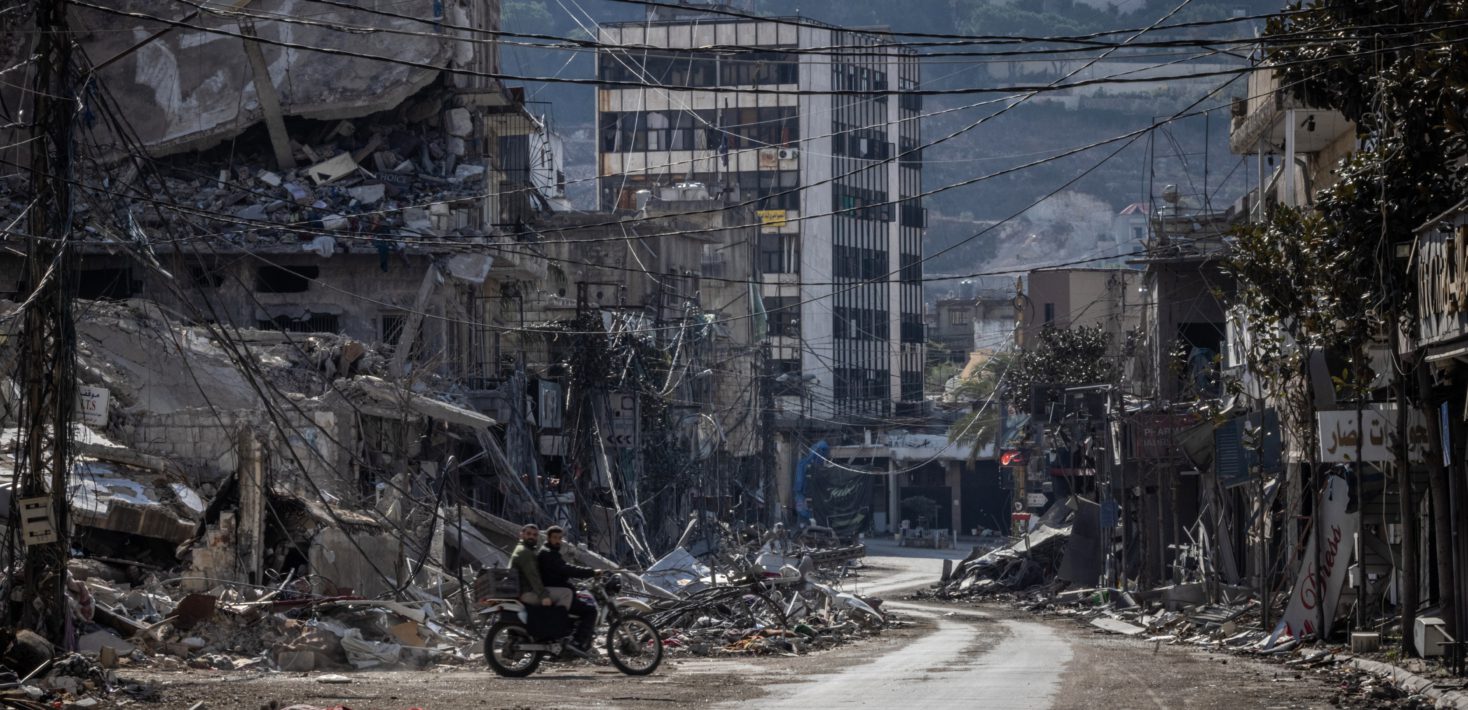
Lebanon’s Finance Minister, Yassine Jaber, told L’Orient Today that direct losses resulting from the current war are no less than three to four billion USD. Previously, a World Bank report in 2025 indicated that the previous round of all-out war cost Lebanon 14 billion USD in economic losses.
Jaber also noted that Lebanon’s government revenue for March 2026 fell by around 35–40%, while remittances from Lebanese abroad declined by more than five percent.
Cross-Sectoral Impacts
Israeli attacks have significantly affected Lebanon’s productive sectors, as well as the operations of vital infrastructure and services, including health, water, and transportation.
The Ministry of Agriculture published a report on April 3 highlighting that 22% of Lebanon’s agricultural land – equivalent to 49,564 hectares – has been affected by Israeli attacks.
The report also indicated that 17,000 farmers have been impacted, while over 76% have been displaced. In addition, the Israeli army’s forced displacement order targeting residents around the Masnaa crossing – Lebanon’s main land border crossing with Syria – has disrupted cross-border logistics and transportation.
Long-Term Impacts
These developments are likely to affect the Lebanese population’s immediate access to basic needs, as well as longer-term humanitarian and development efforts. The impacts on productive sectors such as agriculture are closely correlated with local self-sufficiency, food security, and overall well-being.
Lebanon’s political economy has long been described as rentier and austere, marked by continued trends of privatization and nepotistic dealmaking. These policymaking patterns had already placed the population’s access to basic needs in a precarious position, a situation that deteriorated significantly following the onset of the 2019 financial crisis.
Weak local production, the prioritization of exports over local self-sustenance, and the absence of robust, sustainable, and adequately funded public services and social protection systems have left the country’s poorest and most marginalized groups vulnerable to successive shocks. These extend beyond economic crises and wars to include climate-related challenges such as recurrent droughts, including what was described as “the worst drought on record” last year.
The ability of the population to access basic needs and ensure adequate levels of social protection will depend on the trajectory of political and security developments. This begins with whether Israeli forces will withdraw from or continue occupying land in southern Lebanon, and extends to how post-conflict recovery processes will be shaped.
Lebanon remains in urgent need of strengthened public service provision and social protection mechanisms, alongside political economy reforms that address deep inequalities between politico-financial elites and the country’s most vulnerable groups. This includes ensuring access to basic rights for the majority of the population, as well as enhancing productive sectors and establishing preventative, protective, promotive, and transformative social protection systems.
