

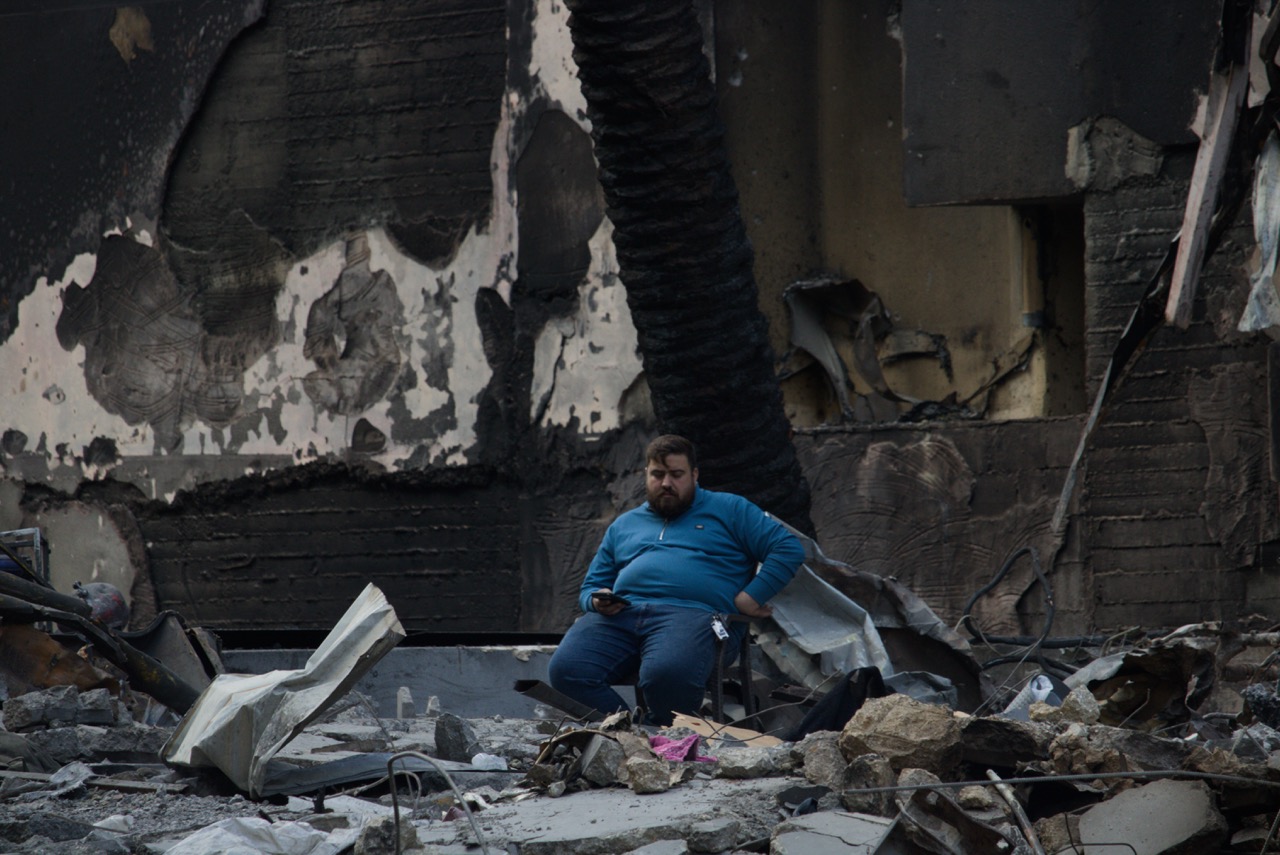
Amid a new war between Hezbollah and Israel, two Lebanons have seemingly emerged from the conflict: one under the constant threat of attack and another where life continues normally.
By: Nicholas Frakes
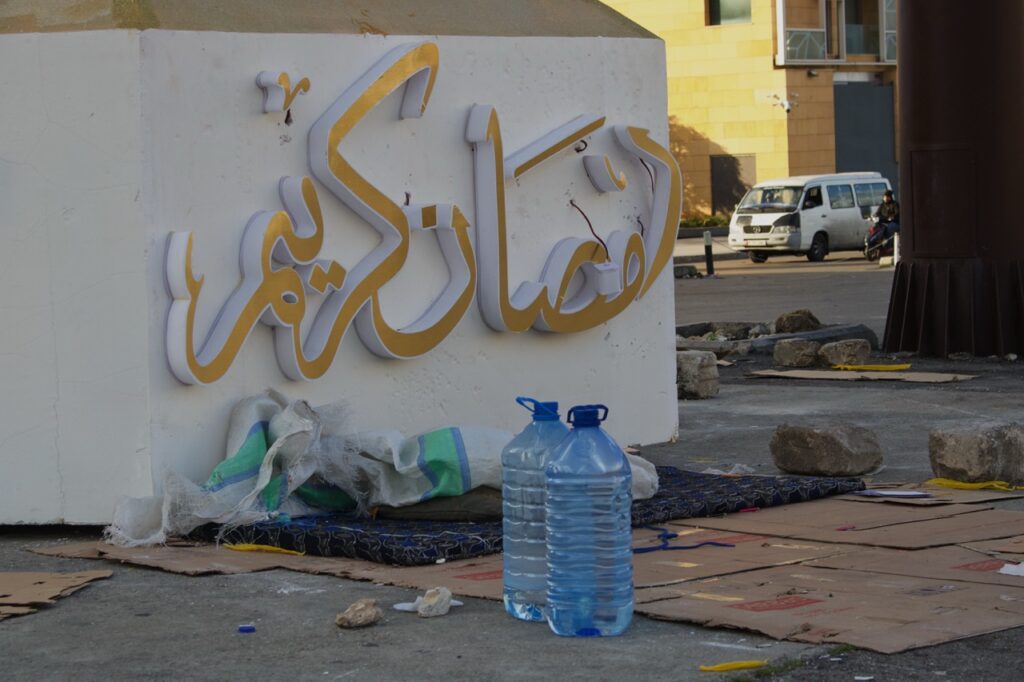
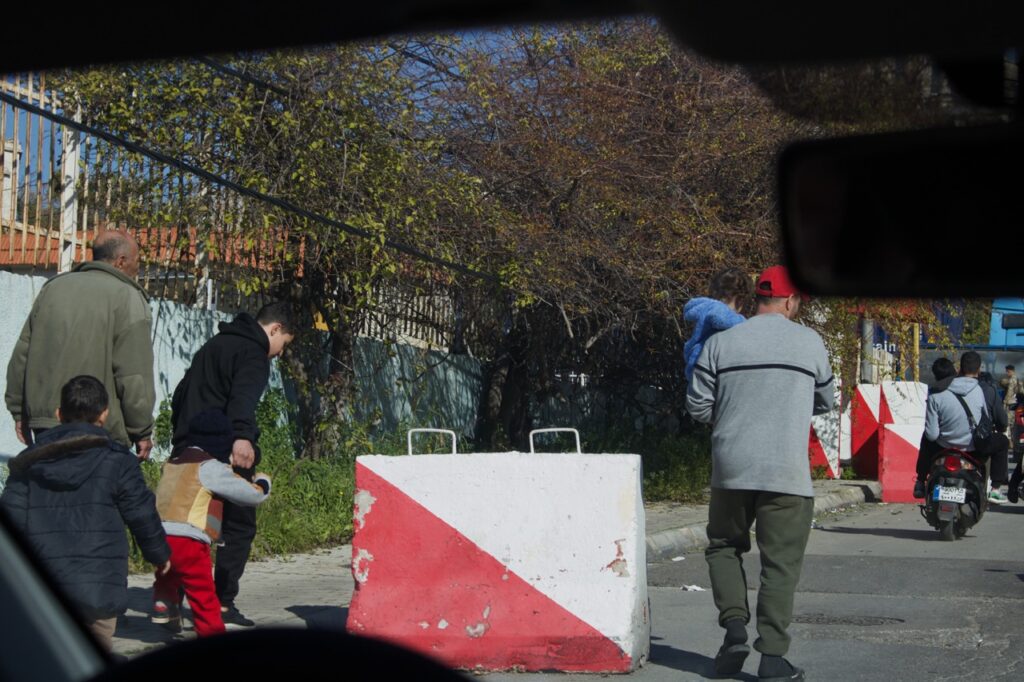
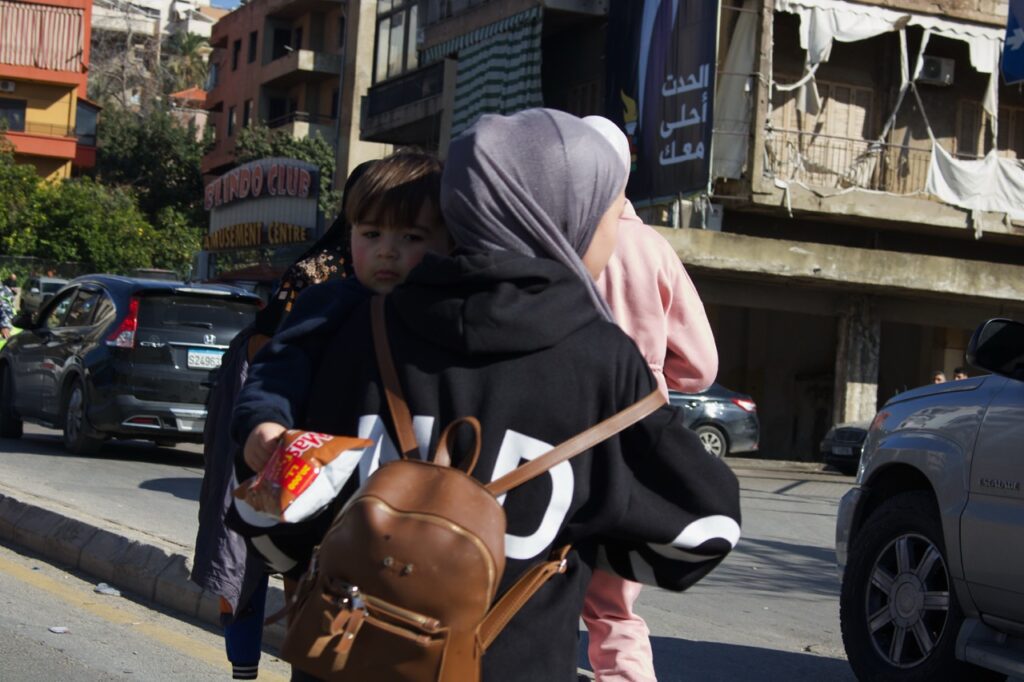
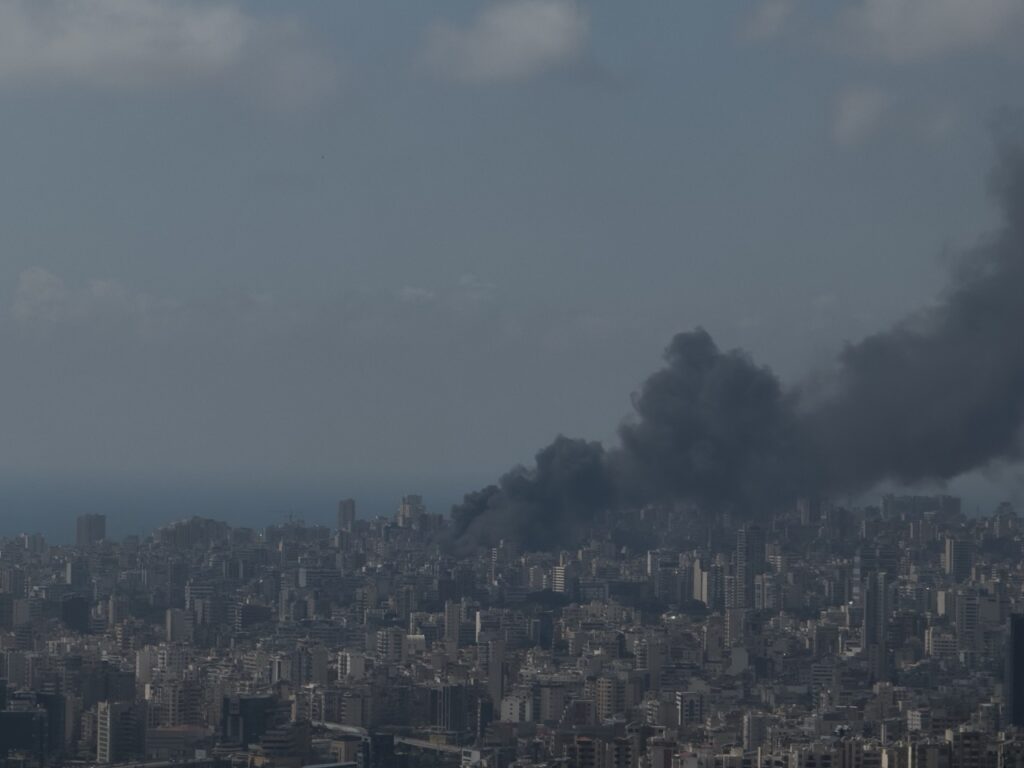
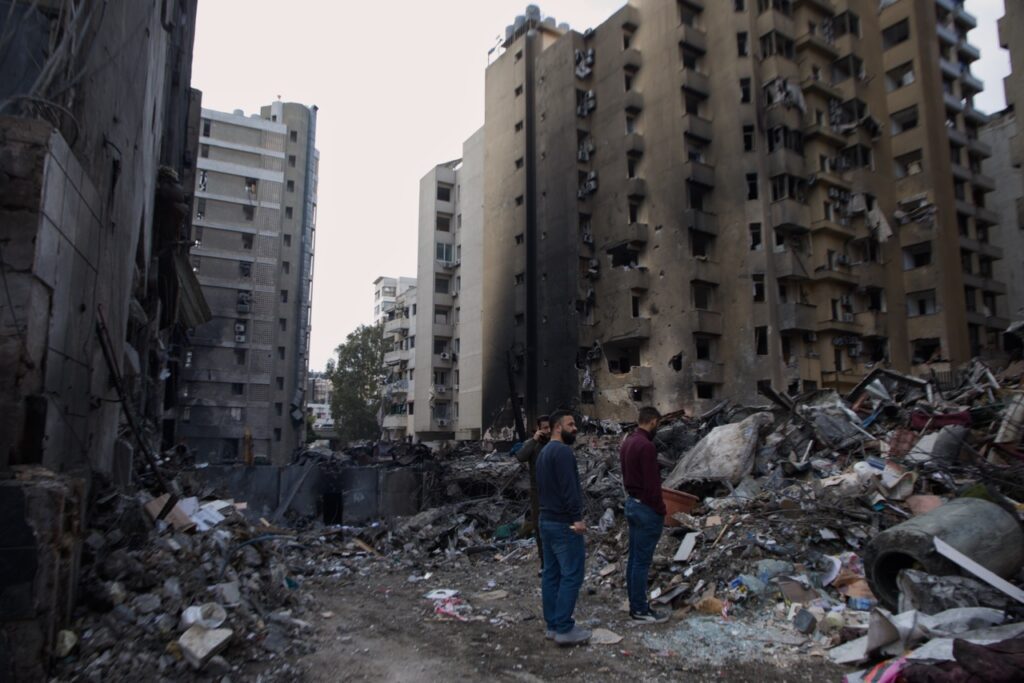
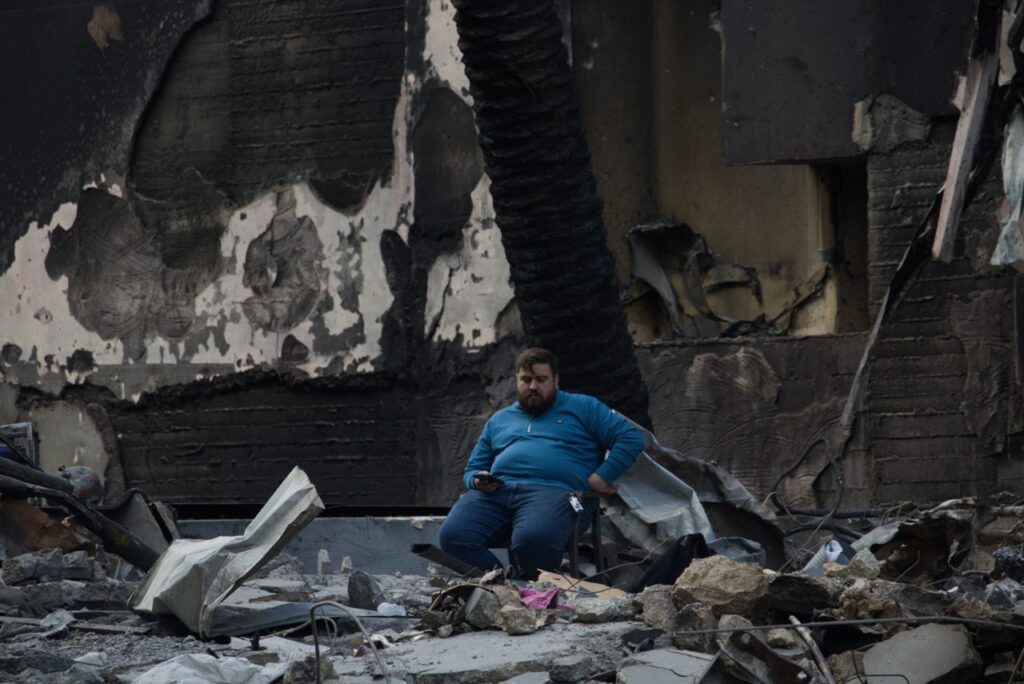
The skies over Beirut were filled with smoke and the streets of the Lebanese capital echoed and shook from the sheer intensity of the over 100 Israeli airstrikes that were carried out across the country in the span of 10 minutes on April 8, including densely populated residential areas in central Beirut and other governorates.
For the Lebanese living in areas under Israeli bombardment, “Black Wednesday,” as it has become known, yet again reinforced the idea that nowhere was safe and that, even when there was supposed to be a ceasefire, bombs could drop at any moment. The drones continuing to fly overhead and the displacement order issued the following day for all of Dahiyeh – Beirut’s southern suburbs – hammered that point home. Even though Dahiyeh was not bombed that day, the entire city braced itself for hours after the order was issued, preparing itself mentally and physically for the destruction that it was sure would soon come from the missiles fired by the roaring Israelis jets overhead.
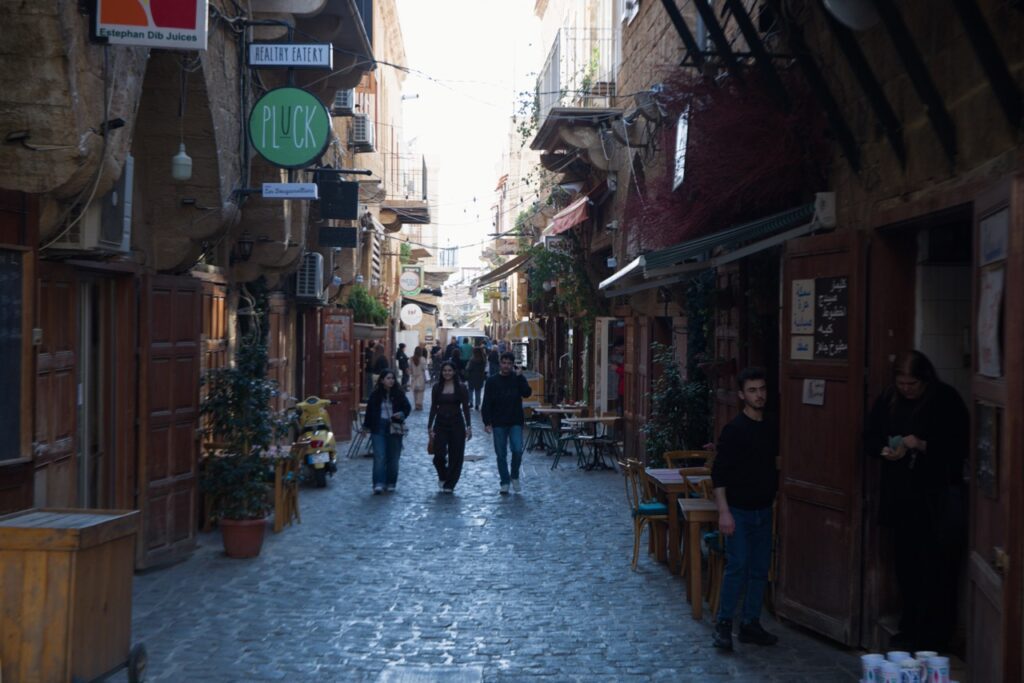
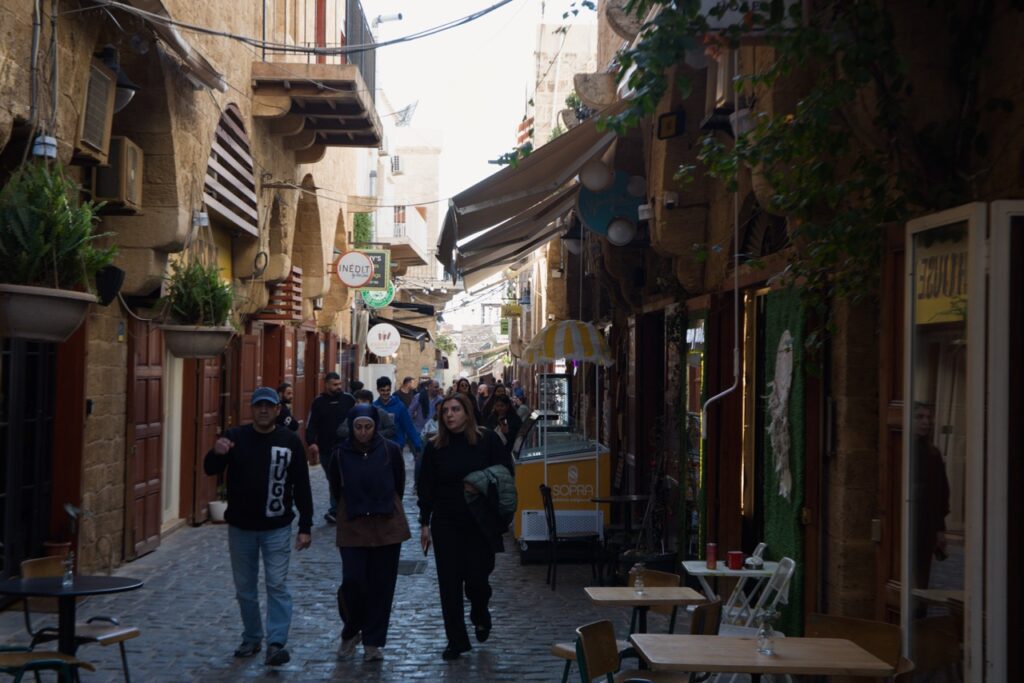
In Batroun, a town about an hour north of Beirut, there was a blue sky with very little cloud cover, allowing the warm sun to reflect majestically off the Mediterranean Sea next to it that, despite the cool breeze that calmly blew through its maze-like streets, promised those willing a chance at relaxing and forgetting about their troubles.
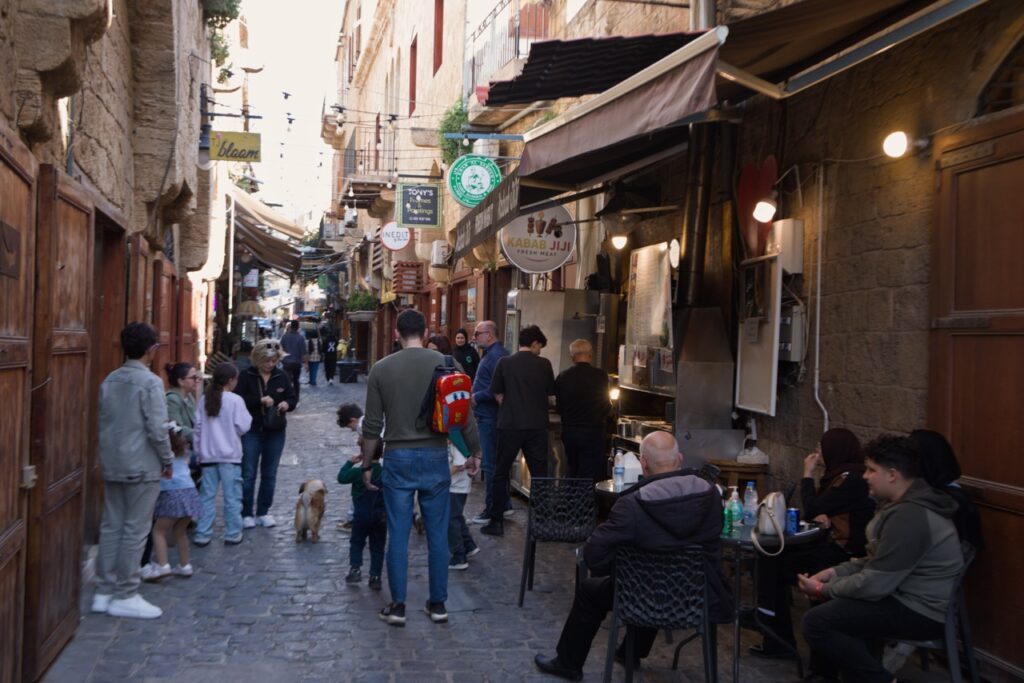
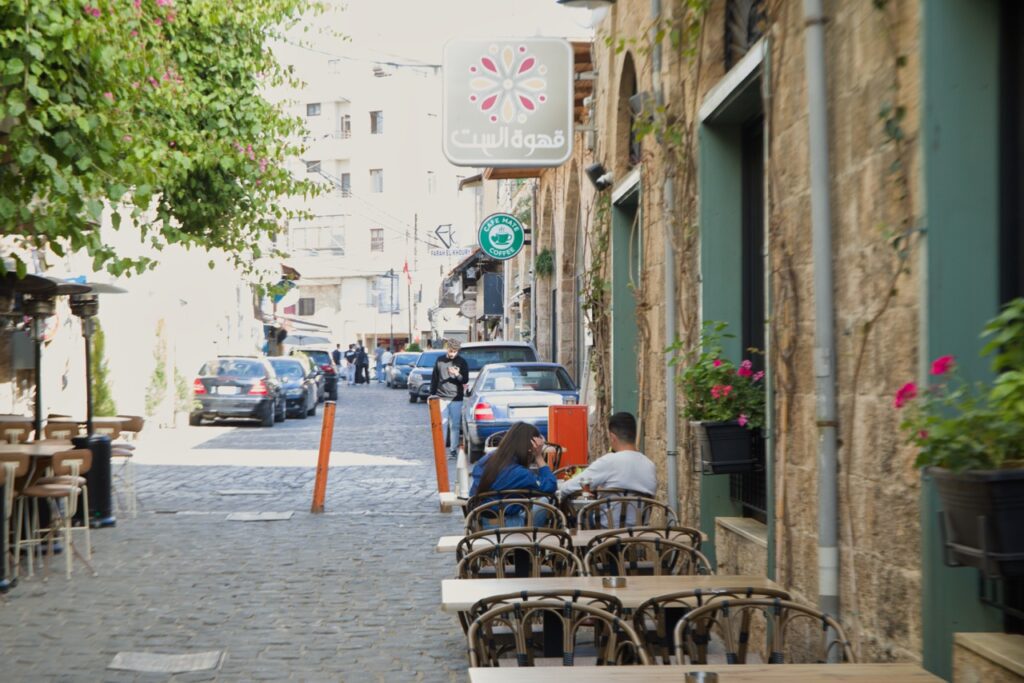
Couples sat together at coffee shops in the souk, drinking coffee and hookah while families walked by, the parents laughing as their son tried to get the attention of a small dog that was meandering the streets alongside them.
While people in Batroun were not oblivious to the war taking place further south of them, they also knew that they were safe here.
“It’s always normal here. No matter what. We try to keep things lively, cheerful and happy to change the mood a little bit,” Miral Ohanian, 23, told Beirut Today.
Waiting for explosions
When the latest war between Hezbollah and Israel started on March 2, Hossam, 24, had no idea that Hezbollah had even launched rockets into northern Israel the night before. He was at his aunt’s house in Dahiyeh and had gone to sleep early that night. It was not until the morning that he realized something was even happening, and by that point, it was already too late.
The street across from the house was being bombed, reducing the buildings that once housed dozens of families into mounds of smoke and rubble that now served as the tombs for the memories that existed there.
Once again, Hossam was being displaced by a war in his country.
“I was still one of those who was recovering from the previous war,” he told Beirut Today. “I’ve been on purely survival mode.”
Unlike the last war, in 2024, when he spent weeks going from the Bekaa to Syria to Iraq to Kurdistan and, finally, to Turkey, Hossam decided to move with a friend to Dekwaneh, a Christian-majority area on the periphery of Beirut. Around a month after moving there, Hossam had to leave after people in the area found out that he was displaced from Dahiyeh and sought to have the municipality make him leave.
However, while he was there, Hossam found a semblance of safety from the war.
“When I was in Dekwaneh, the apartment I was at was soundproof to a certain extent. So, I wouldn’t hear much [drones, jets or bombings] in Dekwaneh,” he explained.
Things were very different when he went out, though. No longer protected by the walls of the apartment, Hossam could hear the drones and jets flying endlessly over the city. Whenever he heard them, in particular the jets, it would fill him with dread and bring him to the point of having a panic attack.
“I was talking to my psychologist and when we were speaking, there was a very loud noise of the jet and, then, I froze and I couldn’t speak because, for me, whenever I hear the sound, I’m just waiting to hear the bomb after it,” he recalled.
For 33-year-old Rouba Houssami, living through the war means going through a wave of emotions on a daily basis. From exhaustion to anger, she simply tries her best to make it through the day, arguing that it was impossible to simply “adapt” to the situation.
Still, she refuses to give up on life and tries to find ways to maintain a sense of normalcy or, at the very least, find connections that help her stay strong in the face of danger.
“I’m not living in constant fear of death because when you’re in this situation, you can’t function that way,” she told Beirut Today. “You just try to get through each day, stay close to the people you love, and hold on to whatever sense of humanity you can.”
This was put to the test on Black Wednesday when one of the sites bombed by Israel was in Corniche el-Mazraa, near where she lives.
I felt devastated, she said, the same as when the south is bombed.
Both Hossam and Houssami do their best to distract themselves from the carnage surrounding them by cooking or playing games with friends. But, at the end of the day, both of them recognize that their situations are far from normal and that their lives have been put on “pause” by the war.
Life goes on
The streets of Batroun were bustling with life as friends and families shared a meal at food stalls while drivers carefully scanned the busy street for any opening where they could park their cars.
Even though the souk was seeing a bit slower traffic than usual, Ohanian predicted that at night, the bars and clubs would come alive with people and the booming bass from the DJ’s tracks creating a late-night soundtrack in the town’s ancient streets.
“You’re going to be seeing a lot of parties going on, DJs, nights out,” Ohanian stated. “People are going out and having fun. [The war] doesn’t kill the vibe but it minimizes the people coming out.”
No one in Batroun was worried about the war reaching them. For the residents of the seaside town, life continues at the normal, relaxed pace that it does when there is no war.
“We’re far here. We don’t hear [the bombs or jets]. We hear the news and what is happening, nothing more than that,” Souad Fadoul, 65, told Beirut Today. “Batroun is calm. There is nothing, thank god. The situation is good.”
The lack of fear over the war is particularly evident in the restaurants and clubs that are doing renovations in preparation for the summer months, when much of the country usually flocks to the town to sit on the beach during the day and party at night.
Even if Batroun is not directly affected by the war, residents still feel the impact on an emotional level.
For Fadoul and Ohanian, news of the bombings is nothing short of heartbreaking and, like on Black Wednesday, tear-inducing. At the end of the day, Lebanon is still their country, and it is a small country, so many residents have friends or family who are living through the war.
Ohanian recalled how on Black Wednesday, after news reached them of the scale of the attacks, the entire town was silent. No one was going out. No one could even really speak. All they could do was stay glued to their phones and televisions, waiting for any updates on the devastation wrought by the Israeli bombings.
“You can feel the hit even if you don’t see it. You can feel it,” Ohanian said.
The war has also brought a greater sense of community for residents of Batroun. Everyone tries their best to support one another through everything that is happening.
Even when it comes to those displaced by the war, they are not viewed as a potential risk that could bring the war to Batroun’s doorstep, but as just another Lebanese who needs help.
“We will help them as much as we can because we’re brothers and sisters,” Ohanian stated. “[We] try at least to help them find a place where they can stay and if they know someone who can help in a way of getting some supplies or essentials, we’ll get in touch with them.”
Some in Batroun are more stoic about the situation gripping the country, simply shrugging their shoulders and hoping that the war will end soon.
“We’re living. What else are we going to do?” George, 65, told Beirut Today. “We got used to things. We need to continue our lives. May God bring good to the country.”
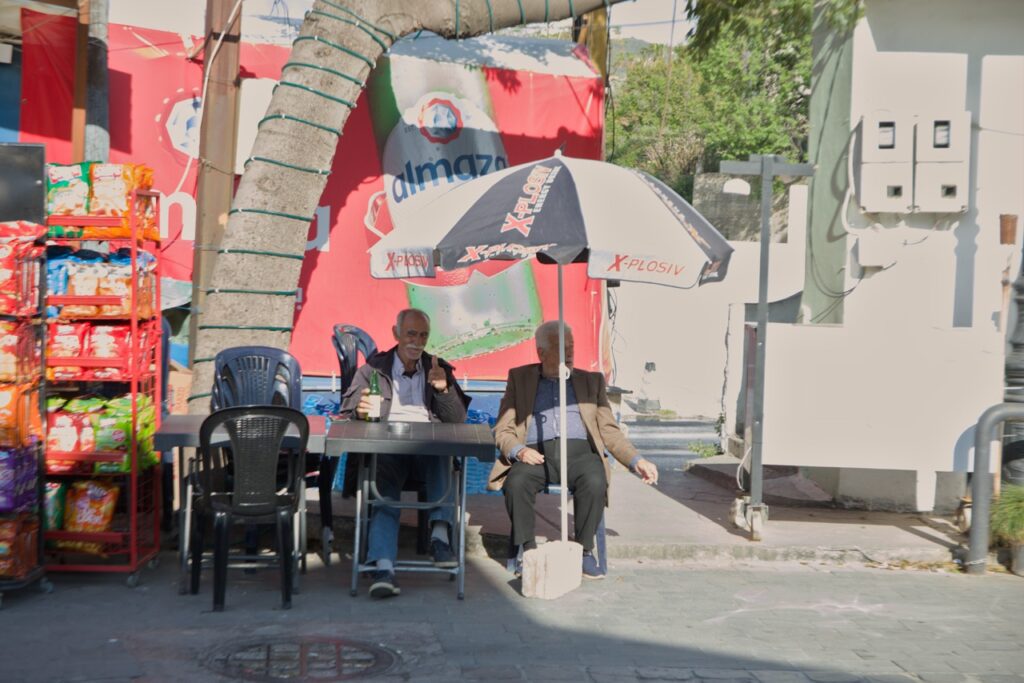
The continuation of life was most evident at the edge of Batroun on the seaside road, just before it is set to become an increasingly shrinking image in the rear-view mirror. Two old men sat together laughing under an umbrella drinking beers and smoking cigarettes. As people passed by, they raised their bottles, giving those leaving a warm, unworried smile.
Even with U.S. President Donald Trump’s announcement of a 10-day ceasefire, the situation remains grim. In the south, Israel stated that it was not going to withdraw its forces from Lebanon during the ceasefire, ensuring that many people who call the south home will be unable to return to find out if they still have homes or not after relentless bombings from Israeli jets and drones, along with Israeli troops on the ground who razed almost entire villages. It is unclear if the ceasefire will hold, especially with the uncertainty surrounding the ceasefire in Iran, raising the question of whether the war in Lebanon could expand once more.
While Beirut and Batroun might be far apart in wartime experience, people in both cities remain connected by a deep sense of national identity that refuses to break, no matter how much pressure is applied.
“What keeps us going is each other,” Houssami said. “Even in all of this, people are still helping, still caring and that’s something no war has managed to take away.”
