

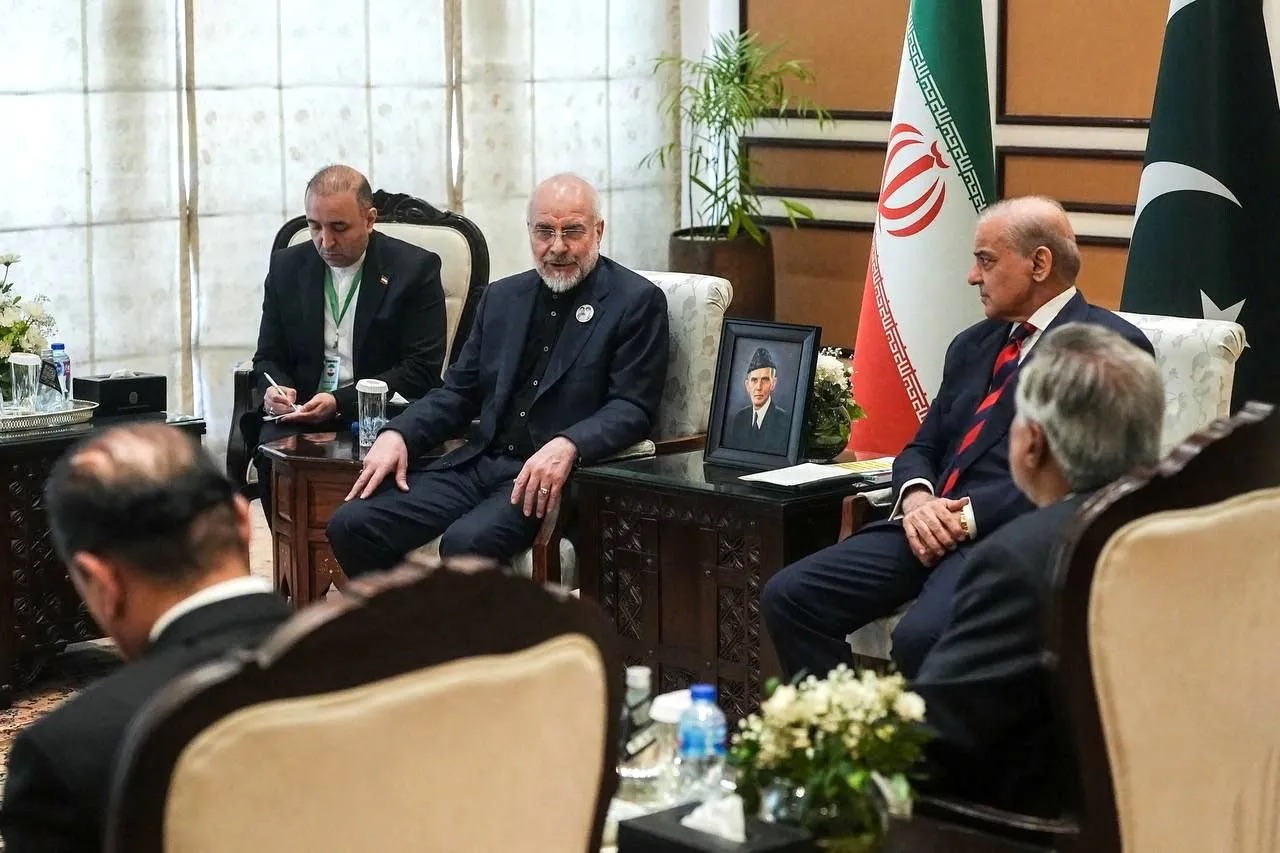
United States Vice President JD Vance left Islamabad earlier today, stating that no agreement had been reached and that Iran had rejected Washington’s demands. Shortly after, Iran’s delegation, including Parliament Speaker Mohammad Bagher Ghalibaf and Foreign Minister Abbas Araghchi, also departed the Pakistani capital.
One of the key sticking points remains what was described as “US unwillingness to commit to halting Israeli attacks on Lebanon,” according to journalist Kamal Hyder. Iran also reportedly rejected US conditions related to security arrangements in the Strait of Hormuz, according to Hyder.
On Friday, US President Donald Trump said the Strait of Hormuz would reopen “with or without” Iran’s cooperation, reiterating that preventing Iran from acquiring a nuclear weapon remains Washington’s top priority.
Pakistan’s Foreign Minister Ishaq Dar urged all parties to uphold the ceasefire.
“It is imperative that the parties continue to uphold their commitment to the ceasefire,” Dar said, adding that Pakistan would continue facilitating dialogue between Iran and the United States in the coming days.
Hostilities Continue in Lebanon
In Lebanon, Israeli attacks have killed at least 2,020 people, including 85 healthcare workers, and injured 6,436 others, according to the Lebanese Ministry of Public Health.
Strikes have continued despite the announcement of a US-Iran ceasefire earlier this week, with clashes between Israeli forces and Hezbollah persisting, particularly along the southern border.
On Wednesday alone, Israeli attacks killed at least 357 people and injured around 1,150 others. The escalation included strikes on more than 100 locations across Lebanon within approximately 10 minutes during early afternoon hours, including densely populated residential areas.
Following Wednesday’s escalation, the United States reportedly pressured Israel to refrain from striking Beirut in the coming period.
The broader implications for Lebanon amid ongoing regional negotiations remain uncertain. On Friday night, the first direct contact between Lebanese and Israeli officials took place as part of ceasefire efforts. The call involved Lebanon’s ambassador to Washington, Nada Hamadeh, Israel’s ambassador to Washington, Yechiel Leiter, and US ambassador to Lebanon, Michel Issa.
