

Migrant workers in Lebanon are forced to fend for themselves amid the latest war between Hezbollah and Israel, relying on those in their community to survive.
Byline: Nicholas Frakes
It was the middle of the night on March 2 and 30-year-old Sara was asleep at home along with her six-and-a-half-year-old son, Ibrahim. Her husband, who worked as a natour – a kind of guard and janitor – for the residential building, was still awake.
Suddenly, her husband woke them from their sleep. Hezbollah had launched rockets into Israel and there was going to be a swift and brutal response from the Israelis. Since they lived in Dahiyeh – Beirut’s southern suburbs – a predominantly Shia area where Hezbollah is based, they knew any Israeli attacks would likely target the crowded residential space.
The three quickly got ready to leave, with Sara putting Ibrahim’s passport and other important papers in her bag.
“The most important thing for me was my son’s papers,” she told Beirut Today.
Not bothering to pack anything else, they went outside and found everyone rushing to flee Dahiyeh before the inevitable airstrikes that would rain death and destruction on a part of the Lebanese capital that had not yet recovered from the last war in 2024.
A few minutes after they left, Sara heard a deafening explosion that reverberated through the street and surrounding neighborhoods. She turned around and saw fire and smoke erupt from the building that she and her family had called home.
“We could see the whole building crumble to the ground,” she recalled.
With no time to mourn their loss, the family moved toward what they hoped would be safety, but, since she was Ethiopian and her husband Sudanese, Sara knew that as migrant workers in Lebanon, they would be on their own.
Escaping to nowhere
In the immediate aftermath of the start of the war, the Lebanese government announced that it was opening shelters for the displaced, using public schools to offer a haven for those fleeing the war, with nowhere else to go. However, these government-run shelters, like in the last war, were open only to Lebanese.
“There is no government shelter for migrants. Many of the schools and government shelters are open to Lebanese only, as always,” Banchi Yimer, the founder of Egna Legna Besidet, an organization that assists migrant workers in Lebanon, told Beirut Today. “This time, they ‘upgraded’ to migrant workers who are married to Lebanese. But, still, they face discrimination and racism even inside those shelters and get less assistance as well.”
According to Yimer, like many of the 1,300,000 displaced individuals across Lebanon, migrant workers faced significant hardships trying to find somewhere safe from the bombs. Some migrants were at a linguistic or technological disadvantage in even knowing that they should leave.
“When the Israeli government announced the evacuation [of south Lebanon and Dahiyeh], many of the migrants don’t speak, read or write Arabic,” explained Yimer. “ Some of them don’t have phones or internet. So, they don’t have access to the information.”
In some cases, they only knew that they needed to evacuate because people were shooting in the air – something that has become a warning that forced displacement orders were issued for an area. But even this was not always a sufficient warning, as shooting in the air is also a common celebratory practice in Lebanon, initially not making it clear to the migrants whether people were shooting out of fear or joy.
When fleeing an area, while many Lebanese might have somewhere to go, such as a relative’s home or a shelter, migrants do not.
When the war began, Mohammad Yassin, a 46-year-old Sudanese refugee, was in Tyre in South Lebanon. He understood that he needed to go north to Beirut, even if he knew that it would not necessarily mean he would be spared from the Israeli attacks. Initially, he left on foot but was fortunate enough to find someone to give him a ride.
“I got in a car on the road but traffic was at a complete stop, so we were moving very slowly,” he told Beirut Today. Like the hundreds of thousands of others fleeing the south that day, it would take almost the entire day to reach Beirut, a drive that is usually only a little over an hour.
Upon arriving in Beirut, Yassin had nowhere to go and was forced to sleep on the street near the Ring Bridge.
Yehya Yacoub, also a 46-year-old Sudanese refugee, faced the same fate.
He was in Dahiyeh when the war started but, unlike Yassin, he could not find a car to take him out of the area and had to walk as bombs fell around him.
“We went outside and found that there were a lot of bombings, so we walked to the Ring Bridge and Saifi. We stayed there for around three to four days,” he told Beirut Today.
It was at the Ring Bridge that Yassin and Yacoub met and decided to stay together, given that they were in the same situation. They attempted to find work cleaning to make some money. Eventually, a member of Egna Legna Besidet found them and helped them find shelter in a nearby church that opened its doors for over 200 displaced migrants.
While they were grateful for having a roof over their heads, the situation was still far from ideal, given the limited support they received.
“You feel as if you are confined. You don’t have freedom. Like, you almost feel like you are imprisoned,” Yacoub stated.
Yimer was critical of the Lebanese government and its lack of support for migrants in the country.
“It is a very tough time for everyone. But, at the same time, the Lebanese government should make a plan for migrants and refugees living in this country,” she said.
Community support
Without the government to help them, migrants have been forced to rely on Egna Legna Besidet and the few other migrant organizations in Lebanon, but they are struggling to accommodate the thousands of people who now rely on them.
Unable to enter government-run shelters, the migrant community has since established over 15 shelters for migrants.
These shelters are informal and usually have one or two small rooms for people to sleep. In some cases, these shelters are housing upwards of 75 or even 80 people. Some churches have also been willing to act as shelters for migrants in need.
Some, like Sara, have been able to find friends who are willing to share their homes, but even that has been fraught with its own challenges. Now in the Jnah neighborhood of Beirut – a part of Dahyeh recurrently hit by Israeli attacks – she shares an apartment with three other women, her son and two other children. Because the apartment is only for women, Sara’s husband is staying with friends in a different area.
“The neighbors in the building complain about the kids and that we are loud and that we need to keep the children quiet,” she stated. “We can’t do that. How do they expect us to do that? You can’t do anything. They want to play.”
The owner of the apartment Sara is staying in also complained to her about the people living in the apartment.
“I asked him if he wanted them to sleep on the street. I brought them to the apartment. There’s a war going on,” she said. When Sara asked the man if he wanted money to let them stay, he did not bring up the topic again.
Others, not having anywhere to go, have been forced to sleep on the street.
“They know that no one is going to take them in. No one is going to help them,” Yimer stated.
“What they do is, at night, they go out and sleep on the street nearby or sometimes they go to Downtown, Raouche or anywhere else they feel is safe. During the day, they go back home and take a shower and, if they can, cook. … We encourage them not to go back [to their homes] but some of them, they have no choice. They have nowhere else to go.”
Organizations like Egna Legna Besidet, already a lifeline for migrants who receive little to no support, have become integral for the community in wartime, especially with there being no work or money to buy food and basic necessities.
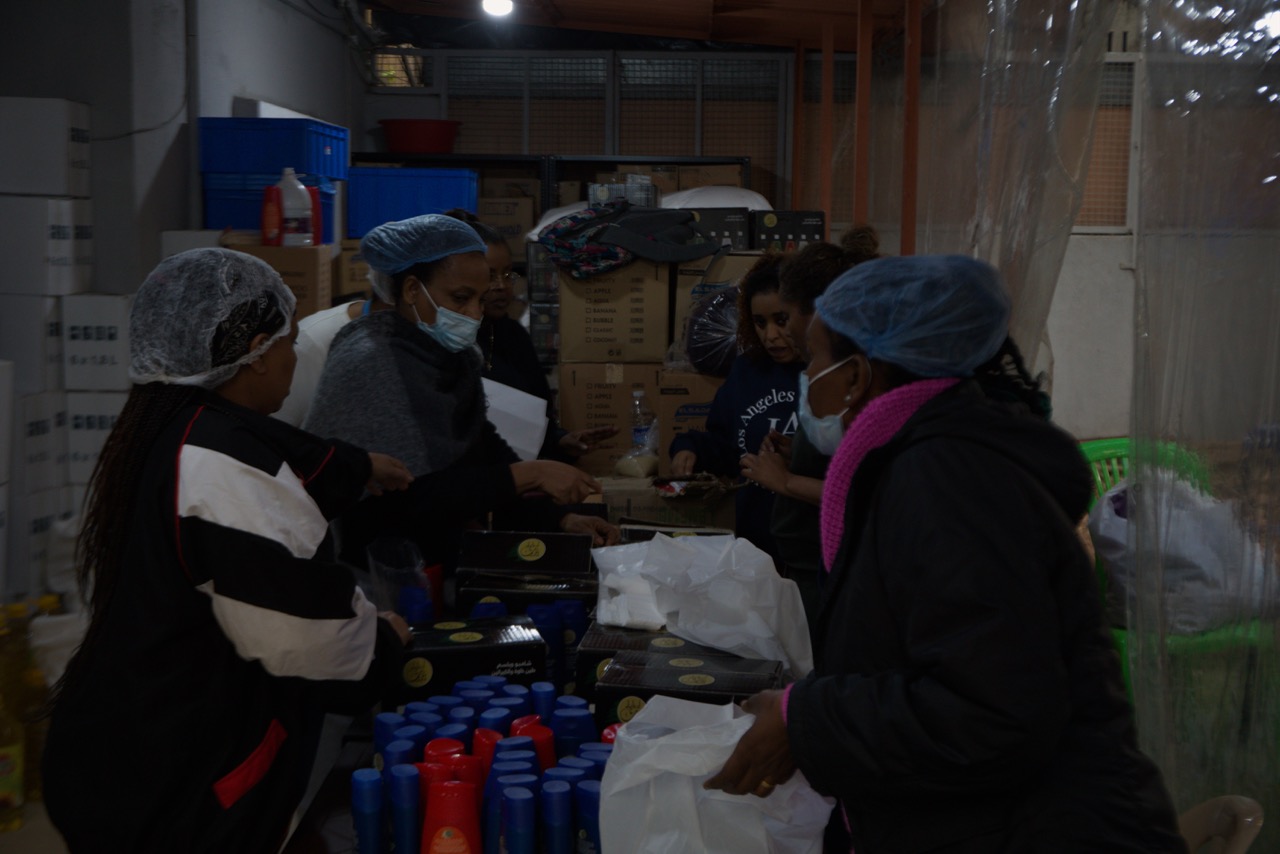
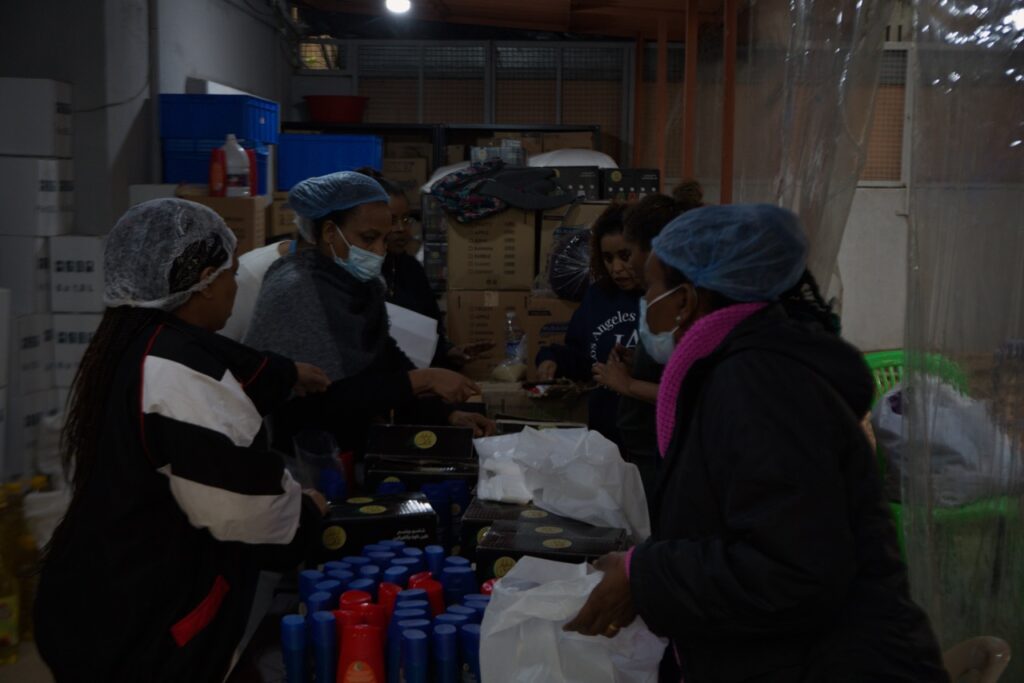
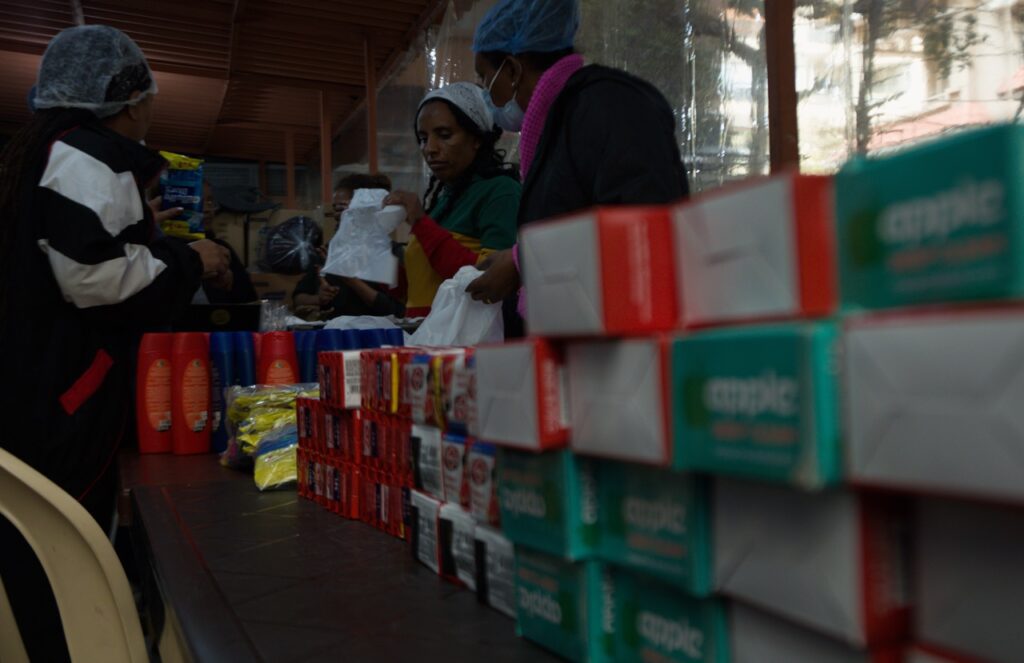
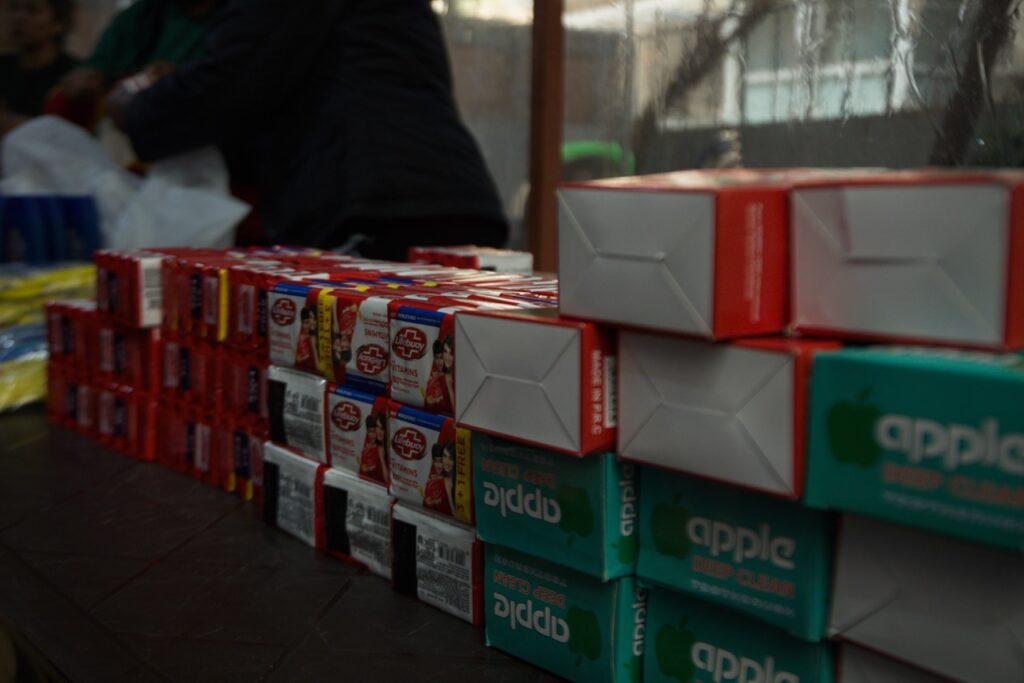
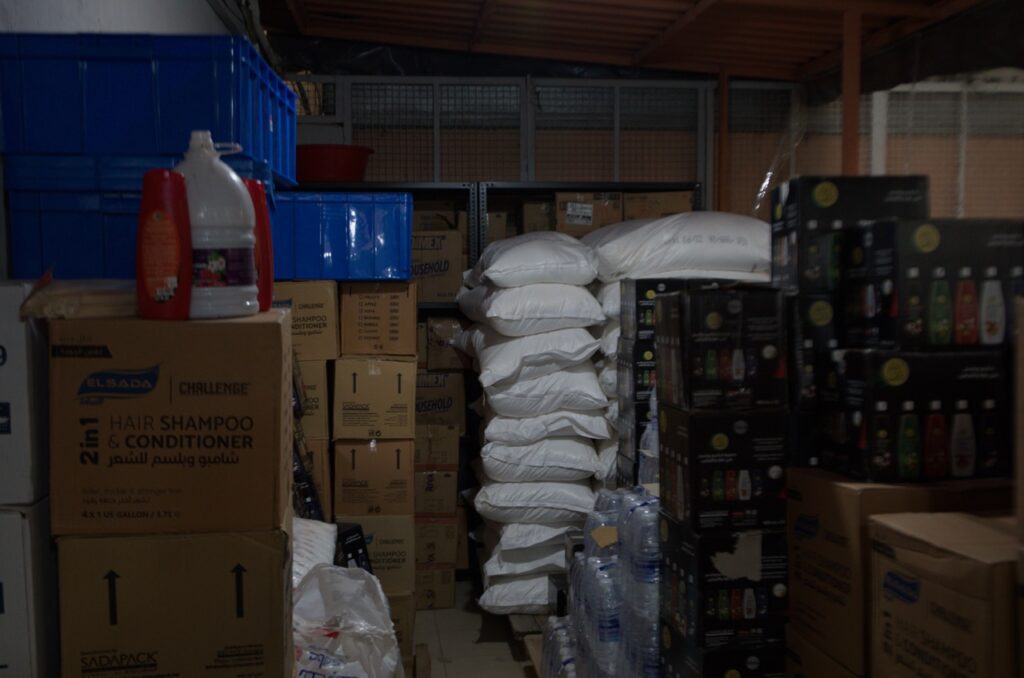
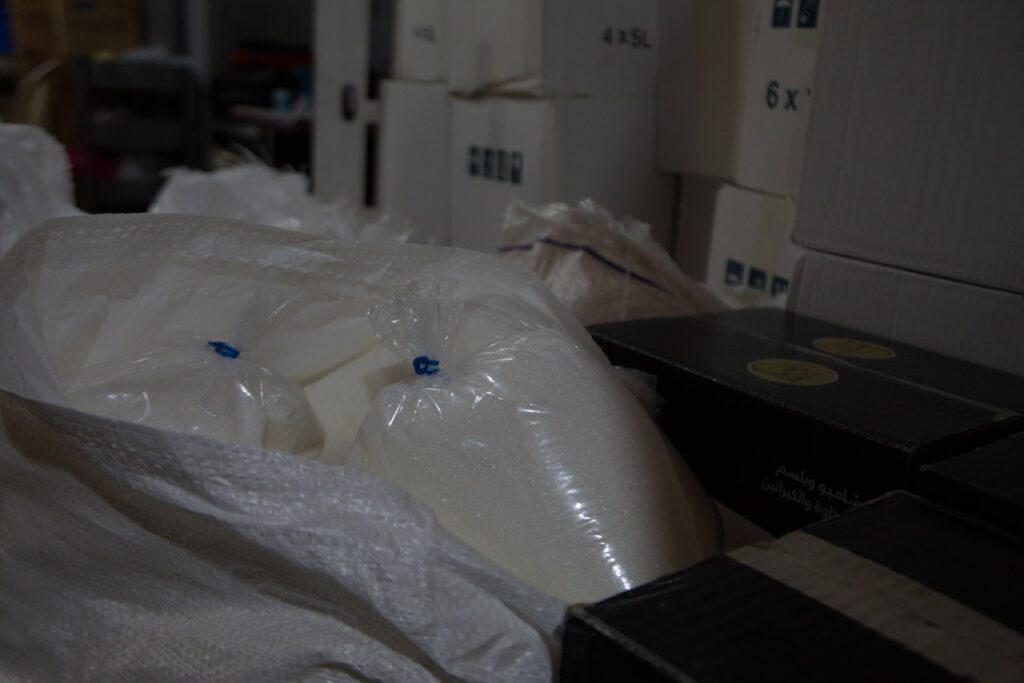
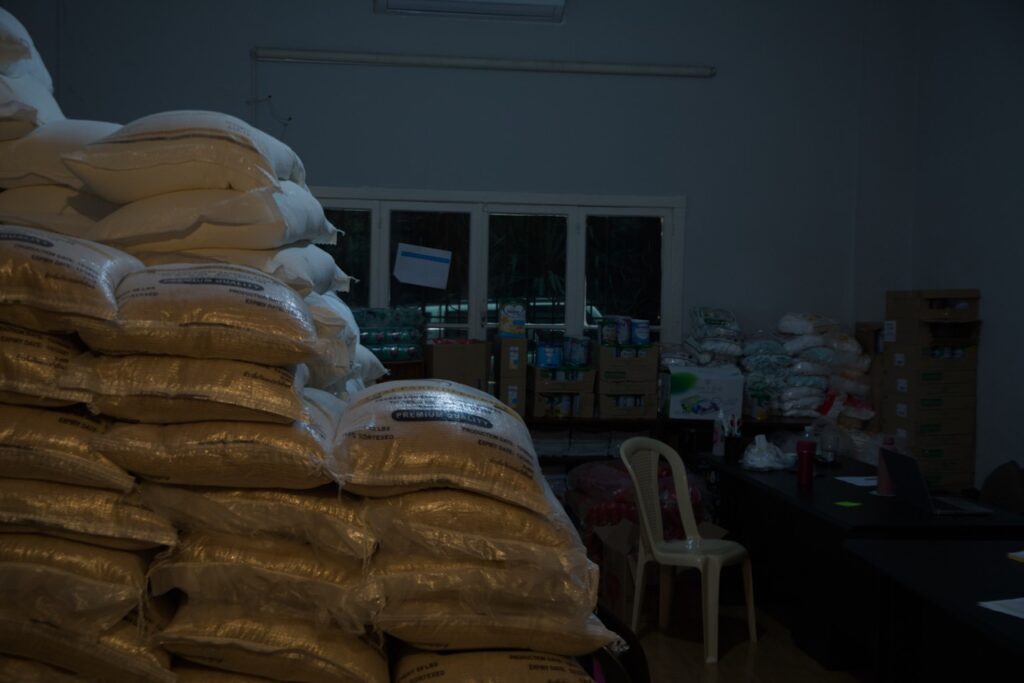
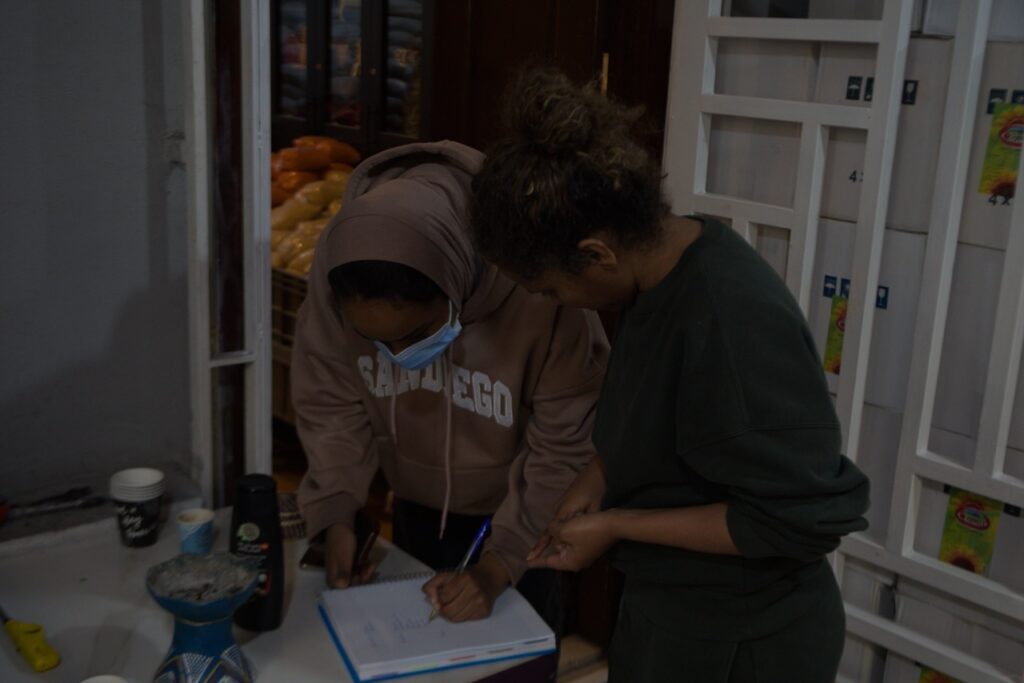
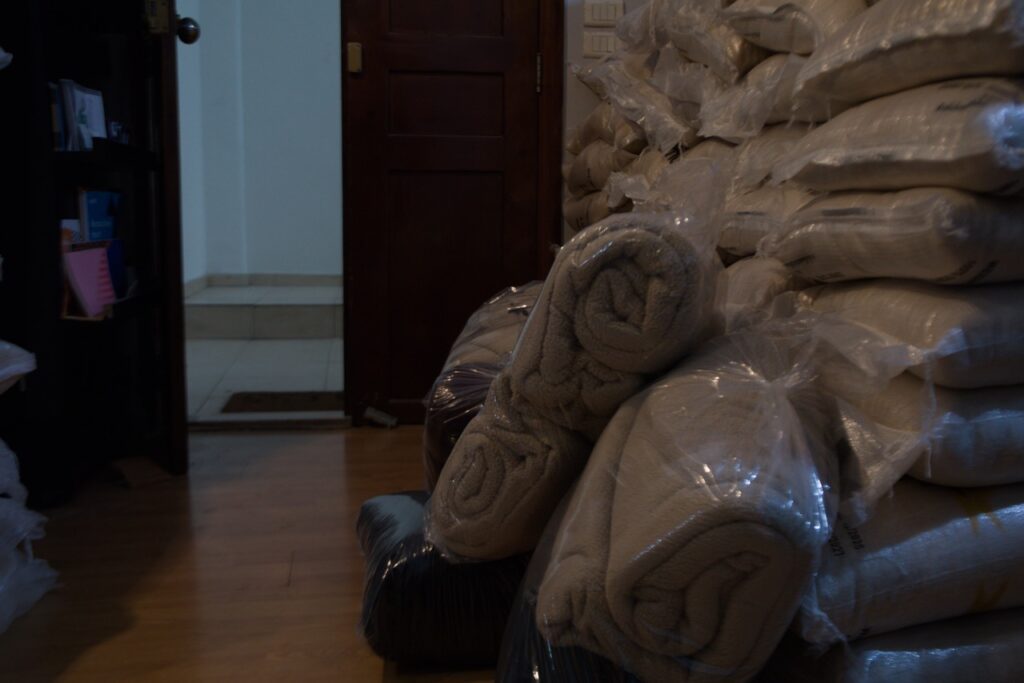
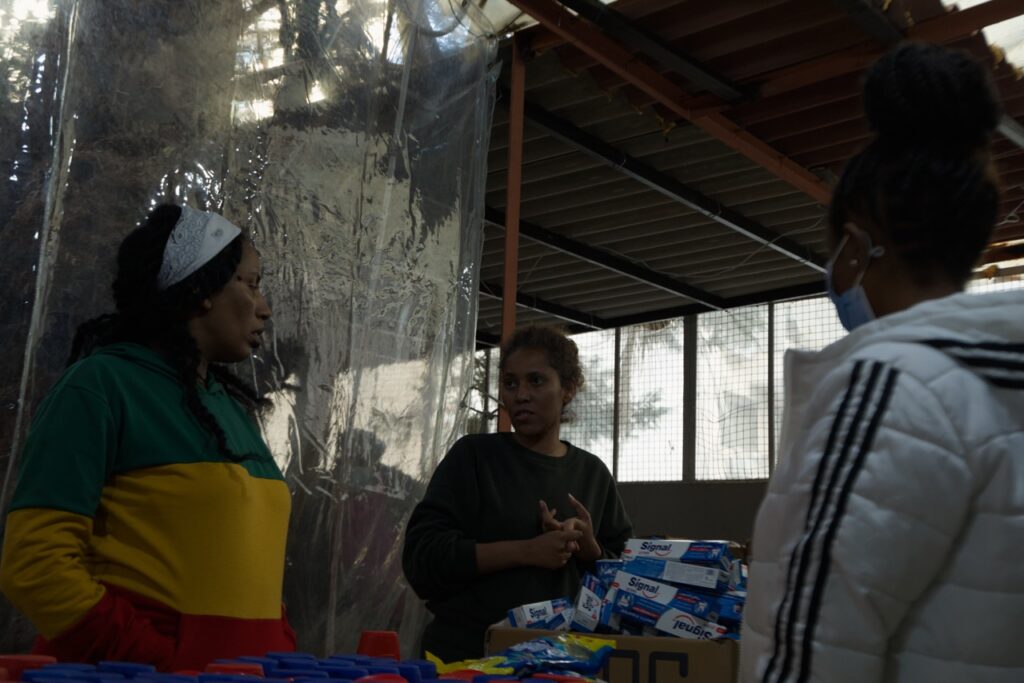
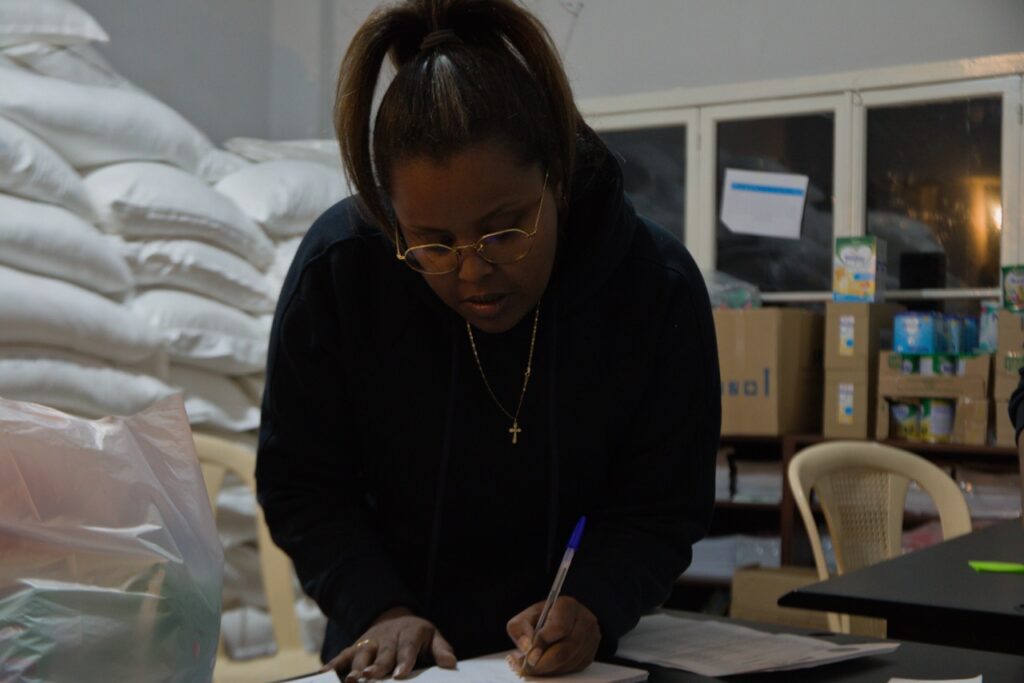
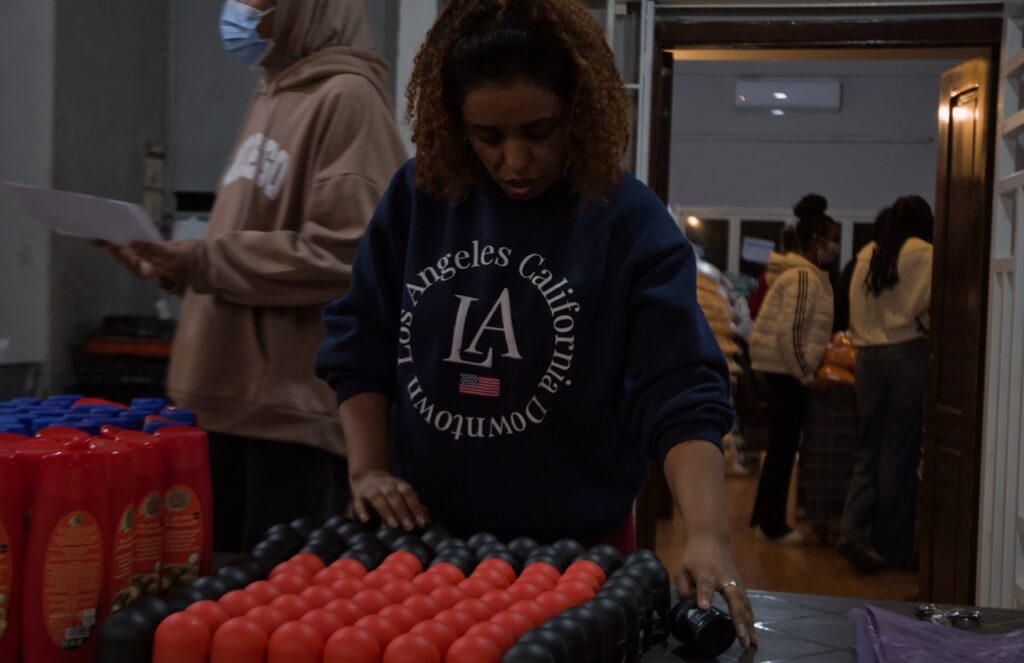
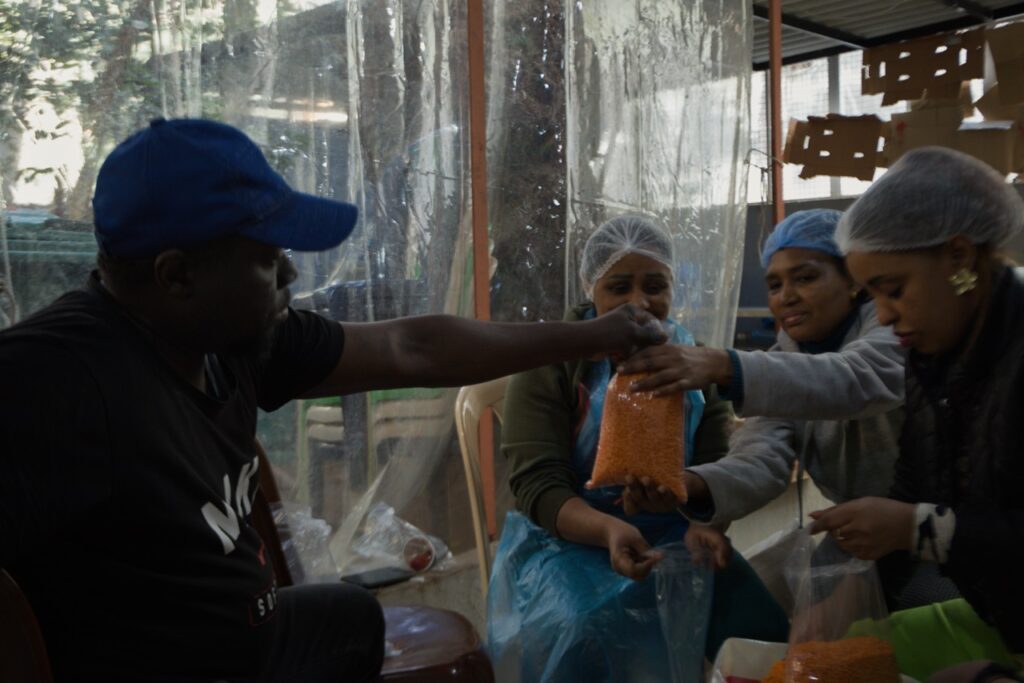
Egna Legna Besidet provides hot meals to the displaced several times a week. Besides that, it also supplies families with whatever else they might need, from clothes to blankets to sanitary products.
But these organizations are being spread thin by the war. In the first week, Egna Legna Besidet said that it was supporting over 4,000 people. Now, a month into the war, Yimer said that this number was significantly higher, but they did not have the data because they were constantly having to focus their efforts on providing aid.
This aid, though, is being pushed to a breaking point.
“We don’t have enough resources to deal with this. This is supposed to be what the U.N and the government are supposed to deal with and we’re a very small organization, but we deal with hundreds of families, which is thousands of people every day,” Yimer stated.
Egna Legna Besidet, with the rising cost of living in Lebanon, is having to prioritize its support to the most vulnerable. Normally, anyone in need of aid could come to them and get it. But, now, the organization is, at times, turning people away if they are not displaced.
“I’m worried about what will happen next week and after that week … when we run out of that food. We have to work with a limited number of people per week because we don’t have enough money,” Yimer said.
‘This war is worse’
During the 2024 war, even when migrants were stranded in the south and other areas under bombardment, Egna Legna Besidet was able to reach them and deliver aid.
This is not the case in this war.
Whenever they plan a trip to southern cities like Sidon or Tyre, they are forced to cancel it because a forced displacement order is issued or because there is a bombing on the road, making it impossible for those stranded in the south to get aid unless they are able to come to Beirut.
Outside of struggling with the lack of support, migrants are also struggling with the traumas of war, with many of them still struggling to recover from the last one.
For the Sudanese who came to Lebanon to escape the war back home, they are facing an all-new trauma in a place that they hoped would be safe.
War has also seeped into the everyday details of children’s lives.
“We check with their parents, and they draw the war, what they saw around their neighborhood, and what happened. That’s what they’ve been drawing. They don’t draw nice things [like kids usually do],” Yimer stated.
The intensity of the war is not lost on the migrants, especially those who lived through the last one.
“This war is worse,” Sara explained. “I have never seen something in my life like this. Before, you’d hear the explosions and that was it. This time, it’s hard.”
When Sara needs to go out, rather than taking Ibrahim with her, she leaves him in the apartment with the other women. The psychological terrors induced by the constant buzzing of roaming Israeli drones and the roar of the jets flying over the capital often ensnare her in their icy cold grip. Every report about a bombing causes her to worry about what might happen to her son while she is away.
“If something happens, I get scared. Maybe something happens to him. Maybe they get bombed. You don’t know what will happen,” she said, her voice starting to crack at the thought.
As exhausted as Yimer and the others working with Egna Legna Besidet are with the unrelenting pace that the war is having on them, they persist, refusing to stop their work because they know that, without them, no one in the Lebanese government or internationally would be there to help.
“The drone is not going to identify who’s who” she insisted. “We should be in the plan.”
