

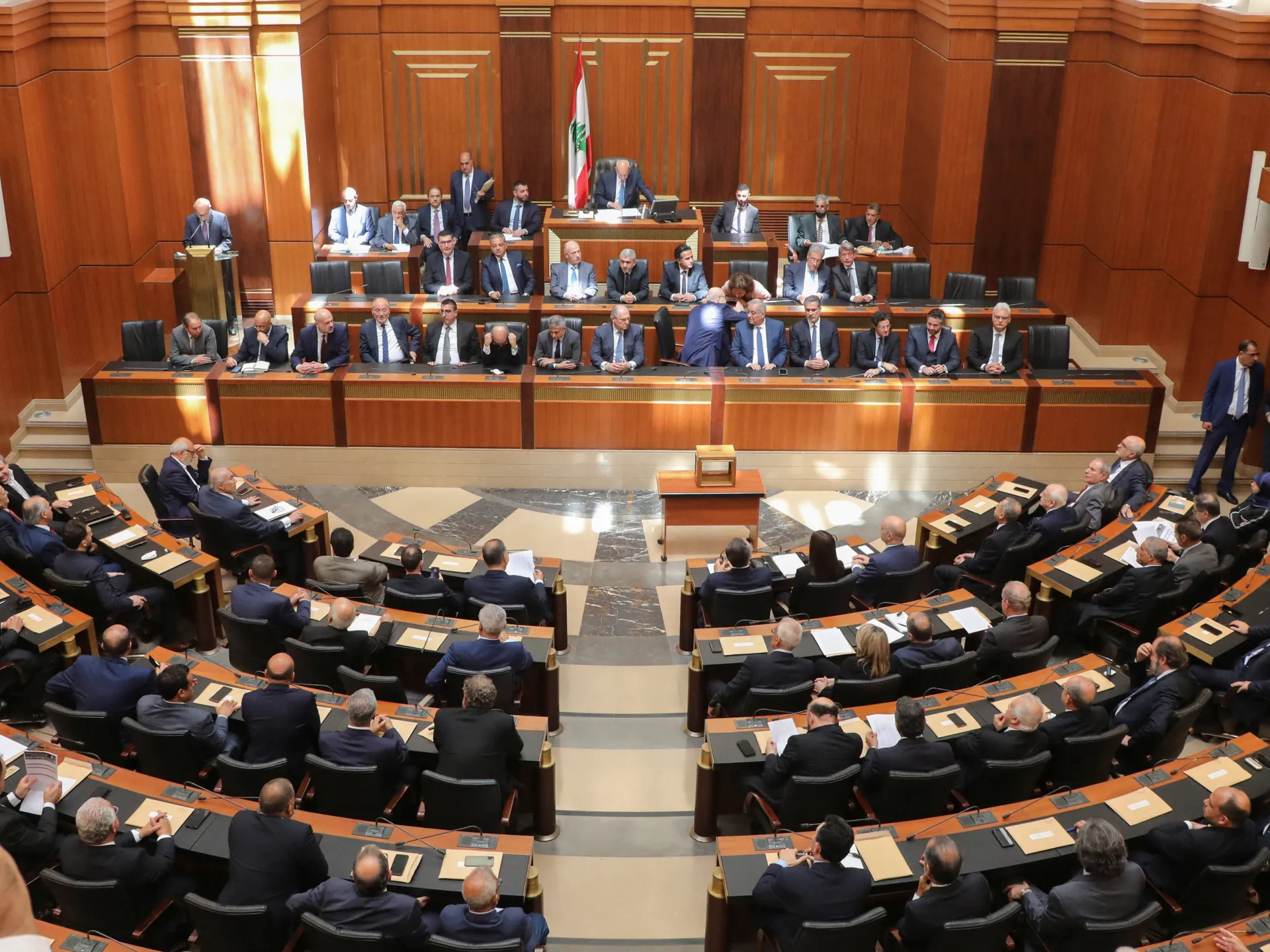
Today, the Lebanese parliament voted to approve a two-year extension of its current mandate. The vote concluded this morning with 76 votes in favor, 41 against, and four abstentions.
Parliamentary elections were originally scheduled for May of this year. However, uncertainty surrounding their implementation has dominated political headlines for several months, with many parties and political groups not even taking initial steps toward campaigning.
The main justification for the postponement lies in the current security situation. Israeli attacks have increased significantly across the country, while broader social conditions are widely seen as unconducive to holding elections.
Differing Positions
Debates among Lebanon’s political groups also focused on the length of the postponement, with the proposed two-year extension viewed by many as excessively long.
Several proposals suggested shorter extensions, including six months or one year, while others proposed linking the postponement not to a fixed timeline but to specific political or security conditions.
One prominent view holds that parliamentary elections should not take place before the issue of Hezbollah’s disarmament is resolved, particularly given the role that weapons and armed actors have played in the current security developments that disrupted the electoral process in the first place.
The Role of the Speaker of Parliament
Despite the parliamentary initiative represented by this vote, questions continue to be raised about the role of Speaker of Parliament Nabih Berri during this critical period as Lebanon seeks a way out of the ongoing conflict.
Last week, the Lebanese Cabinet issued a decision outlawing the military activities of Hezbollah. More recently, diplomatic efforts by the Lebanese state have intensified in search of an end to the hostilities.
One key actor whose intervention remains critical in this context is Berri. While some analysis suggests that Berri and his Amal Movement implicitly supported the Cabinet decision, given the presence of Amal ministers in the discussions, the Speaker has yet to issue a public position on the broader political efforts to resolve the conflict.
His role, particularly as the leader of the other major Shia political party in Lebanon, is expected to be crucial in the ongoing deliberations surrounding the conflict.
