

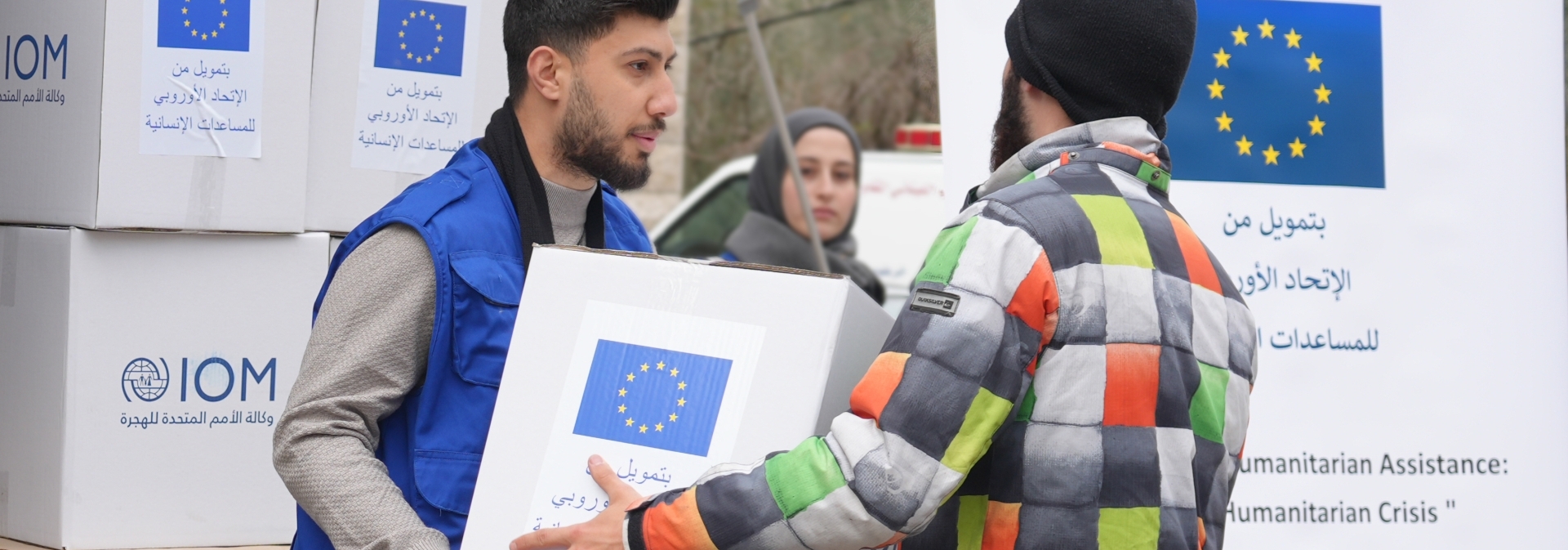
Last month, the United Nations and the Government of Lebanon, along with appealing partners, published the Lebanon Response for 2026.
The Lebanon Response Plan, or LRP, is a joint humanitarian and stabilization framework that coordinates assistance across different sectors, prioritizing vulnerable population groups. It mobilizes international funding and includes a wide range of participating partners (non-governmental organizations), which coordinate service delivery and humanitarian and development interventions.
A Continued Socioeconomic Crisis
Seven years after the uprising and more than one year after the ceasefire, Lebanon’s humanitarian landscape continues to look bleak despite what is perceived by many as a period of relative stability.
Today, the LRP identified almost three million people in need of humanitarian or development assistance (2.99 million) among an estimated population of 5.3 million. The LRP itself is targeting 1.5 million individuals, with a funding appeal of $1.62 billion dollars by 155 UN and NGO partners.
Target groups include low-income households, people affected by conflict and displacement, refugees, migrant groups, and gender-sensitive groupings.
The primary objective of the plan is to provide immediate humanitarian assistance for vulnerable populations to meet critical needs, while also strengthening national systems such as rapid response capacity and reinforcing long-term Lebanese economic, social, environmental sustainability.
High Allocation for Cash Assistance Reveals Critical Humanitarian Needs
The largest allocation from the LRP ($321 million) targets the multi-purpose cash assistance (MPCA) sector, whereby partners deliver cash assistance to vulnerable households in the country. This reflects urgent needs for liquid cash for people to access basic needs, with cash being used and prioritized according to various contextual conditions, such as rent, access to food, health, and other services.
Food security and agriculture came in second ($231 million), reflecting results from the latest Integrated Food Security Phase Classification (IPC) report, which estimated that 961,000 individuals are projected to face high levels of acute food insecurity between April and July 2026. This also comes as the latest Israeli war, coupled with a historical drought, have extremely decimated agricultural endeavors and green areas in the country.
Protection, child protection, and gender-based violence services had the most number of appealing partners ready to work in the sector, whereas social stability and water, hygiene and sanitation (WaSH) had the highest number of people targeted (at 2.8 million and 2.2 million individuals respectively).
Between Short-term and Long-term Planning
A key objective from the plan is to couple humanitarian aid with long-term national systems-strengthening and socioeconomic stability bolstering, focusing on building sustainable structures for social protection, localization, and transitioning toward development and recovery.
Despite positive steps and a period of relative stability, Lebanon remains very far from pre-crisis conditions, with a GDP contracted by 40% since 2019, and multidimensional poverty impacting 73% of Lebanese and nearly all non-Lebanese residents.
With the government and public services still severely underfunded, largely due to an austerity-based and rentier political economy and rampant corruption and sectarianism, access to basic needs and services remains very weak. The need to couple urgent humanitarian assistance with long-term planning and systems building has never been more urgent.
