

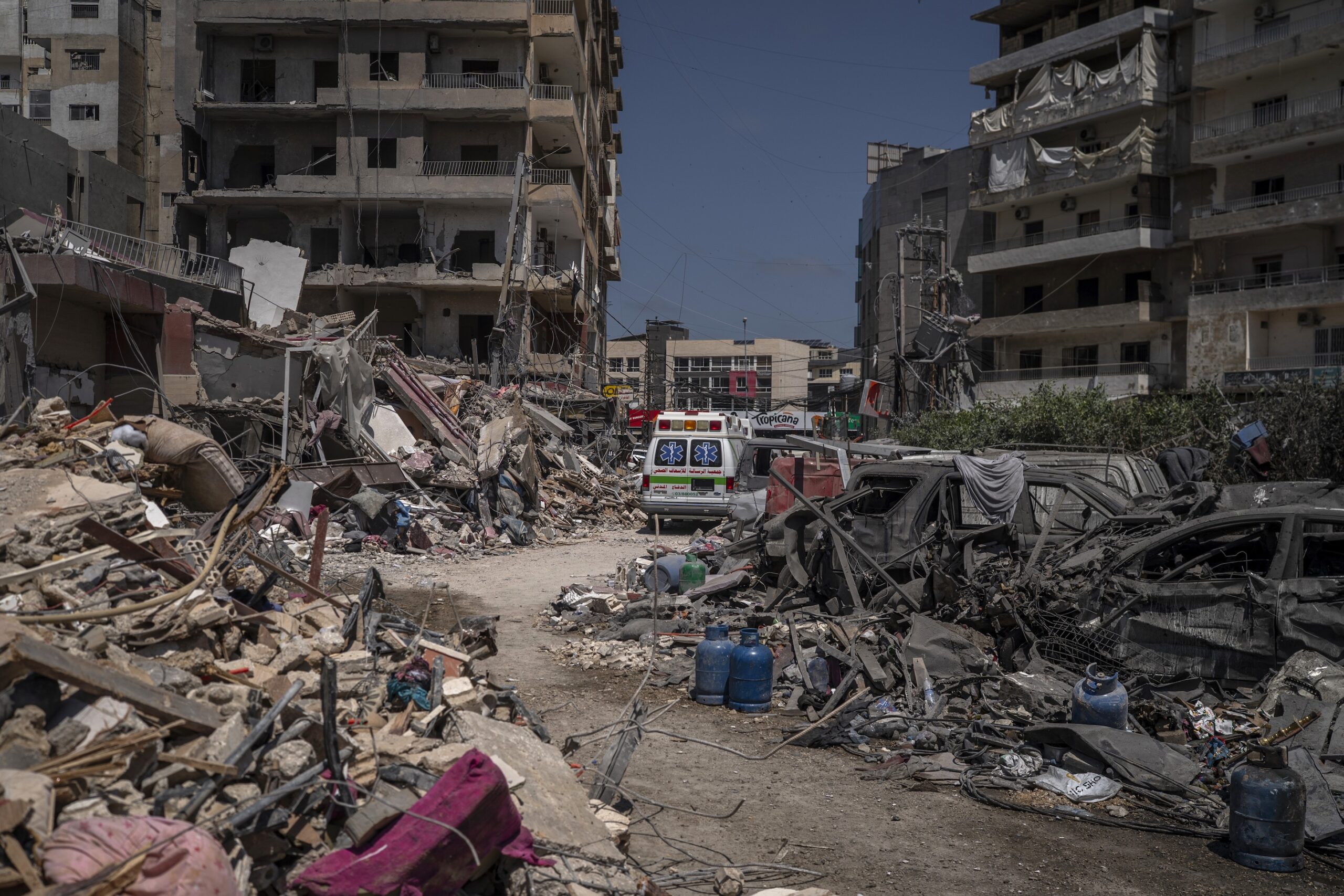
The United Nations Office for the Coordination of Humanitarian Affairs (OCHA) in Lebanon released its latest flash update on the escalation of hostilities in the country.
The report found that at least 375,000 people remain displaced as a result of the war. This figure is likely an underestimate, given that it relies on a mix of sources, including the Disaster Risk Management Unit and the International Organization for Migration.
The number of people killed in Israeli attacks has reached 4,329, including 392 women and 253 children, while the number of people injured has reached 12,233, including 1,450 women and 1,036 children. Since June 20, 349 individuals have been killed and 229 others injured.
The World Health Organization also reported that two Lebanese Red Cross paramedics were injured during a search-and-rescue mission, while the Ministry of Public Health reported injuries to two additional medical personnel in an airstrike near an ambulance.
Around 29,500 people have been registered in official collective shelters, with significant needs related to access to basic items, as well as housing and residency stability.
A Long Period Ahead
Hundreds of thousands of people are expected to remain displaced, as pilot zone operations have only recently begun. The process is expected to take a significant amount of time, particularly as it requires verification by different parties and involves highly sensitive operations that are likely to face substantial hurdles.
The Lebanese Armed Forces are expected to ensure that non-state armed groups in the pilot zones are completely disarmed, a process that could itself lead to significant social tensions and potential resistance from Hezbollah. The operations would also have to be deemed satisfactory by Israel and the United States amid highly vague framework agreement language.
Following the disarmament process, Israeli forces are expected to withdraw gradually from Lebanese territory. The pilot zones included in the initial stages, namely Froun, Srifa, and Zawtar Al-Gharbiya, had no established Israeli military presence and likely required little persuasion for the different parties to launch operations.
The true test of pilot zone operations will come in heavily contested areas, particularly those of strategic importance to Israeli forces and where they have established structures or ongoing operations.
The sound of drones hovering over Lebanon has continued and, according to anecdotal accounts, even increased. With tensions escalating regionally between the US, Iran, and other state actors, it remains to be seen how closely the Lebanese track is connected to, or independent from, regional ones.
As these security processes unfold, people’s returns to their areas of residence are expected to increase gradually. However, given the extensive destruction of residential buildings and basic infrastructure, as well as the widespread damage to agricultural and green spaces, particularly in southern Lebanon where they are prevalent, significant reconstruction and humanitarian and development assistance are required to enable residents to return sustainably.
