

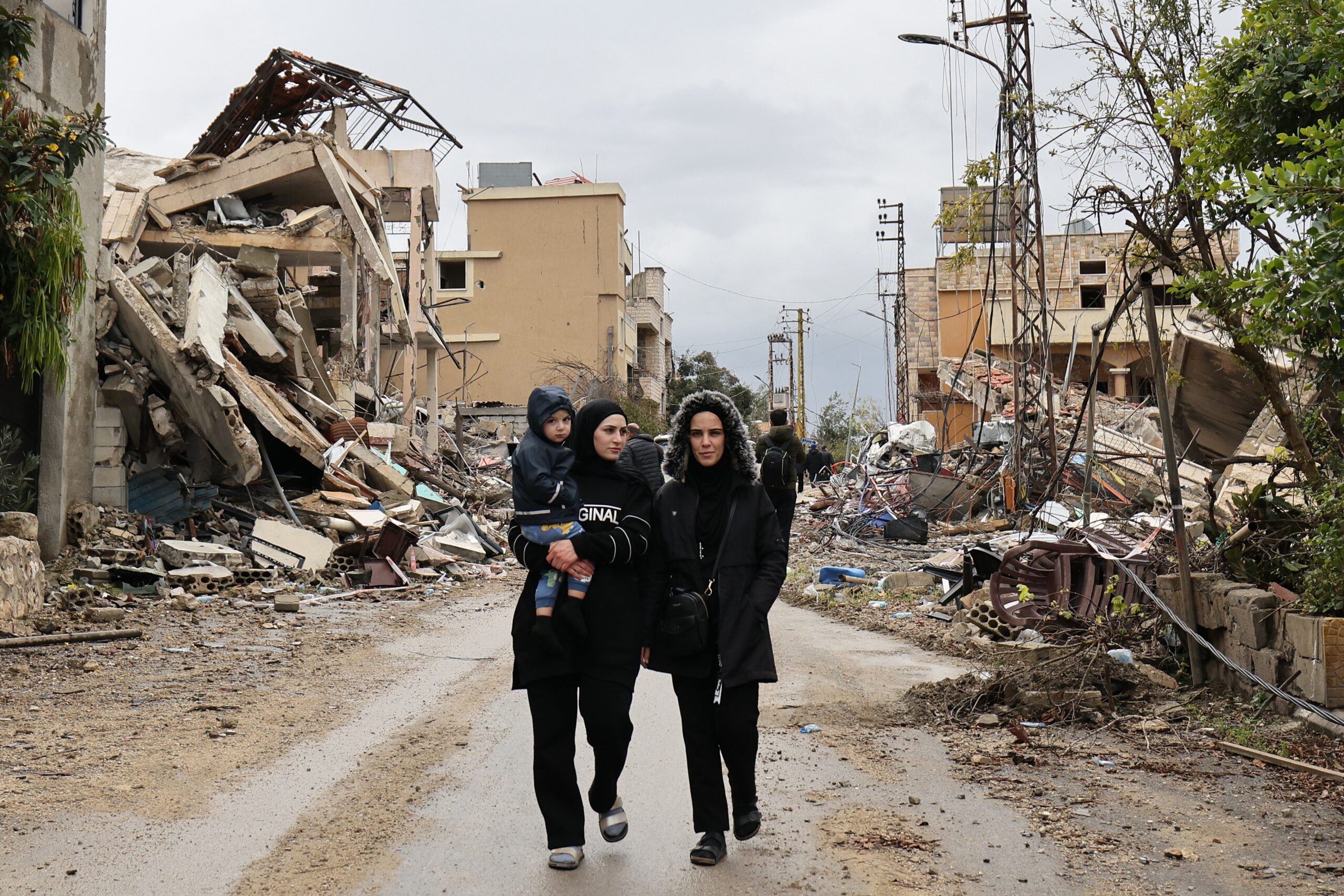
The news of the United States and Iran reaching an initial deal to end the war was not received with high spirits in Lebanon. Despite numerous agreements over the last years, both concerning Lebanon and at a regional level, the country remained under Israeli attacks, occupation, and back-to-back hostilities.
US-Iran efforts seem to be going in opposite direction to Israel-Hezbollah plans. While the US seems keen to end the war in the region, Israeli officials have stated that their plans for Lebanon have not yet ended and that they plan to stay in the country, whereas Hezbollah rejected the Lebanon-Israel talks in Washington, DC.
The US-Iran Deal
US President Donald Trump and Iran’s Deputy Foreign Minister Kazem Gharibabadi both announced that the countries had reached an initial deal to end the war. Trump announced that the deal should be signed on Friday.
The opening of the Strait of Hormuz is also scheduled to be on the same day, with mine removal operations in place. The success or failure of the opening of the strait is bound to impact global contexts, not only those of the two belligerent parties, as the rise in the prices of fuel has shaken markets across the globe, leading to massive increases in the costs of every-day items.
One of the major points to be discussed over the upcoming period is Iran’s nuclear programme.
After a widely circulated video in which US Vice President JD Vance appeared to say that the US is paying Iran $300 billion USD for reconstruction, both Vance and Trump quickly shut down this interpretation.
Trump, in a statement on social media platform Truth Social, said that the story that “the US is paying Iran $300 million dollars is fake news”, in an apparent mistake whereby Trump replaced billions with millions. Vance, on his part, said that any proposed $300 billion fund would be sourced from regional allies, not from the US.
How About Lebanon?
While the secretariat of Iran’s Supreme National Security Council said the deal includes hostilities across all fronts, including Lebanon, Israeli Prime Minister Benjamin Netanyahu claimed Israelis are not done yet.
Indeed, shortly after the announcement of the reaching of an initial deal, Israeli attacks continued in Lebanon. Israeli shelling targeted towns such as Nabatieh al-Fawqa, Mansouri, Zawtar (road), and Yater, while systematic blowing up of houses continued in the town of Aita al-Jabal.
With many people considering returning to check on their houses after the announcement, the Lebanese Army reportedly blocked roads leading to towns in the South, such as roads leading to Kfar Roummane, Kfar Tebnit, and Nabatieh el-Fawqa.
Trust in such political agreements is expected to be particularly low this time, as previous agreement announcements were quickly followed by continued attacks, occupation, and other violations. Returns, accordingly, are expected to be slower, or have lower rates in general. An estimated one million people remain displaced as result of the war, with humanitarian needs concurrently high.
