

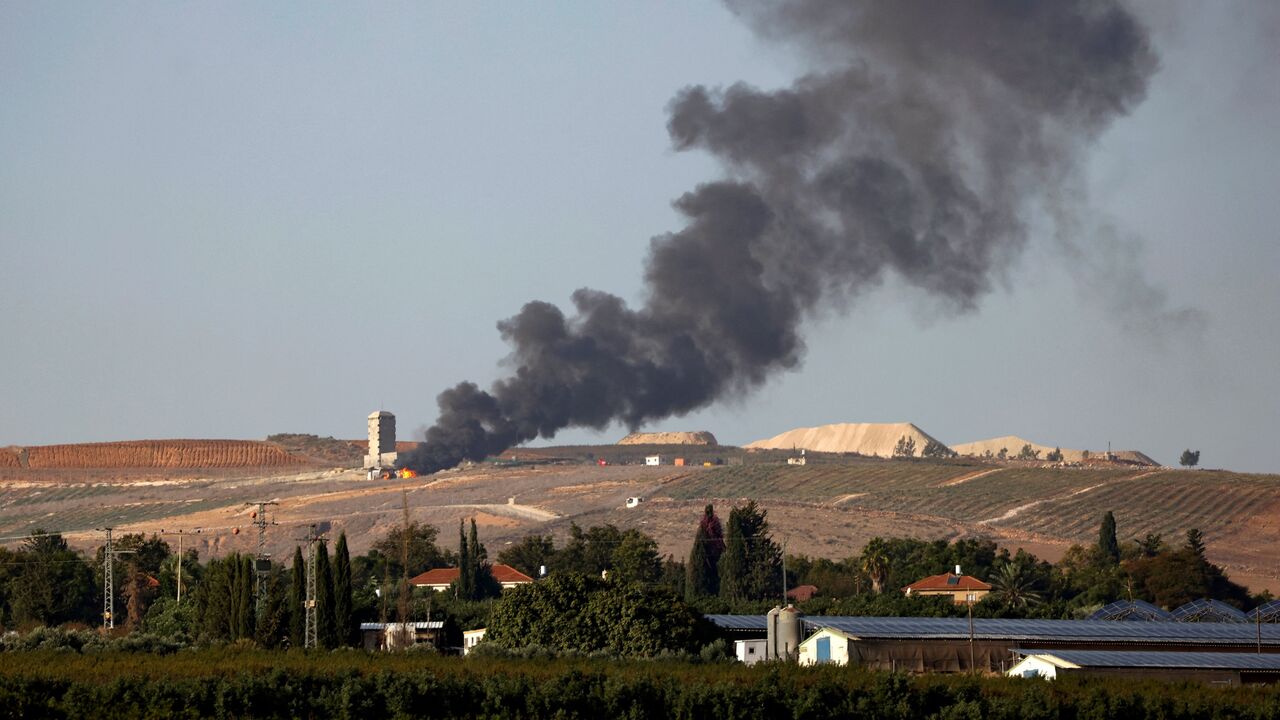
Armed confrontations between Hezbollah and Israeli forces have intensified over the past several weeks, particularly in southern Lebanon. The escalation comes as Israel’s politico-military leadership has announced plans to expand its military presence in southern Lebanon and occupy areas extending as far as eight kilometers inside Lebanese territory.
Hezbollah has continued to issue statements on its operations against Israeli targets. According to L’Orient Today, Thursday marked the highest number of attacks reported by the group, with 94 statements announcing strikes or fire operations. The group also said it had targeted 31 Merkava tanks and used surface-to-air missiles against Israeli helicopters on two occasions.
The Israeli army, for its part, is reportedly deploying additional troops to southern Lebanon. On its official X account, the army said that Division 162 had joined operations in southern Lebanon alongside Divisions 91 and 36, following two years of operations in Gaza. Reports so far indicate that four Israeli soldiers have been killed since early March, while several others have been injured.
International Warnings Amid Regional Uncertainty
International actors were quick to warn of the risks of an expanded Israeli ground offensive.
“A significant Israeli ground offensive would have devastating humanitarian consequences and could lead to a protracted conflict,” said a joint statement issued on March 16 by the leaders of Canada, France, Germany, Italy, and the United Kingdom. “It must be averted. The humanitarian situation in Lebanon, including ongoing mass displacement, is already deeply alarming.”
The statement also condemned attacks by both sides on civilians, civilian infrastructure, health workers and health infrastructure, as well as United Nations peacekeeping forces.
As the United States-Israeli war on Iran continues, Lebanon’s fate within broader regional calculations remains unclear. Analysts have warned that even if a ceasefire is reached in Iran, the same cannot necessarily be guaranteed for Lebanon.
That uncertainty is fueling a range of concerns, including the possibility of a long-term Israeli occupation of southern Lebanese territory, prolonged damage to residential buildings and infrastructure in southern Lebanon and other affected areas, and the deepening of displacement crises.
Mounting Humanitarian and Infrastructure Costs
So far, Israeli attacks have killed 1,116 individuals, including 42 health sector workers, and injured 3,229 others, including 119 health sector workers. A total of 70 attacks has been recorded on emergency medical services, as Israeli forces have repeatedly used the “double-tap” strategy, whereby a location is struck and then targeted again after emergency crews arrive.
Lebanese Prime Minister Nawaf Salam has estimated that the number of displaced individuals has surpassed 1,200,000, as attacks continue across the country and forced displacement orders affect large swathes of Lebanese territory.
Israeli attacks have also increasingly targeted vital infrastructure, including seven bridges, three small crossings, ten gas stations, and one power station. A recent report by Oxfam found that only a few days into the escalation in early March, at least eight water facilities had already been damaged in the Bekaa region alone, while water projects in the south had become increasingly inaccessible.
