

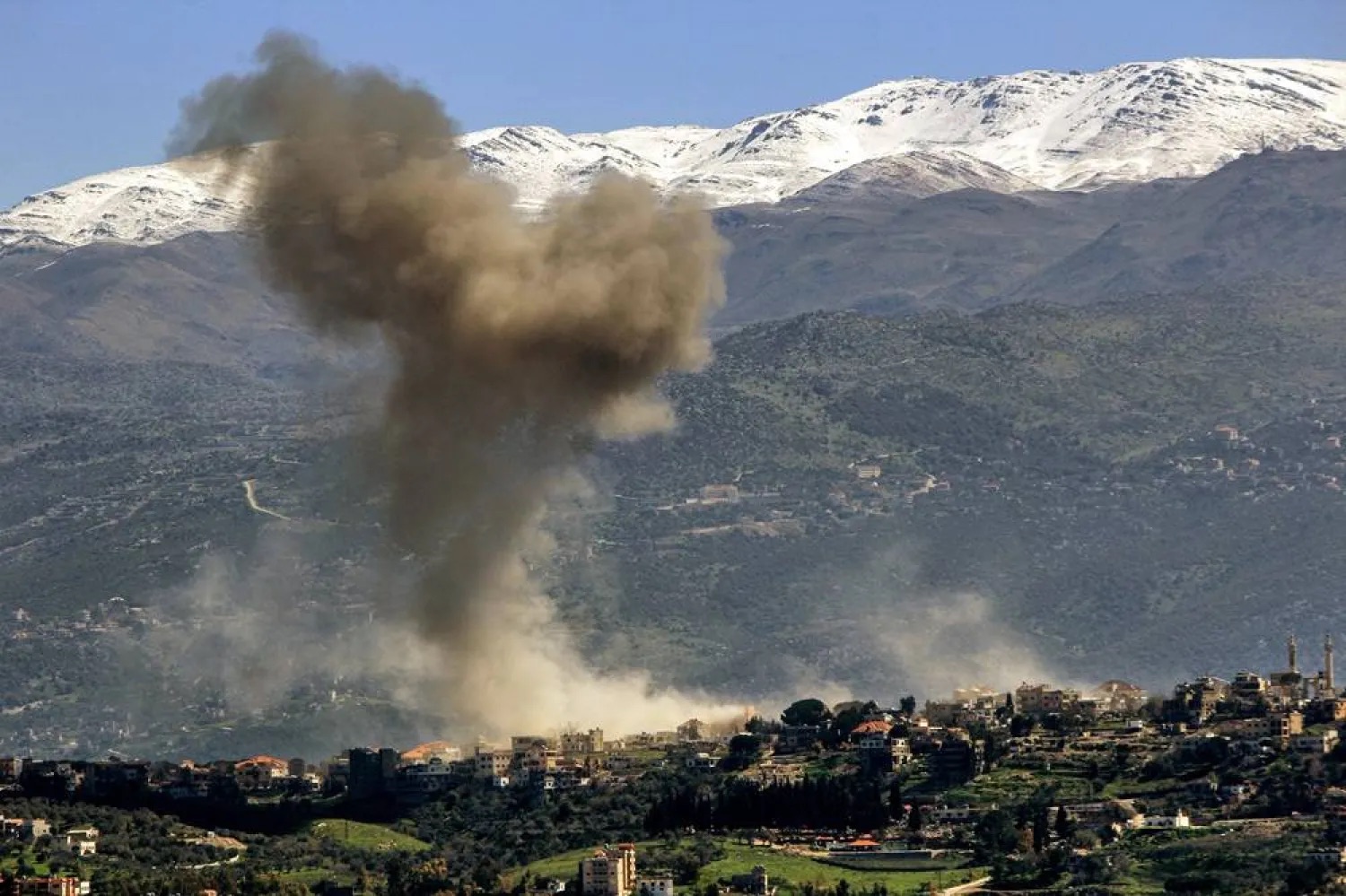
Today, an Israeli airstrike on the city of Nabatieh killed one Lebanese Army solider, injured four others, one of whom is in critical condition. The strike occurred as they were traveling through the city in a car and on a motorcycle, according to a statement by the Lebanese Army’s official page on X. The soldiers have been transferred to a hospital for treatment.
The strike comes as Israeli attacks across Lebanon continue to expand. As of Monday evening, Israeli attacks have killed 886 individuals and injured 2,141 others across the country.
The number of displaced people has surpassed one million, with 1,049,328 individuals identified as displaced. While many are staying in officially recognized shelters, others remain stranded on the streets or in ad hoc arrangements.
Ground Incursions Intensify
Clashes between Israeli forces and Hezbollah have intensified in southern Lebanon. Last week, the Israeli army issued an expanded forced displacement order, calling on residents in southern Lebanon to move north of the Zahrani River, whereas previous orders had set the boundary at the Litani River.
Over the past few days, fighting has been particularly intense in the town of Khiam. Shelling and strikes have targeted southern areas across all three fronts—eastern, western, and central.
Today, shelling, drone strikes, airstrikes, and reported engineered explosions were recorded in the towns or outskirts of Ghandourieh, Bnaafoul, Touline, Burj Qalaouieh, Qaaqaaiet al-Jisr, Taybeh, Majdal Zoun, Baraachit, Blat, Aita Chaab, Khiam, Kafra, Aiteeit, Jarmaq, Zebqine, Yohmor, and Arnoun.
These attacks come as Israeli forces have signaled their intent and already begun an expanded ground operation, moving further north into Lebanon and beyond the five regions they had occupied since 2024 under the ceasefire agreement.
An Uncertain Outlook
The fate of Lebanon, as well as that of the broader Southwest Asia region, remains highly unpredictable and precarious from a security perspective.
With the war increasingly turning into one of attrition, and with the global economy significantly affected – particularly due to disruptions related to the Strait of Hormuz – international actors have begun exploring efforts to end hostilities.
For Lebanon, however, the key question remains whether its trajectory in the conflict will be tied to developments in Iran, and whether a ceasefire involving Iran would translate into a ceasefire in Lebanon.
