
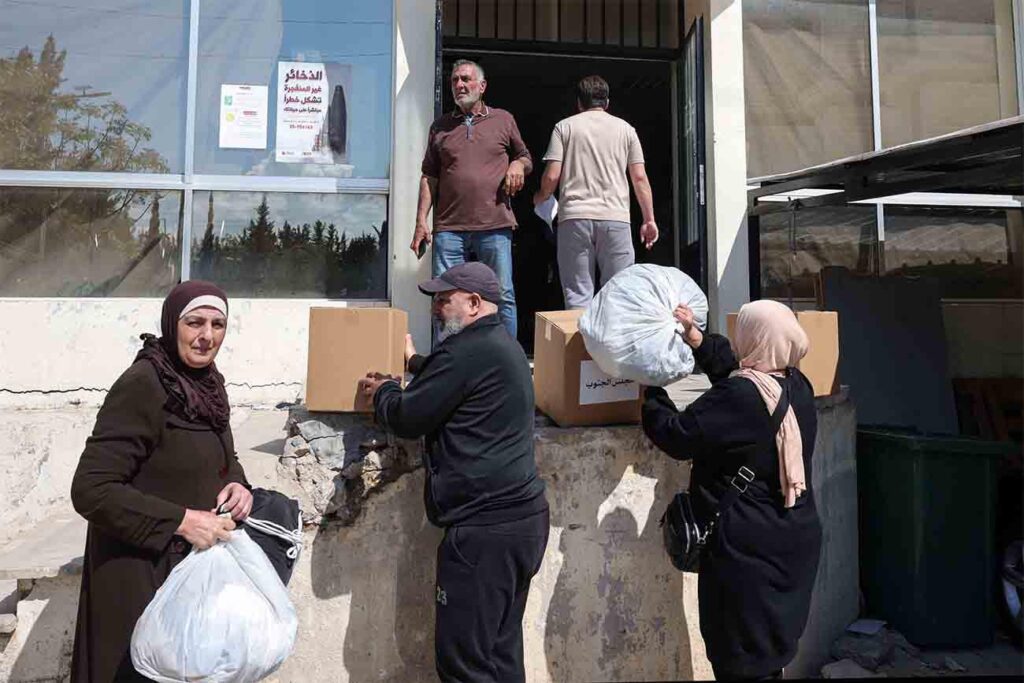
Yesterday, the latest Integrated Food Security Phase Classification (IPC) report for Lebanon was released, highlighting severe food security issues in the country due to the mix of socioeconomic, conflict, and climate crises.
The IPC report, which partially relies on projections for the short term, highlighted that around 1.24 million individuals are facing high levels of acute food insecurity (IPC Phase 3, or a condition of crisis) between April and August 2026.
Less than half (40%) of the over 5 million people analyzed only did not face major food security related issues. In addition, over 100,000 individuals were in IPC phase 4 – or a state of emergency – suffering from severe food security issues. Almost a quarter of the population analyzed (24%) – or 1,241,712 individuals – were either in a state of crisis or emergency.
According to the report, the decline in food security prospects across Lebanon was driven by the war, displacement, livelihood opportunity disruptions, market disruptions, and expected reductions in humanitarian food assistance coverage.
Cross-Sectoral Crises
While the entire economy in Lebanon was impacted, productive and environmental sectors were particularly impacted. A report by the Ministry of Environment and the National Council for Scientific Research covering the period between 2023 and 2025 highlighted that Israeli attacks cost the agriculture sector $118 million USD in damages and $586 million USD in losses.
More recently, assessments by the Ministry of Agriculture highlight that 22% of Lebanon’s agriculture land – or almost 50,000 hectares – has been impacted by Israeli attacks, with 17,000 farmers affected and over 76% of farmers displaced.
Recently, Lebanon has also suffered from recurrent climate crises, primarily a severe drought, as well as the socioeconomic crisis that has exponentially escalated since 2019. The country’s overall prices were also severely impacted by the global fuel crisis fueled by the war in the region.
Without active and well-supported productive sectors – especially agrifood systems – the Lebanese population’s self-sustenance needs, especially those of the most vulnerable groups, remain in a precarious condition.

