
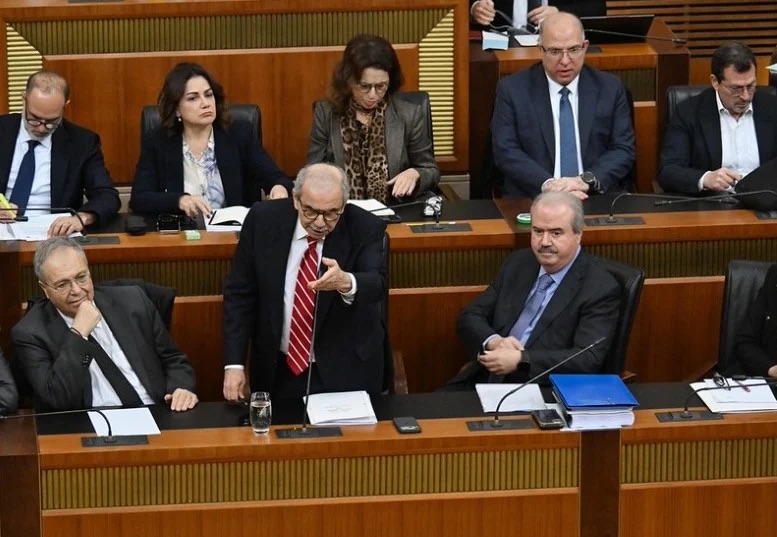
The Lebanese Cabinet met on Thursday to discuss a number of key items. It approved the 2027 state budget, as well as a decree amending the transportation allowance for public sector employees, among other measures.
The allowance would now be equivalent to five liters of gasoline per day, with a minimum of 500,000 Lebanese pounds and a maximum of 800,000 pounds. Given how rapidly fuel prices are fluctuating, the allowance would require frequent recalculation, as prices change around twice a week.
The change comes against the backdrop of a sharp increase in fuel prices over the past few months, affecting a range of sectors and significantly raising the prices of everyday items.
The International Monetary Fund
At the same time, Lebanon has been in contact with the International Monetary Fund (IMF) for several years, having signed a preliminary agreement in April 2022, but with little progress since then.
The IMF highlighted that Lebanon should implement a number of economic and banking sector reforms for a new program. These include implementing the bank resolution law and adequate financial gap laws, as well as adopting a budget and a medium-term fiscal framework consistent with debt sustainability.
More of the Same?
With these developments, Lebanon’s approach to public financial management and its political economy seem to be heading towards more of the same, rather than fundamental changes.
The measures adopted would likely serve as temporary mitigation measures, and it remains to be seen whether the state is moving towards substantial changes in governance.

