
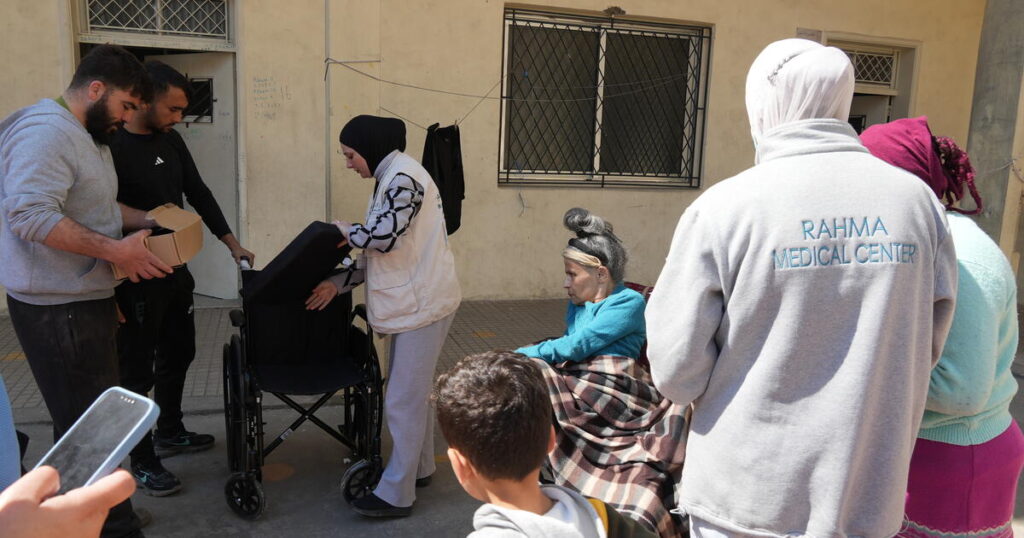
The Lebanon Response Plan (LRP) Addendum was launched by the Government of Lebanon and the United Nations on September 18 in response to new and worsening humanitarian needs in the country.
The framework brings together the efforts of multiple humanitarian and development organizations across the country. It includes activities across sectors such as health, education, livelihoods, shelter, water, and protection, adjusted to reflect developments in different areas.
From the LRP to its Revision and Addendum
The LRP remains the overarching framework guiding a large portion of the humanitarian response across Lebanon, with a focus on collective humanitarian and stabilization efforts.
The plan was launched in early 2026 with a target of reaching 1.5 million people with critical support. It identified 2.99 million people in need of services, including disproportionately affected groups such as vulnerable Lebanese people, Syrians, Palestinians, and migrants. Partners appealed for $1.62 billion to meet these needs.
Following a revision in June 2026 to reflect changes brought about by the war and ongoing crises, humanitarian partners identified a need for $639.9 million to support 1.4 million people between March and August 2026.
In September, humanitarian and stabilization actors announced through the addendum that they were seeking an additional $385.88 million to assist 732,125 people between September and December 2026.
Elevated Needs Across a Wide Range of Sectors
Sectors covered by the addendum include:
- Education: 327,000 people in need were identified, with a target of reaching 200,000 people. Education would require over $21 million in humanitarian and stabilization funding.
- Food Security and Agriculture: 813,000 people in need were identified, with a target of reaching 271,000 people. Food security and agriculture would require over $61 million in humanitarian and stabilization funding.
- Health: 1.2 million people in need were identified, with a target of reaching 546,000 people. Health would require nearly $50 million in humanitarian and stabilization funding.
- Nutrition: 60,300 people in need were identified, with a target of reaching 24,000 people. Nutrition would require $1.6 million in humanitarian and stabilization funding.
- Livelihoods: 94,000 people in need were identified, with a target of reaching 26,800 people. Livelihoods would require $15 million in humanitarian funding.
- Logistics and Telecommunications Cluster: The cluster would require $1.2 million in humanitarian funding.
- Protection: 900,000 people in need were identified, with a target of reaching 270,000 people. Protection would require $11.1 million in humanitarian and stabilization funding.
- Child Protection: 385,000 people in need were identified, with a target of reaching 136,000 people. Child protection would require $10.3 million in humanitarian and stabilization funding.
- Gender-Based Violence (GBV): 650,000 people in need were identified, with a target of reaching 220,000 people. GBV response would require $10.3 million in humanitarian and stabilization funding.
- Shelter (including Site Management Coordination): 940,000 people in need were identified, with a target of reaching 200,000 people. Shelter would require $43.5 million in humanitarian and stabilization funding.
- Social Stability: 555,000 people in need were identified, with a target of reaching 324,000 people. Social stability would require $8.2 million in humanitarian and stabilization funding.
- WASH: 921,000 people in need were identified, with a target of reaching 599,000 people. WASH would require $47.9 million in humanitarian and stabilization funding.
- Multipurpose Cash Assistance (MPCA): MPCA has a target of reaching 732,000 people and would require $103.9 million in humanitarian funding.
Humanitarian conditions in Lebanon continue to deteriorate amid ongoing Israeli attacks and occupation, displacement, and worsening economic conditions.
Interventions remain necessary to end Israeli violations in the country. State and international policies are also needed to address gaps in public institutions and services, as well as barriers to meeting basic needs faced by the majority of the population.

