
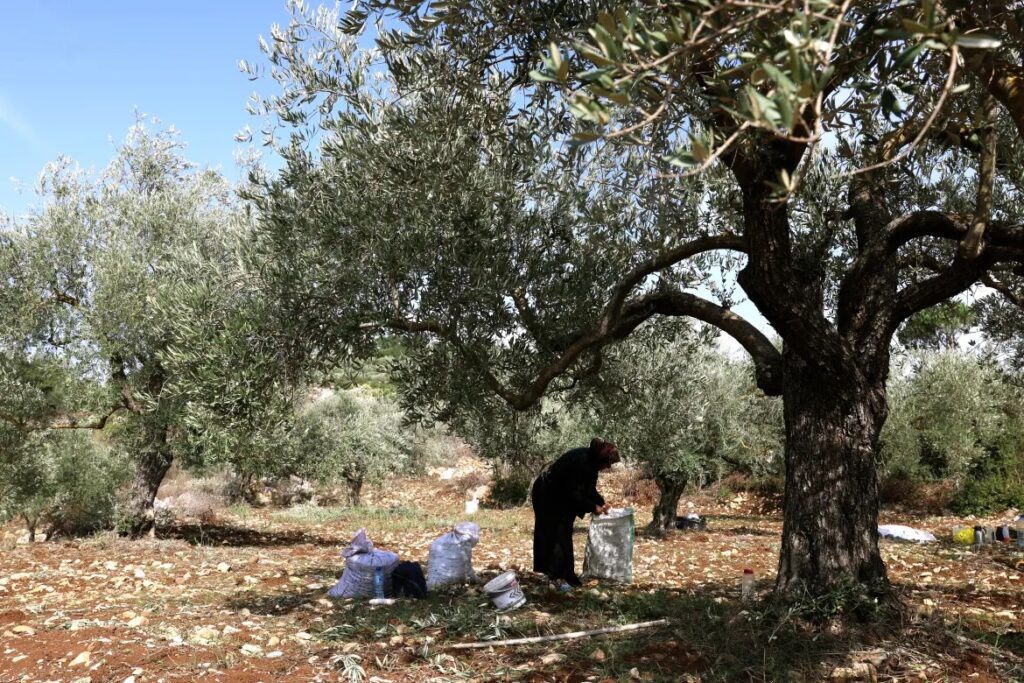
The beginning of the fourth quarter of the year usually marks the start of the olive harvesting season in Lebanon. People from across the country head to their villages to harvest olives, which are then pressed into olive oil or used for direct consumption.
However, the country’s harvesting season is once again being impacted by Israeli violations of Lebanese sovereignty.
In the last month, three individuals were killed while tending to their olive trees or agricultural land. They include Edgar Jilou, who was killed in his field in Ain Ebel by unexploded Israeli ordnance, and Hussein Ali Ramadan, who was killed while harvesting olives in Froun by unexploded ordnance, which also injured one other person.
Retired soldier Ali Abdel-Hasan Sweidan was killed when Israeli forces shelled the outskirts of Yater. Sweidan was also tending to his land and olive trees.
Harvesting and tending to the land in Lebanon are beyond a consumption or livelihoods and income-generating activity, they are social and personal activities that connects people to their land and form a central part of one’s personal and social life and well-being.
Another Season Disrupted
Previous years also saw significant disruptions to agricultural workers’ activities. The escalation in 2024 also took place during the peak harvesting season, when farmers, especially in southern Lebanon, the Bekaa, and Baalbek el-Hermel, lost partial or complete access to their lands.
Beyond losing direct access to their lands, many also lost access to markets where they would sell their produce or gather with others as part of collective activities.
Israeli forces continue to carry out the systematic destruction of Lebanese agricultural land and greenery, with both short- and long-term consequences. The Ministry of Agriculture published a report in May 2026 stating that over 56,000 hectares of agricultural land had been impacted by Israeli violations, equivalent to 22.5% of agricultural land located within the conflict zones in southern Lebanon.
Furthermore, Lebanon’s agricultural sector and overall food security have been affected by a major drought in recent years that has significantly impacted crops across the country, compounding difficulties for the general population.
The latest Integrated Food Security Phase Classification (IPC) report, published in April, estimated that around 1.24 million people would face high levels of acute food insecurity in Lebanon between April and August 2026.

