
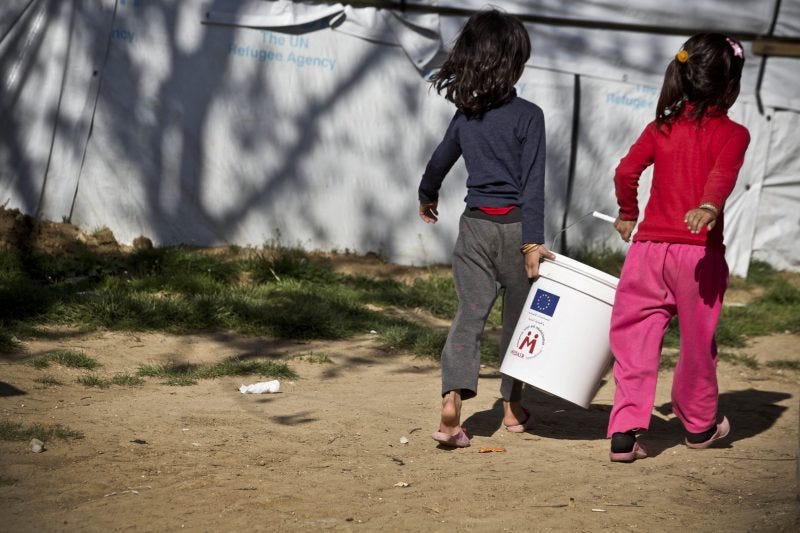
The United Nations Children’s Fund released a press release highlighting that four in five households in Lebanon are struggling to afford basic necessities as conflict and the continued socioeconomic crisis compound each other.
The release focused on the realities facing children, highlighting how they are being pushed “into hunger, out of education and into work”.
Striking Figures
UNICEF said that more than a fifth of surveyed households reported that their children go to bed hungry, while 31 percent reported that children had gone without healthcare. Fourteen percent reported that at least one child was working, double the figure recorded in January 2025.
The release highlights that since the escalation of the war on March 2, 2026, at least 261 children have been killed and 1,056 injured, with an estimated 12 percent of injured children now living with a disability. Eighty-six teachers have been killed or injured.
Around 436 schools were destroyed, leaving around 100,000 children at risk of being without a classroom. Household spending on education also fell significantly, with 46 percent of households cutting education spending and 17 percent reporting that their children had to stop attending school.
Furthermore, the release highlights the psychological toll on children, with an estimated 770,000 experiencing psychological distress over the past six months and more than half of households saying that their children’s emotional well-being had worsened.
The release also points to another assessment conducted by UNICEF earlier this year, showing shrinking opportunities for young people aged 18 to 25, with only 22 percent in school or university and 67 percent unemployed.
Short- and Long-term Impacts
The ongoing Israeli attacks and occupation, alongside the continued socioeconomic crisis, continue to have both short- and long-term impacts on access to basic needs and services for the majority of Lebanon’s population.
Public institutions and services have deteriorated considerably, while private institutions have sharply increased their prices. The resulting effects include intergenerational deprivation and mounting obstacles for poor households.

