
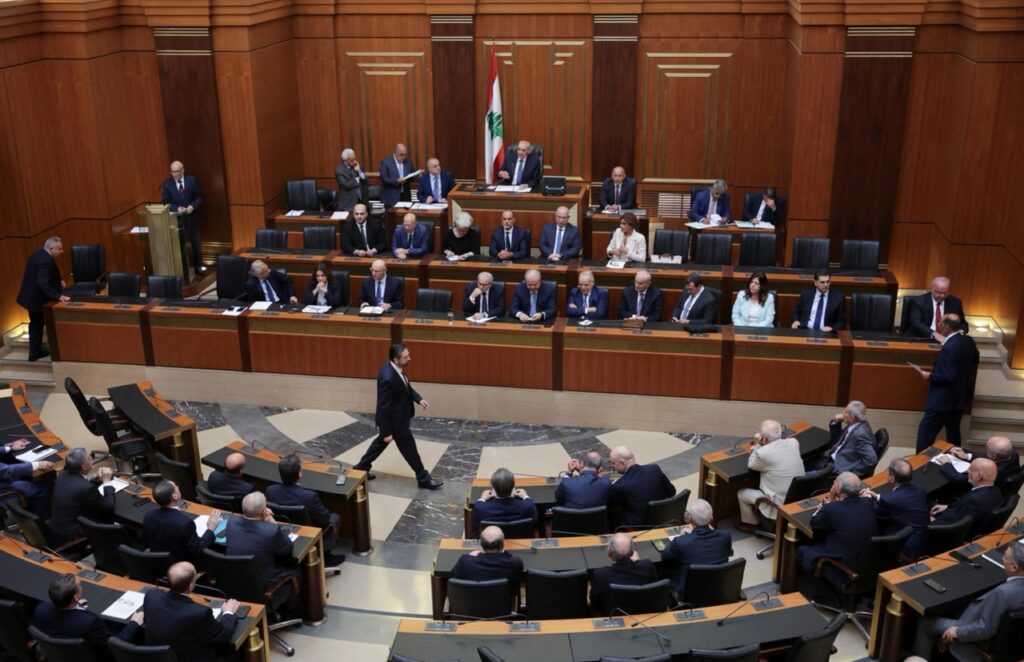
Lebanon’s Parliament approved a new media law on August 11, replacing much of the country’s outdated media legislation and introducing a modernized, unified framework.
The long-awaited law covers newspapers and other publications, television, radio, news agencies, professional news websites, advertising agencies, opinion polls, and foreign media operating in Lebanon.
Major Aims of the Law
The law seeks to protect freedom of expression and promote media pluralism, fair competition, access to information, human rights, gender equality, child protection, accuracy, and diverse local production.
Structurally, it establishes a ten-member National Media Authority with formal administrative and financial independence. Its wide-ranging responsibilities include licensing television and radio stations, registering media institutions, monitoring ownership and market concentration, receiving complaints, overseeing compliance, issuing warnings, and referring serious violations to the courts.
The law also establishes specific administrative and regulatory requirements for different types of media. These include, for example, different requirements for print and digital media, on the one hand, and television and radio broadcasters, on the other.
It introduces several protective measures, including the confidentiality of journalistic sources; protection against arbitrary searches and surveillance; the right to access public information; freedom to establish and join professional associations; and the right to refuse attribution of altered material. It also excludes media offences from military-court jurisdiction, subject to limited exceptions, and prohibits preventive detention for offences committed through covered media or electronic platforms.
Source confidentiality may nevertheless be overridden by a court in exceptional cases involving serious crimes or imminent danger when the information cannot be obtained through other means.
Questions Surrounding Numerous Provisions
Analyses from organizations specialized in media matters such as Samir Kassir eyes (SKeyes), HuMENA, and l’Orient Today have raised numerous questions regarding many of the law’s provisions.
Article 104 remains highly controversial. It allows for imprisonment of between three months and three years, a fine, or both for deliberately fabricating and publishing false and harmful information.
Given the nature of Lebanon’s legal and political systems, concerns have been raised about how this article could be interpreted and applied in practice. In particular, the absence of precise definitions for terms such as “false,” “fabricated,” and “harmful” creates a risk of overly broad interpretations and potential pressure on journalists, investigative reporters, critics, and social-media users.
The composition of the National Media Authority and the process through which its members are appointed would also be crucial. A transparent and independent appointment mechanism is necessary to protect the Authority from political influence.
The Lebanese Press Editors Syndicate and the Press Syndicate have rejected the law and announced plans to organize joint action and public advocacy campaigns. They argue that the law lacks adequate safeguards for press freedom and the independence of Lebanon’s media sector.

