

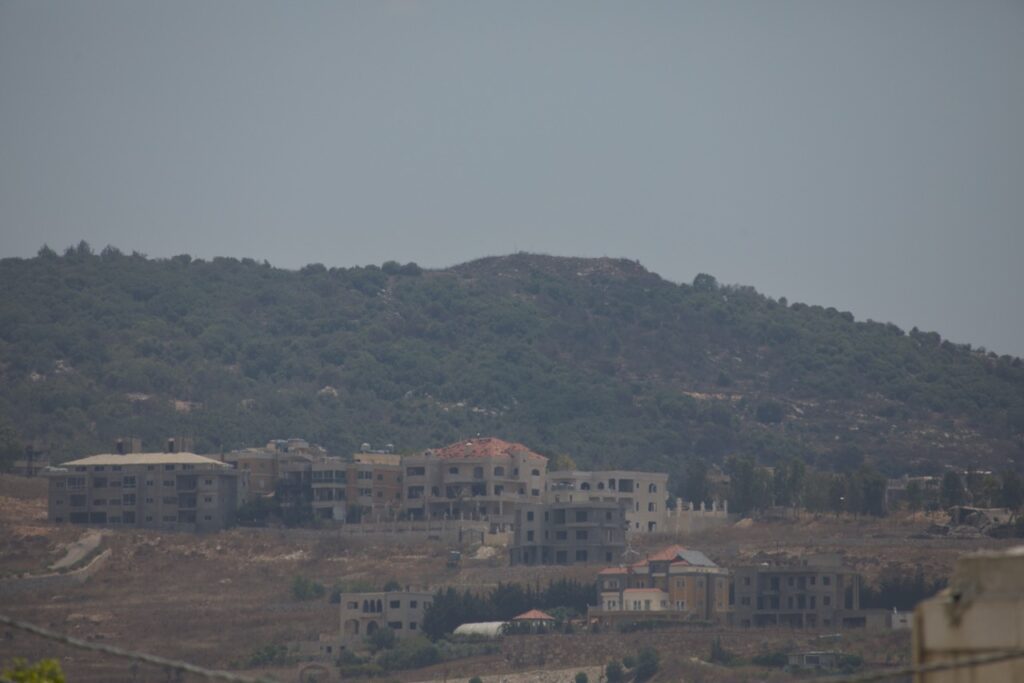
Even as Israel continues to occupy and bomb parts of south Lebanon, those who can are slowly returning to their villages to inspect the damage and rebuild their lives on a land that they refuse to abandon.
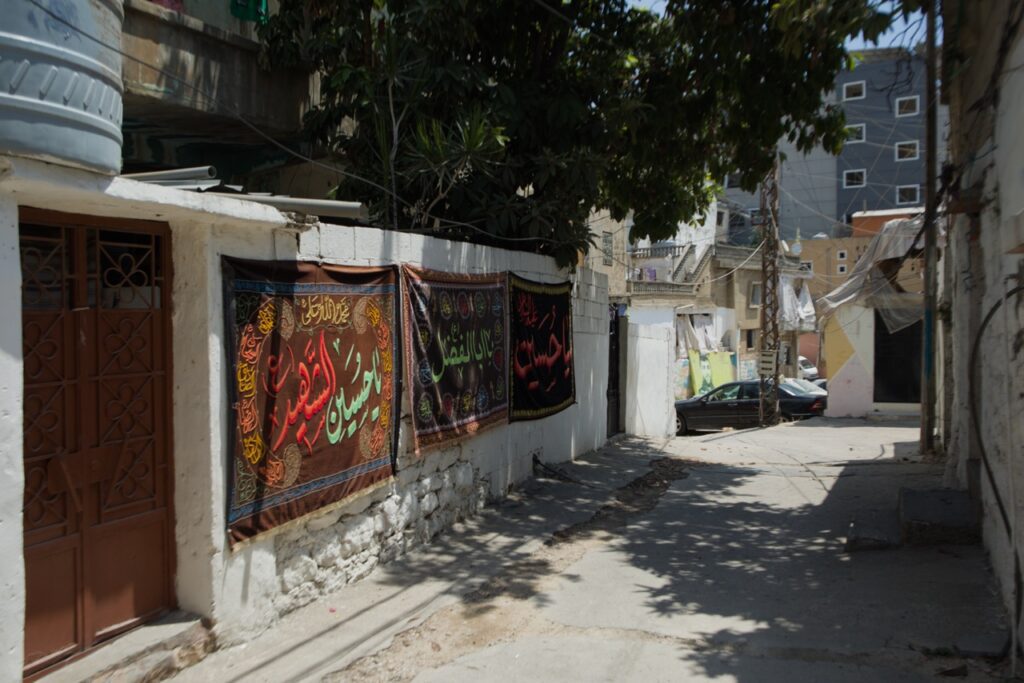
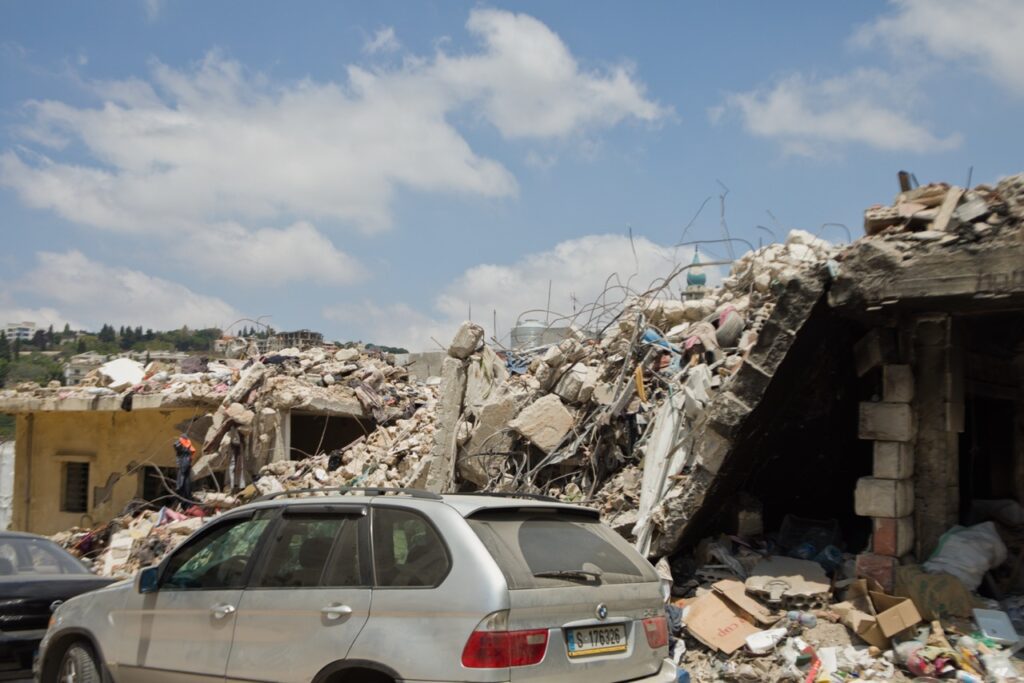
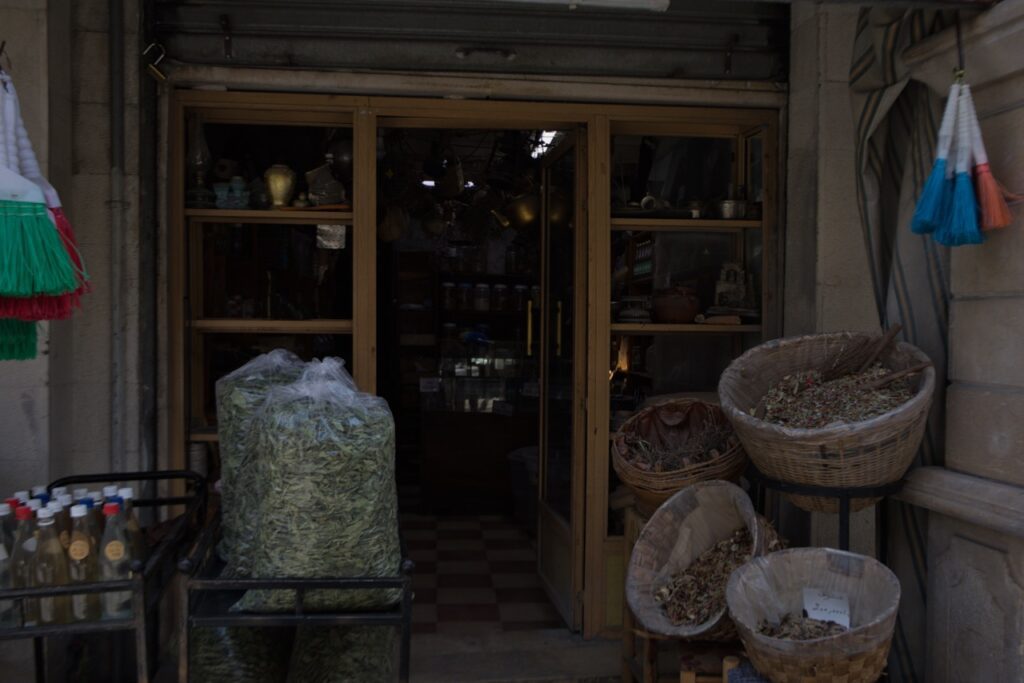
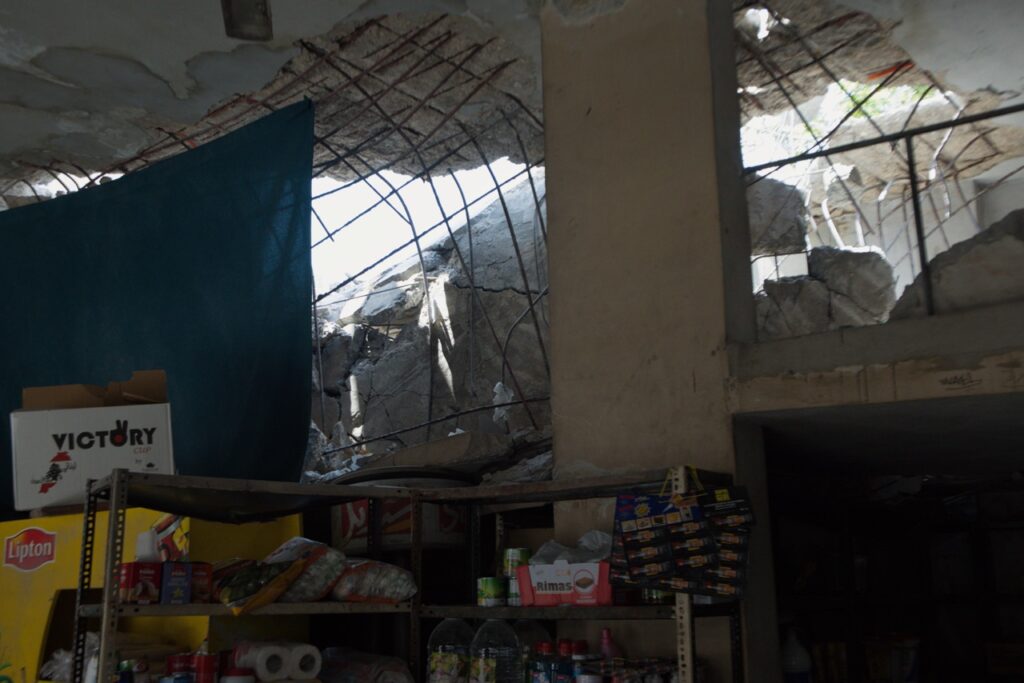
The walls of the houses that formed the borders of the narrow, uneven road in the Hayy al-Serail neighborhood of Nabatiyeh were covered in colorful tapestries that starkly contrasted with the dull, dusty concrete in the area. Some had the names of important Shia figures written on them. Fatima. Hussein. Others had Islamic phrases.
It looked like any other devout Shia neighborhood.
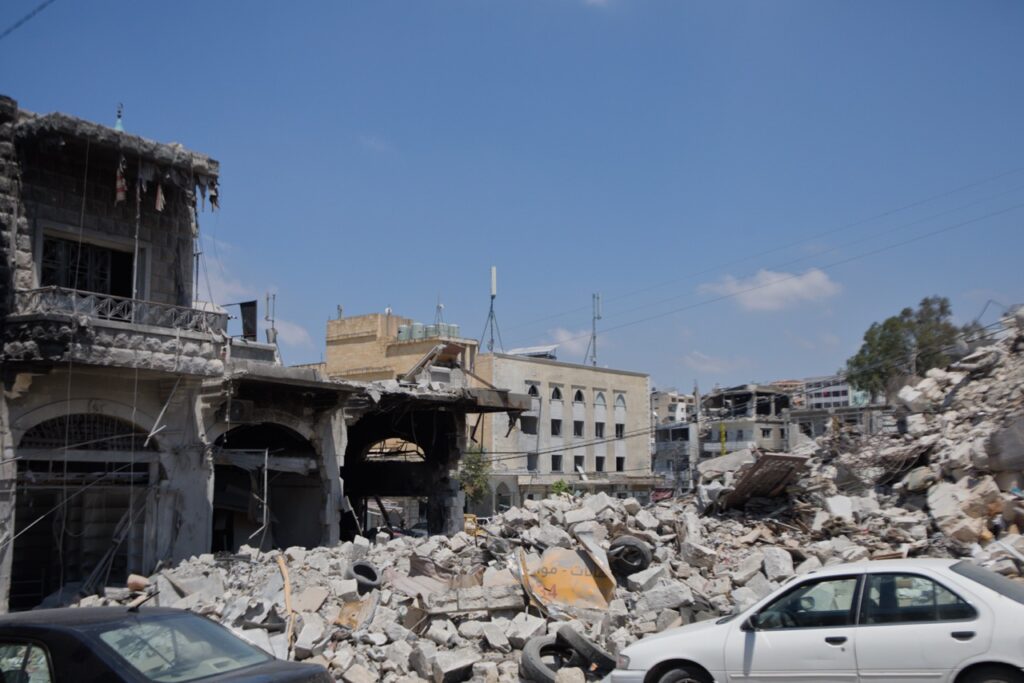
However, like so many other parts of the south, it bore the scars of war.
At the start of the road, there were the charred, skeletal remains of a car that was targeted in an Israeli drone strike. On the same walls that held up the tapestries, posters proudly announced the deaths of Hezbollah members killed in the recent wars between the party and Israel. The sons of the neighborhood.
Under one of those posters sat Um Mehdi, dressed in a thick black abaya despite the harsh summer heat and humidity. There were momentary cool breezes that passed through, providing a brief moment of reprieve from the unrelenting sun.
As she sat there on a plastic chair, the steady buzz of an Israeli drone flying overhead was the only sound on the quiet street, broken up only by the explosions from Israeli artillery fire on a nearby village.
Put an explosive vest on me and I will help liberate our land, the 86-year-old stated with a laugh at the notion of a woman her age going to fight in a war.
Despite Nabatiyeh being one of the most heavily bombed parts of south Lebanon during the war, Um Mehdi, who spoke on the condition that her name not be used, refused to leave. Even as the market and buildings just a few minutes’ walk from her home were bombed, the thought of gathering whatever she could fit in a car, locking her door one last time and praying that she would have a home to return to when the war was over never once crossed her mind.
“My heart was aching for the young men walking through the streets, angry with what is going on with the land,” she told Beirut Today as firmly as the cane she used to help her walk that was leaning against the wall beside her. “I’m at the end of my life and I won’t be leaving my house and go into hiding at this age while young men are fighting for this land. They gave me courage and strengthened my heart. They encouraged me to stay.”
The ones who stayed
When the latest war between Hezbollah and Israel began on March 2, after Hezbollah launched a volley of rockets into northern Israel in support of Iran amid the joint United States-Israeli offensive on the party’s patron, those residing in the south and Beirut’s southern suburbs knew what was coming.
Even before Hezbollah officially claimed the attack, everyone knew that Israel would retaliate disproportionately – despite the rockets having been easily intercepted and causing no damage – and that a new war was about to begin. So, the vast majority of residents in the south and the southern suburbs packed their things and fled before the Israeli bombs rained destruction upon them and their loved ones.
The roads became congested to the point where traffic came to a halt, forcing families to sleep in their cars as they waited to move forward just a few meters. For many, it would take hours – and over a day for others – before they reached what they hoped would be safety.
Not everyone chose to leave, though.
Some, having nowhere to go, decided that it would be better to stay. Others were too old to make the journey. There were also those who were too stubborn to leave their homes, defiant in the face of possible death, who would rather die in their homes than abandon them for a fate unknown.
Um Mehdi fell into the third category.
“This is the house where I grew up,” she said, beaming with pride. “I’ve been here for 70 years. We were born in the other neighborhood. I got married and moved to my husband’s house, then later I came back here.”
For Um Mehdi, this one street in Hayy al-Serail was as much a part of her as it was of Nabatiyeh.
She pointed to the rows of old traditional houses on the street that had withstood the test of time and conflict, briefly explaining the history of her neighborhood and how it has transformed over the decades.
“All these buildings, from that column to the other one, there are nine of them. Every room had its place, and there was a bathroom in front. The house is very old,” she explained.
It was not just her home that she spoke about with such love but the land itself as well.
As much as she loved her ancestral home, it was on the land, gardening, where she felt the most connected with the south, planting fruits and vegetables that she would later pick to make lunch or dinner later in the day.
This love for the land, in Um Mehdi’s telling, starts at birth.
“A child from the south grows up with that love from the very beginning from their mother’s blood and their mother’s milk. That love is part of us because of our devotion to Ahl al-Bayt (the family of the Prophet Muhammad),” she stated. “We are all like this. We are the people of the south.”
According to Mohanad Hage Ali, the deputy director of research at the Carnegie Middle East Center in Beirut, this relationship between Lebanese southerners is not surprising by any means. In fact, it is a widespread feeling amongst southerners, as well as the Druze in the mountains that they call home.
“[Southerners] and, of course, the Druze, they have a special relationship to the land in the sense that they claim to have been there for many, many centuries and they settled that part of the country a very, very long time ago,” he told Beirut Today.
Jabal Amel, a region in the south encompassing the regions of Tyre, Nabatiyeh and Bint Jbeil in south Lebanon, boasts a history that goes back centuries. It was the preeminent center for Shia Islamic studies for several centuries. Residents of the region also used to travel freely to towns in modern-day Israel, in particular Acre, where many resided and worked.
That all came to an end in 1948 after the creation of Israel, when these people were forced to leave for Lebanon, never able to return. These families that had to rebuild their lives in southern Lebanon now reside in towns under Israeli occupation.
Today, much of Jabal Amel is now part of what the Israeli military calls the “Yellow Zone.”
“In certain cases, people feel attached to their homes. They see what happened to these towns and these people are not strangers. They know how 1948 went because they have grandparents who were displaced and, now, they see basically a replication of 1948 in front of their eyes,” Hage Ali explained.
In Um Mehdi’s eyes, this was her land as a southerner and she was not going to abandon it no matter the cost.
Despite the widespread destruction to Nabatiyeh from the unrelenting Israeli bombing campaign on the town, she insisted that she was not afraid during the war. Instead, she put her faith in God and refused to let her life be turned upside down. Even as Israeli forces advanced closer and closer to Nabatiyeh, she remained in her home, unwavering in her conviction to stay.
Each day, she recounted, she would walk the streets of her neighborhood and tend to her land, planting the crops that she hoped would provide her nourishment later. The goats, however, had other plans. Um Mehdi smiled as she recalled how they would eat her plants.
“Life was normal. We had electricity, water and food. We didn’t lack anything. The young men were walking through the streets, waiting to be martyred,” she recalled.
Religion, though, was ultimately what gave her the most strength to continue.
“I remember Imam Hussein when he left Medina for Iraq. That’s where my strength comes from. the strength of Ahl al-Bayt. We are followers of Imam Ali, the Commander of the Faithful. This is the path our imams taught us, and we follow their message,” she said.
Um Mehdi was one of the lucky ones.
The district of Nabatiyeh has been one of the hardest hit in the war, suffering some of the greatest destruction and having the most killed and injured than anywhere else in Lebanon.
According to the Lebanese Health Ministry, 1,860 people have been killed and 5,231 others have been injured in Israeli attacks on the Nabatiyeh district since the start of the war, many of them civilians.
Hage Ali argued that Israel was more than likely aware that civilians were remaining in their homes in the areas that they were bombing and that it was part of a collective punishment campaign on Lebanon and the south.
Punishing the masses
For decades, Israel has been accused of using collective punishment as a weapon of war by rights groups and critics alike, largely stemming from what are described as indiscriminate bombings that lead to high civilian casualties.
Israel has pushed back on this, arguing that it takes great pains to ensure that civilian lives are protected and that its enemies hide amongst the civilian population, making it impossible to avoid killing civilians.
Whenever Israel issues a displacement order, it tells people to leave the area or that their lives would be at risk, seemingly an effort by Israel to absolve itself of any criticism in the inevitable civilian deaths that stem from its bombings.
“Israel knows exactly what it’s doing in the sense that if you look at the other side of the policy, which is whenever someone from the Shia community is a suspect and goes to the Christian areas is targeted. The Christians in the area are killed subsequently,” Hage Ali stated. “When you look at the state of the collective punishment in these areas, they’ve turned everyone into an inspector looking for any suspect.”
Now, anyone who looks like they observe even the most basic Islamic values, such as women wearing a hijab or men having a beard, is automatically suspected of potentially being a target.
For those who have been displaced by the war, this has meant being unable to rent an apartment or, in extreme cases, harassment and intimidation.
This, according to Hage Ali, is exactly what Israel is seeking to do.
First, it tells people that there are “consequences” for being part of Hezbollah and that everyone could die if you are with or near a suspected member. Second, it harms communal relations.
This has created a lack of sympathy in some cases in Lebanon for Shia who have been displaced by the war or even killed when they refuse to leave their homes in areas being targeted by Israel.
In past wars, Lebanese across the political and religious spectrum would help the displaced, viewing them simply as other Lebanese who were in need. As time has gone on, though, and Hezbollah has waged more conflicts with Israel, it has led to a growing frustration with the wider Lebanese population.
“For them, this is Hezbollah’s war. They associate it with Hezbollah and there’s a huge fatigue across the country from the conflict, from Hezbollah’s past policies. There’s no sympathy,” Hage Ali said.
A prevailing feeling throughout Lebanon, now, is that it is time to disarm Hezbollah to avoid another devastating war.
However, that is not entirely the case with the Shia, who are seemingly split as to what they want to happen next.
The Lebanese government reached a framework agreement with Israel on June 26 to establish “pilot zones” in south Lebanon in which the Israeli military would redeploy while the Lebanese army goes into the towns that Israel pulls out of and dismantles any Hezbollah infrastructure in the area.
So far, only three towns have been part of the program, and none of these towns were under Israeli occupation before the Lebanese army entered them, leading to speculation that Israel is negotiating with Lebanon in bad faith.
One of those who are skeptical of the “pilot zone” plan is Hage Ali.
“Israel’s not going to give in any town in the ‘Yellow Zone’ to the Lebanese government. It’s not going to happen,” he argued. “What’s going to happen is they’re going to ask the Lebanese army to do more ‘pilot zones’ on the Lebanese side of the border and to neutralize any threat and allow Israel to continue its occupation in the ‘Yellow Zone.’ That’s the game plan for the Netanyahu government.”
Rather than Israel returning any Lebanese land, he believes that Israel will just destroy all of the towns that it occupies.
“It’ll be a no man’s land turned into a parking lot. Scorched earth policy,” he said.
While it is unclear what the future holds for south Lebanon – such as whether the war will restart and Hezbollah will seek to reclaim the occupied lands – for those who have been able to return to their homes, it has been nothing short of a blessing, no matter what it is they find upon their arrival.
Picking up the pieces
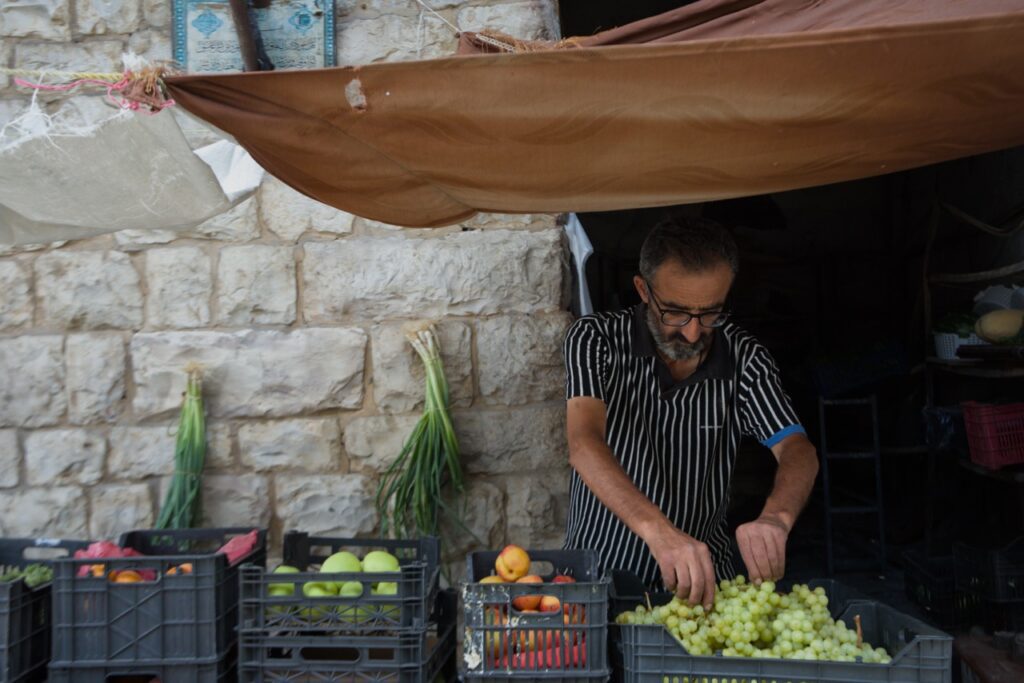
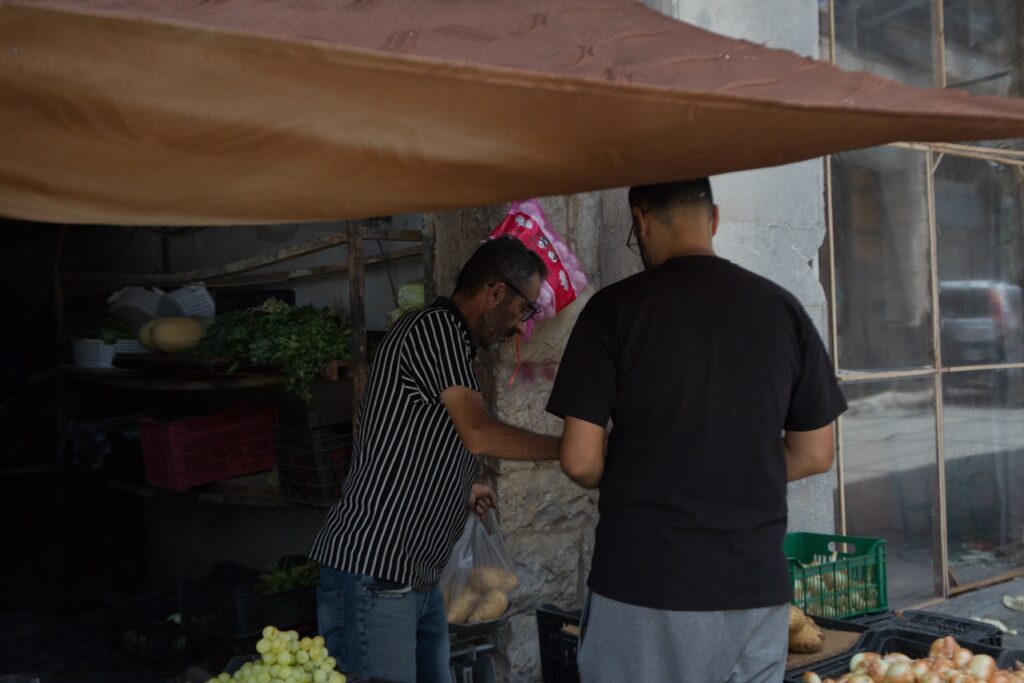
Hassan Doghman’s vegetable stall in Nabatiyeh’s souk goes back generations.
His grandfather ran it, then his father took it over and, finally, the 55-year-old now stands behind the crates of seasonal fruits and vegetables that many other residents of the town frequent.
When the war started, though, he was forced to pack up his things and flee to Jbeil, a town north of the capital, Beirut, and over two hours away from Nabatiyeh by car, when Israel issued a displacement order for the south.
“When your home is in the south, you feel like you want to live in the south,” he stated softly. “I felt like I left my heart behind.”
But even the war could not keep him away.
Every few days, he would make the journey to Nabatiyeh, hoping that an Israeli bomb would not find him.
As the war went on, his small shop was spared the fate of so many others in the town. That was until the last bombing that struck Nabatiyeh.
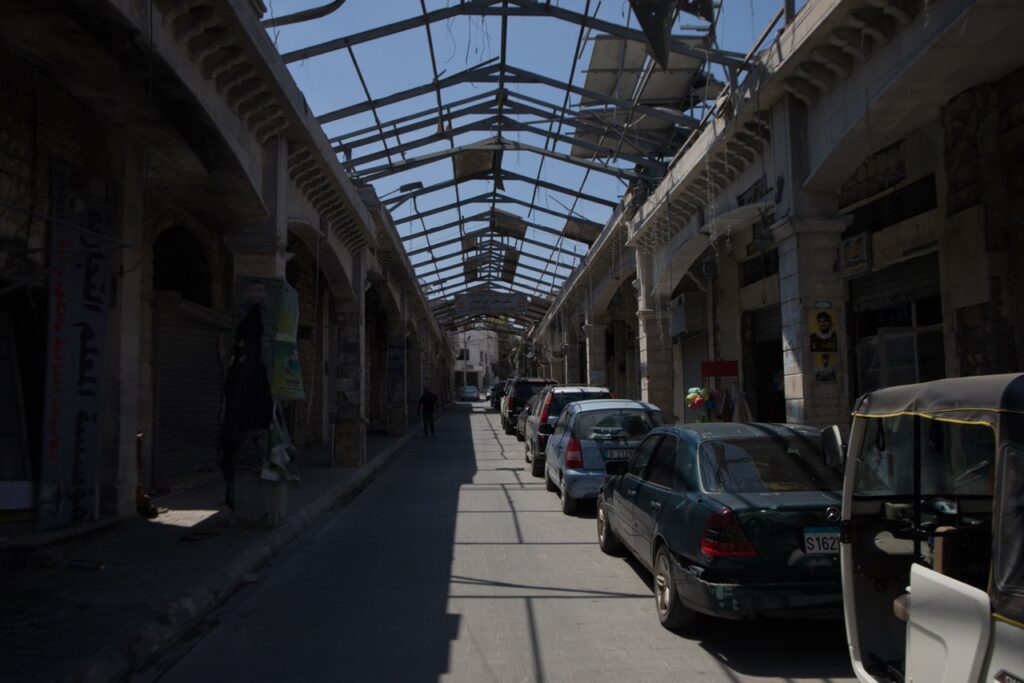
Several missiles destroyed buildings surrounding the souk and engulfed his shop in flames, leaving the souk and his small stand, places that once bustled with life and joy, smoldering carcasses.
“Thank god I wasn’t here. I was in Jbeil,” he told Beirut Today, appearing almost relieved in his recollection of what happened.
Finally, when the ceasefire was announced, Doghman returned to see what had become of his family’s shop.
It was still smoking when he arrived, making it impossible to breathe and forcing him to don a mask to begin the process of cleaning up.
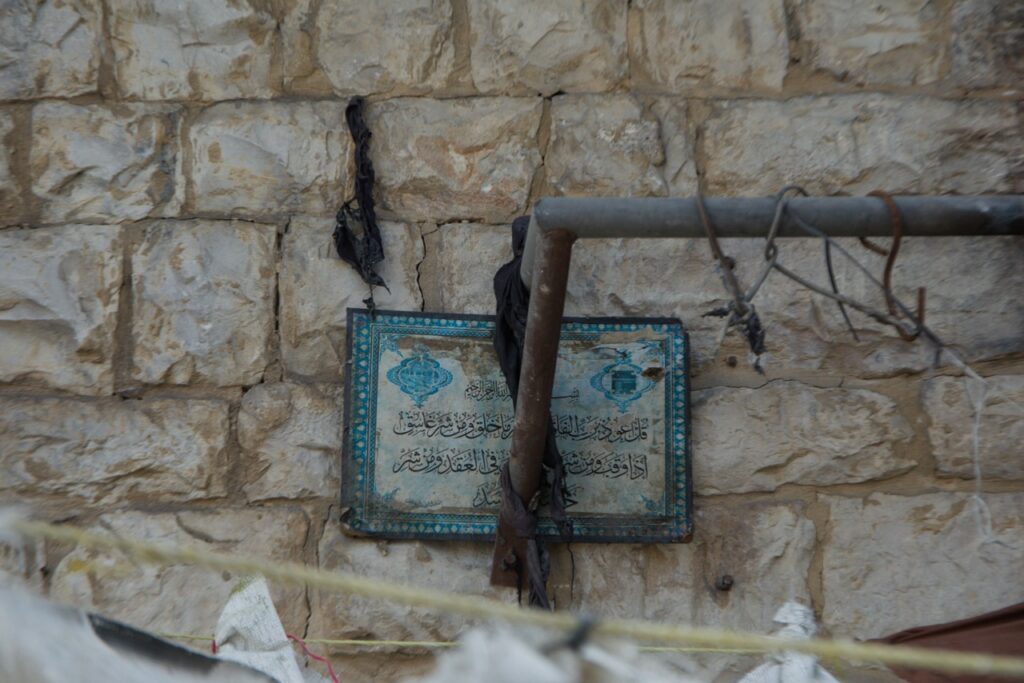
When he was done, the space was usable once more, but the scars remained. Little had survived from his space. The only thing that remained mostly untouched was a verse of the Quran that hung on the wall above his shop. Only the corners of it were slightly singed, blackening its edges.
He soon started selling fruits and vegetables again in the souk since he needed to provide for his family.
While he had a steady stream of customers asking about what he had that day and buying a few bags to bring home to eat that evening, they were only a fraction of what he would usually get.
According to a Hezbollah source, only around 40 percent of Nabatiyeh’s residents have returned.
A major reason for that is many do not have homes to return to because they were either completely or partially damaged in the war.
Jaafar al-Saydawi, 55, knew that Nabatiyeh had taken the brunt of Israel’s bombings in the south but the true devastation was only revealed to him when he finally returned after the ceasefire.
A family business was completely destroyed in the bombings and the family home was damaged.
“When they bombed our place, they struck the balcony. They hit our neighbor’s home. Our home is 80 years old,” he told Beirut Today.
Like so many others, Saydawi left his home at the start of the war. However, instead of going to Beirut or further north, he decided to stay in Sidon, a town 45 minutes from Nabatiyeh. There, he discovered the struggles of displacement.
The prices for renting an apartment skyrocketed and, even when he was able to find a place that he could afford, he knew that if anything happened, he could easily be evicted at a moment’s notice.
The last thing he wanted to do was leave his family home but he knew it was not safe to stay. But it was not his life that he worried about; it was what would become of the house as the war dragged on that filled him with emotion.
“I was born in this house,” he explained, his eyes welling up with tears. “I remember the voices of my mother and father [when I walk through the house].”
Every corner of the stone structure carried a memory for him and he understood all of that could be erased in an instant.
Even though the house was only damaged, Saydawi was grateful that his father was not alive to see the state it was in.
Like Doghman, Saydawi returned to the house to clean up the shards of glass after the windows shattered under the force of the explosions, bringing an engineer with him to inspect the building and determine what could be done.
“The engineer came with me to look at the house and he said, ‘This isn’t construction. This is artwork,’” Saydawi exclaimed proudly.
Sabah Jaber, 45, was not so lucky.
“My house was destroyed. Now, I am staying with my parents and their home was partially destroyed,” she told Beirut Today.
Jaber was no stranger to loss and remains stoic. Her son was a Hezbollah member who was killed in 2024 and her husband died over two decades ago.
As she walked through Nabatiyeh, she proudly wore a pin on her abaya of her slain son, a smile on her face. The smile, though, was because she was back in the south, a place that she holds dear to her heart.
“The south is our mother,” she said. “This is our city.”
Despite going to Sidon during the war, she remained connected to Nabatiyeh due to the fact that, even though she was in another town, she was still in Lebanon and that meant she was still close to her beloved Nabatiyeh.
“Yes, we were in Sidon, but this is still our land. The south is our land. Sidon is our land. Beirut is our land,” Jaber stated.
The ink on the ceasefire was not even dry when Jaber started her return to Nabatiyeh. She did not care what she would find when she arrived. All that mattered was that she was back.
Jaber kissed the ground when she reached Nabatiyeh.
Um Mehdi does not believe those outside of the south understand what their land means to them. For southerners, their land means everything. It is a part of them. It is in their blood and their blood is in it.
“Our land is our identity, and our country is our country,” she said. “The people of the south have a special bond with it. The blood of the martyrs is in this land. That blood remains red, it doesn’t fade; the crops do not die, it’s always green.”
Editor’s note: During reporting in Nabatiyeh, a Hezbollah minder was present with Beirut Today throughout the trip there. Hezbollah did not interfere in any of the interviews or photographs taken.

