
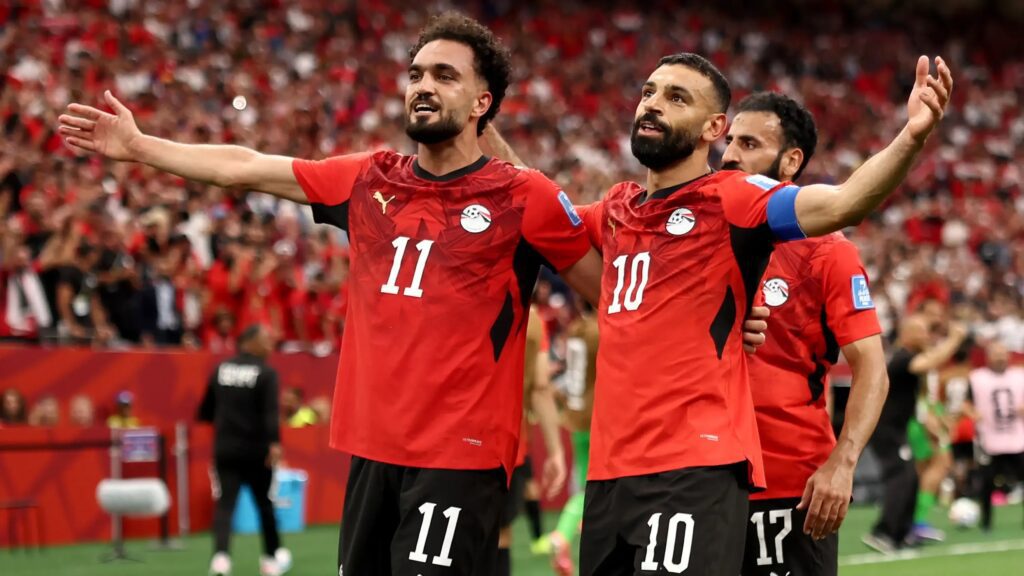
A record eight Arab countries participated in the 2026 World Cup. The participating nations were Morocco, Egypt, Tunisia, Qatar, Jordan, Algeria, Saudi Arabia, and Iraq. While the record was facilitated by the expansion of the tournament format to 48 teams, compared with the previous 32-team format, the improvement in competitiveness cannot be denied.
While none of the teams progressed to the semi-finals, Arab countries have proven themselves to be strong competitors among the tournament’s traditional footballing elites.
Morocco and Egypt
Morocco enjoyed a highly impressive World Cup campaign this year, reaching the quarter-finals before being eliminated by France, widely considered one of the tournament’s favourites.
Morocco delivered a commanding performance against Canada in the Round of 16, defeating the North American nation 3-0. Before that, Morocco went toe to toe with another footballing powerhouse, the Netherlands, in the Round of 32, defeating the European side on penalties after a 1-1 draw during the original 90 minutes and Extra Time.
Earlier in the tournament, Morocco drew 1-1 with Brazil, often considered the greatest footballing nation in history, defeated Scotland 1-0, and beat Haiti 4-2 in what was one of the most impressive group-stage campaigns of the tournament.
Egypt, for its part, also delivered an outstanding performance, finishing the group stage with five points and placing second behind Belgium only on goal difference. The team then defeated Australia in a penalty shootout in which Mohamed Salah scored a daring and brilliant Panenka, the famous chipped penalty named after Czech footballer Antonín Panenka, who first used the technique in the 1976 European Championship final to secure the title for Czechoslovakia.
Egypt eventually lost to Argentina in the Round of 16, another nation widely considered among the tournament favourites. Egypt led 2-0 until the 79th minute before Argentina scored three goals in what many considered a highly controversial match from a refereeing perspective.
No Longer Underdogs
For nations such as Morocco and Egypt, supported by fans across the Arab world, these teams are no longer approaching matches as underdogs but rather as genuine contenders capable of competing with football’s traditional elites.
Their wealth of talent, the growing number of players competing at the highest levels of club football around the world, and the emergence of what seems to be more systematic and organized national team structures have elevated their level of competitiveness considerably.
As most Arab fans turn to supporting elite non-Arab nations during the tournament’s three remaining matches, they can do so with confidence that Arab football is steadily establishing itself as one of the world’s strongest regional footballing landscapes, provided investment in talent development, infrastructure, and long-term growth continues.

