
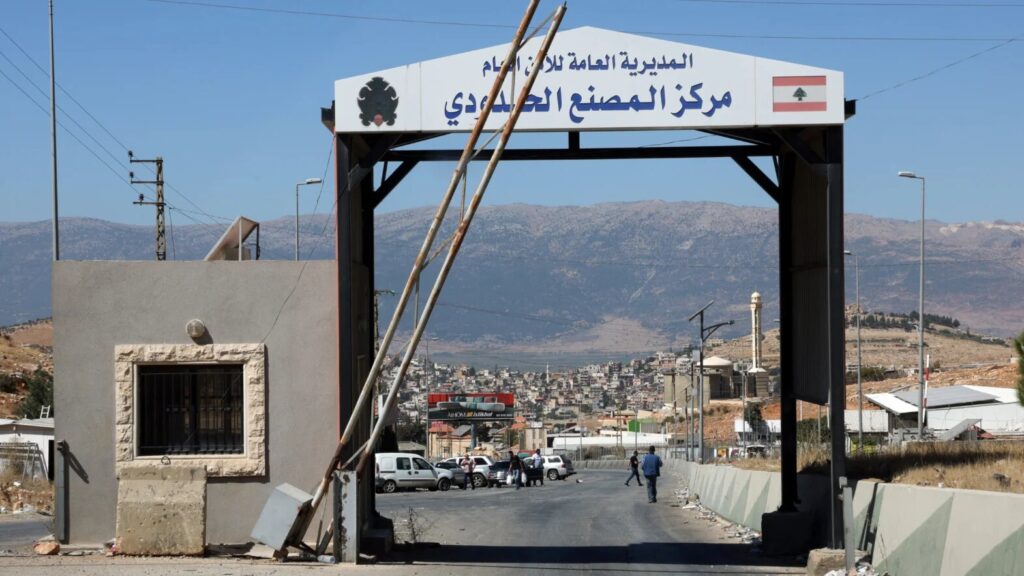
On April 4, Israeli army spokesperson Avichay Adraee issued a displacement order and warning targeting areas surrounding the Masnaa crossing, the main border point between Lebanon and Syria.
The announcement sparked widespread concern given the crossing’s critical role in cross-border trade, food security, and broader socioeconomic stability, particularly for Lebanon.
Masnaa had already been the subject of repeated Israeli warnings and strikes in 2024. These attacks disrupted the flow of life-saving humanitarian aid and rendered the route largely impassable, especially as civilians fled from Lebanon into Syria.
According to the Lebanese Ministry of Economy and Trade, around $700 million of Lebanon’s $21 billion annual trade moves through the crossing – equivalent to roughly 2% to 5% of total trade – as most activity remains maritime-based, according to LBCI.
Lebanese and Syrian Authorities Intensify Efforts to Mitigate Disruptions
Multiple sources indicated that the crossing has not been targeted so far due to diplomatic intervention, with Syrian authorities reportedly contacting the United States, which in turn pressured Israel to refrain from striking the area.
On Sunday, Lebanon’s Minister of Public Works stepped up coordination with relevant authorities to ensure the resumption of truck movement and logistical operations, particularly as dozens of vehicles remained stranded following the Israeli warning.
According to the National News Agency, several trucks are still awaiting clearance, prompting urgent coordination between Lebanese and Syrian authorities to resolve the situation.
Minister Rasamny stated that Lebanese security agencies have implemented strict monitoring measures at the crossing, including truck inspections and scanner-based screening procedures. He dismissed allegations of weapons smuggling as unfounded and lacking any factual basis.

